ADHD and Sleep: Why Your Circadian Clock Runs Late (And What Actually Helps)
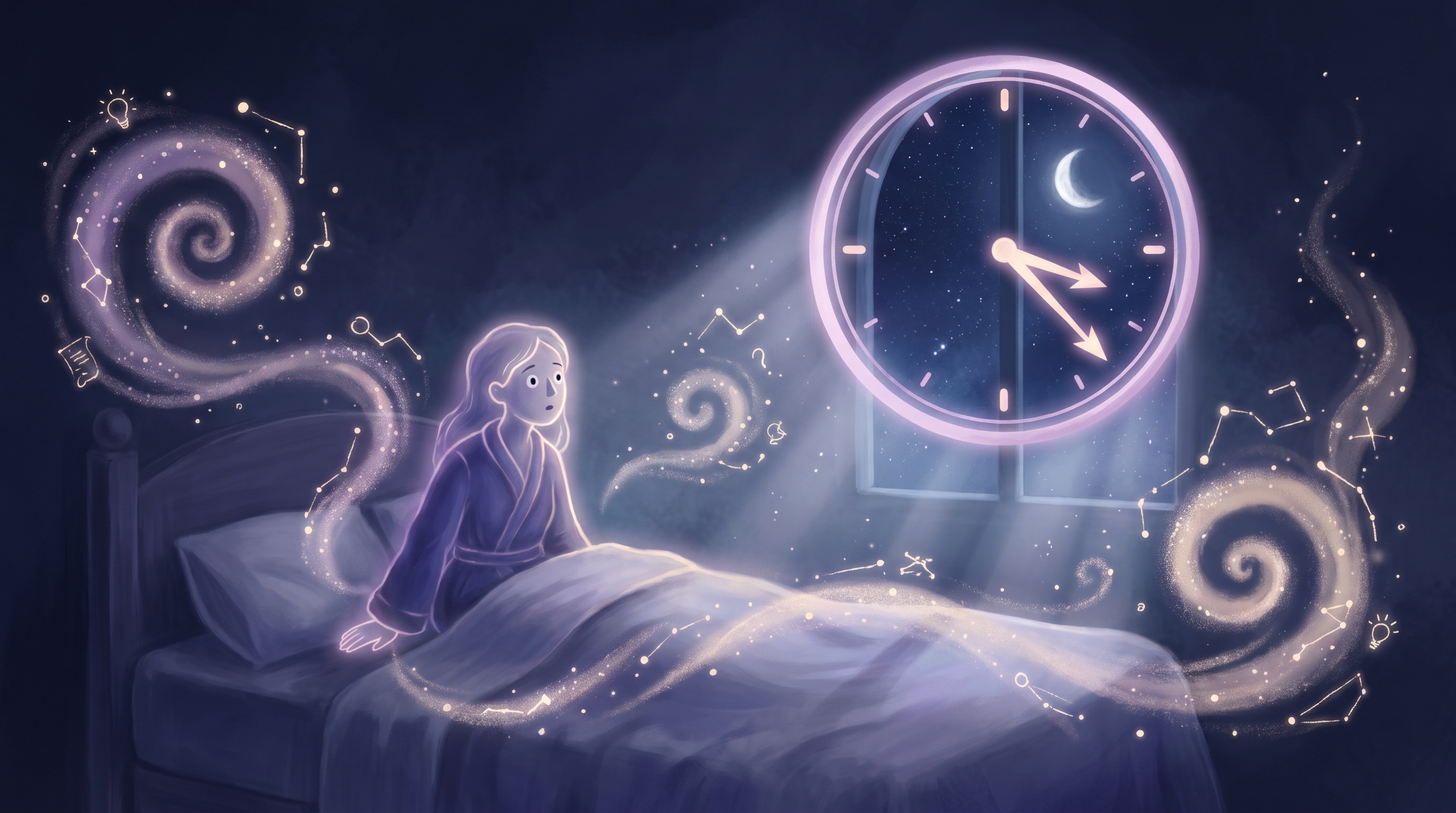
It’s midnight and your brain just decided to reorganise your entire life. You’re suddenly full of ideas, energy, motivation — everything you needed at 2pm when you were staring blankly at your screen. By the time you finally fall asleep, it’s 2am. Your alarm goes off at 7am. You drag yourself through the morning. The cycle repeats.
If this sounds familiar, you’re not lazy or undisciplined. Research increasingly shows that ADHD and delayed sleep are biologically linked — and the connection runs deeper than most people realise.
The ADHD-Sleep Problem Is Enormous
Research consistently finds that a large proportion of adults with ADHD report significant sleep problems, with delayed sleep onset being the most common complaint. Many describe themselves as natural “night owls” who feel most alert and creative in the evening — exactly when they should be winding down.
For decades, this was dismissed as poor sleep hygiene: too much screen time, inconsistent routines, lack of willpower. But emerging research points to something more fundamental — a biological difference in how the ADHD brain keeps time.
Your Internal Clock Runs Late
The suprachiasmatic nucleus (SCN) in your hypothalamus acts as your body’s master clock, coordinating the release of melatonin and cortisol to match the 24-hour day. In people with ADHD, this clock appears to run on a delayed schedule.
A 2025 Canadian paper outlined the mechanism: in ADHD, the evening rise of melatonin — the hormone that signals “time to sleep” — is delayed by approximately 1.5 hours compared to neurotypical individuals. This isn’t a choice or a habit. It’s a measurable, physiological difference in when the brain transitions to sleep mode.
This delay creates a cascade of problems. You’re not sleepy when society says you should be (10-11pm). You lie in bed alert and frustrated while your body hasn’t received its biochemical sleep signal. When you finally do fall asleep, your alarm forces you awake before your body has completed its sleep cycles. The result is chronic partial sleep deprivation that worsens every symptom ADHD already produces: impaired focus, emotional reactivity, poor working memory.
The Vicious Cycle: ADHD Symptoms Worsen Poor Sleep, and Poor Sleep Worsens ADHD
This isn’t a one-directional problem. ADHD and sleep deprivation amplify each other in a feedback loop that’s difficult to escape.
ADHD → Poor Sleep:
- Racing thoughts at bedtime (the brain’s executive function, already weaker in ADHD, can’t “switch off” the thought generator)
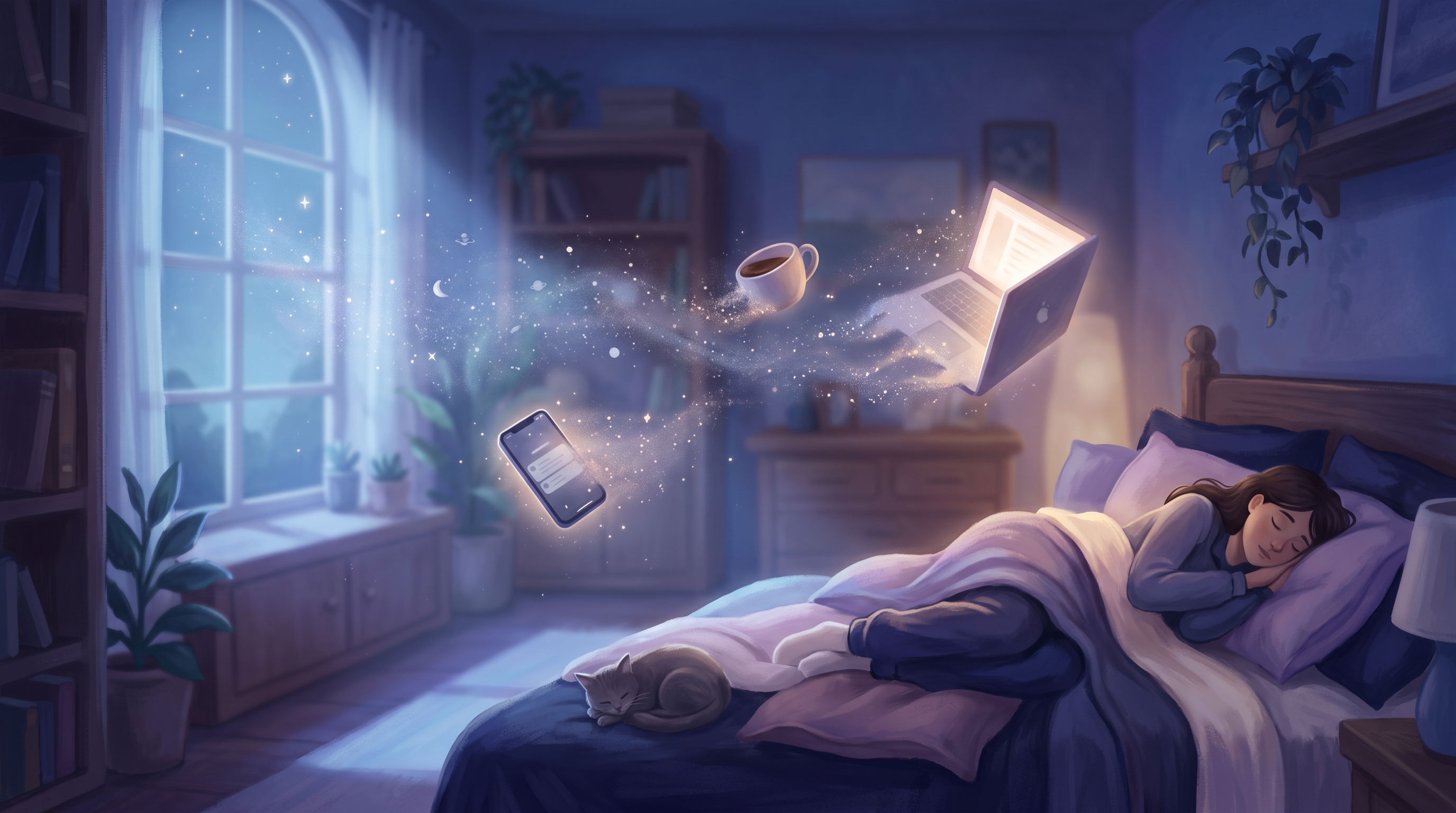
- Hyperfocus on evening activities (you lose track of time watching videos, reading, or working on projects)
- Delayed melatonin onset means you genuinely aren’t tired at a reasonable hour
- Stimulant medications (if taken too late) can further delay sleep
Poor Sleep → Worse ADHD:
- Sleep deprivation impairs prefrontal cortex function — the exact brain region already underperforming in ADHD
- Reduced adenosine clearance compounds attention deficits
- Emotional regulation deteriorates (the amygdala becomes hyperreactive without adequate sleep)
- Daytime fatigue leads to higher caffeine consumption, which delays melatonin further
Breaking this cycle requires addressing both sides simultaneously.
What Actually Helps: Evidence-Based Strategies
The 2025 Canadian treatment protocol centres on two interventions that directly target the delayed circadian clock: timed melatonin and morning light exposure. Here’s how to apply them, alongside complementary strategies.
1. Strategic Melatonin Timing
For people with ADHD-related delayed sleep, melatonin isn’t used as a sleeping pill — it’s used as a clock-setting signal. The key is timing: taking a low dose (0.5-1mg) approximately 3-4 hours before your desired sleep time. This advances the circadian clock by signalling “evening” to the brain earlier than it would naturally register.
This is fundamentally different from taking 5-10mg of melatonin at bedtime (which most people do). The goal isn’t sedation — it’s shifting when your body’s natural melatonin production begins. Discuss timing and dosage with your doctor, especially if you take other medications.
2. Morning Light Exposure
Bright light in the first 30-60 minutes after waking is the most powerful signal your SCN receives. It anchors the circadian clock, suppresses residual melatonin, and triggers the morning cortisol rise that promotes alertness.
For people with ADHD, this is especially important because the delayed clock means your body is still producing melatonin when you wake up — you’re fighting biology every morning. Bright light (ideally sunlight, or a 10,000-lux lamp on overcast days) accelerates the transition from sleep mode to wake mode.
Consistency matters more than duration. Ten minutes of morning light every day is more effective than an hour on weekends.
3. A Wind-Down Routine That Works With Your Brain
The standard advice — “put your phone away and read a book” — often fails for ADHD brains because it underestimates how much executive function is required to stop doing something engaging. Instead of relying on willpower, create environmental triggers:
- Set a “last screen” alarm 60 minutes before bed. When it goes off, plug your phone in across the room. The physical barrier matters more than the intention.
- Use sound as a transition signal. A consistent bedtime soundscape — rain, brown noise, or nature sounds — can become a conditioned cue that tells your brain “we’re shifting modes now.” Over time, the association strengthens and the sound itself becomes calming. Sleep Relax lets you build a custom mix and set a sleep timer so it fades out after you drift off.
- Try the cognitive shuffle to occupy your working memory without engaging the thought patterns that keep you alert. Random mental imagery (a red bicycle, a penguin, a cinnamon roll) is boring enough to promote sleep but engaging enough to prevent your brain from wandering back to its favourite late-night project.
Want to try these sounds tonight? Sleep Relax has 100+ calming sounds with a built-in sleep timer.
Try Sleep Relax Free4. Protect Your Sleep Window
People with ADHD are especially vulnerable to “revenge bedtime procrastination” — staying up late because the quiet nighttime hours feel like the only time they have control over their schedule. The paradox is that this stolen time comes directly from tomorrow’s cognitive budget.
Set a non-negotiable “in bed” time and treat it like an appointment. If your brain is still buzzing, that’s fine — the goal is being horizontal in a dark, cool room with calming audio. Sleep will follow once your circadian system catches up.
5. Watch Your Caffeine Window
Caffeine blocks adenosine receptors, and its half-life is 5-6 hours. For someone with ADHD whose circadian clock already runs late, afternoon caffeine can delay sleep onset by another hour or two on top of the existing delay.
A hard caffeine cutoff at noon or 1pm gives your body time to clear enough caffeine before your (already delayed) melatonin window opens. This single change often makes a measurable difference within a week.
When to Seek Professional Help
If these strategies don’t improve your sleep within 2-3 weeks, it’s worth discussing with a doctor who understands both ADHD and sleep medicine. Possible considerations include:
- Medication timing adjustments — stimulant medications taken too late can directly interfere with sleep onset
- Sleep study — ADHD has high comorbidity with sleep apnea and restless leg syndrome, both of which require separate treatment
- CBT-I — cognitive behavioural therapy for insomnia can be adapted for the ADHD-specific thought patterns that fuel bedtime anxiety
The Bigger Picture
ADHD isn’t a discipline problem, and the sleep difficulties that come with it aren’t either. They’re the predictable result of a circadian system that’s wired to run on a different schedule than the one society demands.
Understanding this biology is genuinely freeing. You’re not failing at sleep — your clock is simply set differently. And unlike willpower, a clock can be adjusted with the right tools: timed light, strategic melatonin, consistent routines, and a sleep environment that works with your brain instead of against it.
This article is for informational purposes only and is not a substitute for professional medical advice. If you have ADHD or suspect you might, please consult a healthcare provider for personalised guidance.
Sleep better in 14 nights
A gentle 14-night sleep plan based on CBT-I principles, a one-tap 3am button and calming sleep sounds. Nights 1–3 are free.
Download Sleep Relax