How Alcohol Wrecks Your Sleep: The Hidden Cost of 'Just One Drink'
You had a glass of wine with dinner. Maybe two. You feel relaxed, a little drowsy — the perfect setup for a good night’s sleep, right?
Here’s the uncomfortable truth: that glass of wine is about to sabotage the next 1-2 nights of your sleep in ways you won’t even notice until morning.
The Nightcap Myth
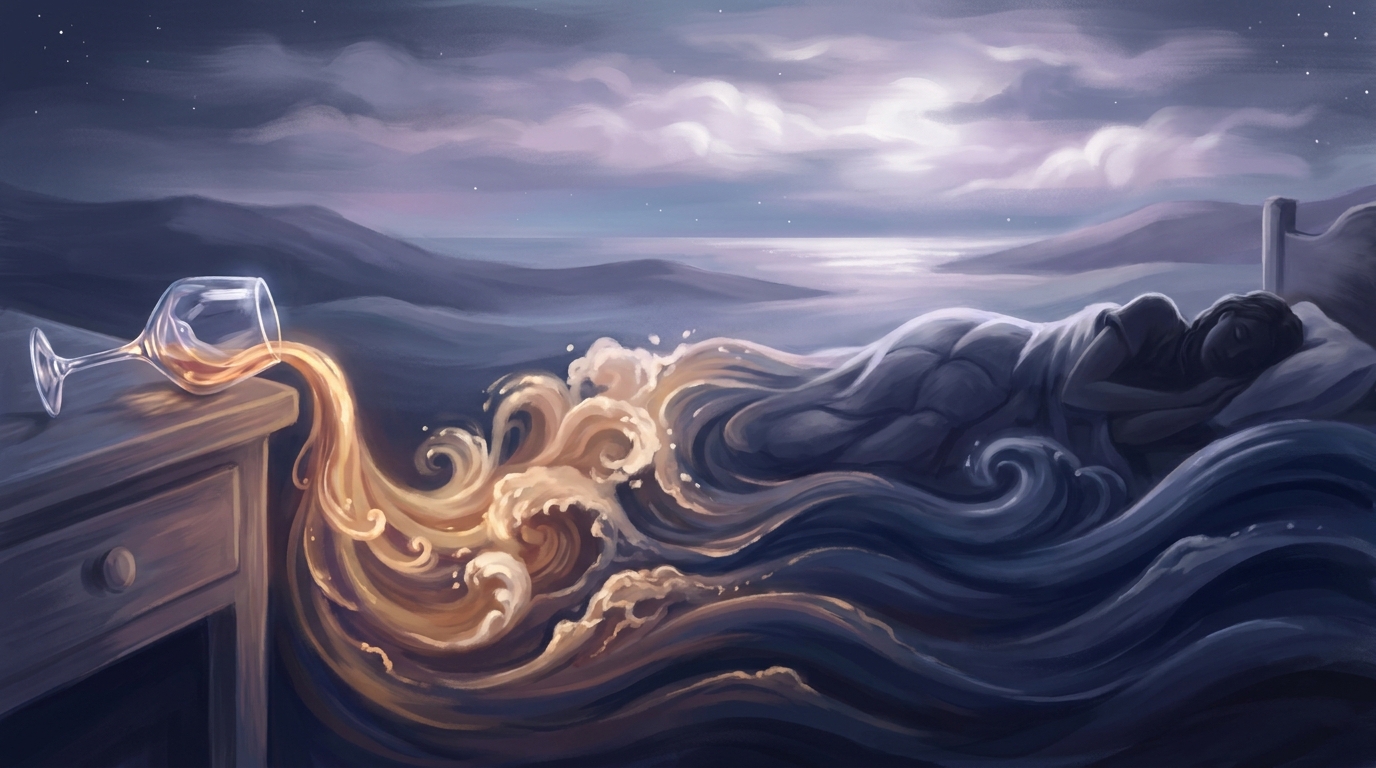
The nightcap has been a cultural sleep remedy for centuries. And it does one thing well: it helps you fall asleep faster. Alcohol is a sedative, and sedation can feel like sleep. But sedation and sleep are not the same thing.
Dr. Matthew Walker, neuroscientist and sleep researcher, puts it bluntly: alcohol is one of the most misunderstood sleep aids in existence. It sedates your brain rather than allowing it to fall into natural sleep, and the difference matters enormously for what happens throughout the night.
What Alcohol Actually Does to Your Sleep
The First Half: False Calm
In the first half of the night, alcohol increases the amount of deep slow-wave sleep. This sounds like a win — and it’s why many people swear by their nightcap. You fall asleep quickly, you sleep heavily.
But this deep sleep comes at a cost. Your brain is being sedated, not naturally cycling through sleep stages. The electrical brainwave patterns during alcohol-induced “deep sleep” are different from natural deep sleep, and they don’t provide the same restorative benefits.
The Second Half: The Payback
As your liver metabolises the alcohol — typically 3-5 hours after your last drink — the sedative effect wears off. What follows is a rebound effect:
- Fragmented sleep: You wake up more frequently, often without remembering it
- REM suppression: Alcohol dramatically reduces REM sleep, the stage where your brain processes emotions and consolidates memories
- Increased heart rate: As alcohol metabolises, your sympathetic nervous system activates
- Night sweats: Alcohol disrupts your body’s temperature regulation
The result? You might have been in bed for 8 hours, but the quality of those hours was significantly degraded.
REM Sleep: The Biggest Casualty
REM sleep is where your brain does its emotional housekeeping. It processes the day’s experiences, strips the emotional charge from difficult memories, and helps you wake up with a clearer perspective.
When alcohol suppresses REM, you lose this emotional processing. After a night of drinking, you’re more likely to feel emotionally fragile, anxious, or irritable — not because of a “hangover” in the traditional sense, but because your brain never completed its emotional reset.
Gary Brecka, human biologist and performance coach, notes that a single drink can disrupt your REM sleep for 1-2 nights. Not just the night you drink — the following night too, as your brain tries to “rebound” with excess REM that disrupts normal sleep architecture.
Want to try these sounds tonight? Sleep Relax has 100+ calming sounds with a built-in sleep timer.
Try Sleep Relax FreeHow Much Is Too Much?
A 2018 study in JMIR Mental Health analysing nearly 4,100 adults found a clear dose-response relationship:
- 1 drink: Reduced sleep quality by approximately 9.3%
- 2 drinks: Reduced sleep quality by approximately 24%
- 3+ drinks: Reduced sleep quality by approximately 39.2%
The timing matters too. A drink with dinner (3-4 hours before bed) is less disruptive than a nightcap right before sleep, simply because your body has more time to metabolise the alcohol before your most REM-heavy sleep cycles begin.
The Tolerance Trap
One of alcohol’s most insidious effects on sleep is the tolerance cycle. When you regularly drink before bed:
- Your brain adapts to the sedative effect, so you need more to feel drowsy
- You increase your intake to achieve the same sleep-onset effect
- More alcohol means more REM suppression and more fragmented second-half sleep
- You wake up feeling worse, which increases stress, which makes you want a drink to relax
This cycle can develop without any awareness that alcohol is the problem. Many people who struggle with sleep quality never connect it to their moderate, socially acceptable drinking habits.
What to Do Instead
If you currently rely on an evening drink to wind down, here are alternatives that actually improve sleep rather than undermining it:
Replace the ritual, not just the drink. The wind-down ritual matters as much as the substance. Try herbal tea, a warm shower before bed, or a few minutes of breathing exercises at the same time you’d normally pour a drink.
Use sound to signal sleep. One of the reasons alcohol “works” is that it quiets the anxious mind. Brown noise or rain sounds can achieve the same mental quieting without any of the sleep architecture damage.
Give it a 2-week test. Track how you feel after 14 nights without alcohol before bed. Most people report noticeably more vivid dreams (REM returning), easier mornings, and better emotional regulation during the day. The contrast often surprises people who considered themselves “moderate” drinkers.
If you do drink, time it wisely. Stop drinking at least 3-4 hours before bed. Have water between alcoholic drinks. Your liver processes roughly one standard drink per hour — the more buffer time, the less impact on your sleep.
The Bigger Picture
Alcohol isn’t the only substance that trades sleep onset for sleep quality. But it’s the most culturally normalised one. We’d never tell someone with insomnia to take a sedative every night, yet the nightly glass of wine goes unquestioned.
Understanding what alcohol does to your sleep doesn’t mean you have to stop drinking entirely. It means making an informed choice. Some nights, the social enjoyment of a drink is worth the sleep trade-off. Other nights — especially when you need to perform, recover, or process a difficult day — knowing the cost helps you choose differently.
Your sleep is too valuable to sacrifice unknowingly.
FAQ
Does alcohol help you fall asleep faster?
Yes, but it sedates rather than inducing natural sleep. The faster onset comes at the cost of fragmented sleep in the second half of the night and suppressed REM sleep throughout.
How long does alcohol affect your sleep?
A single moderate drink can affect sleep quality for 1-2 nights. The night you drink, REM is suppressed; the following night, your brain may “rebound” with abnormal REM patterns.
Is a glass of wine before bed really that bad?
Research suggests even one glass reduces sleep quality by about 9%. The effects are dose-dependent — two glasses have a more significant impact. Timing matters: drinking with dinner (3-4 hours before bed) is less disruptive than a nightcap.
This article is for informational purposes only and is not a substitute for professional medical advice. If you have concerns about alcohol use or persistent sleep issues, please consult a healthcare provider.
Sleep better tonight
100+ calming sounds, breathing exercises, and a sleep timer — all in one app.
Download Sleep Relax