Baby Sleep Sounds: What Actually Works to Soothe Your Infant
You’ve done the swaddle, the gentle rocking, the perfectly timed feed. Yet, your little one is still wide awake, fighting sleep with an energy you wish you had. If you’re a new parent, you’ve probably heard that “baby sleep sounds” or white noise can be a lifesaver. But with so many options out there, what actually works, and why does it help?
We’ve all been there—staring at the ceiling at 2am, desperately trying to decode our baby’s sleep preferences. The good news is that science offers some clear guidance on why certain sounds are so effective at soothing infants.
Why Babies Crave Sound
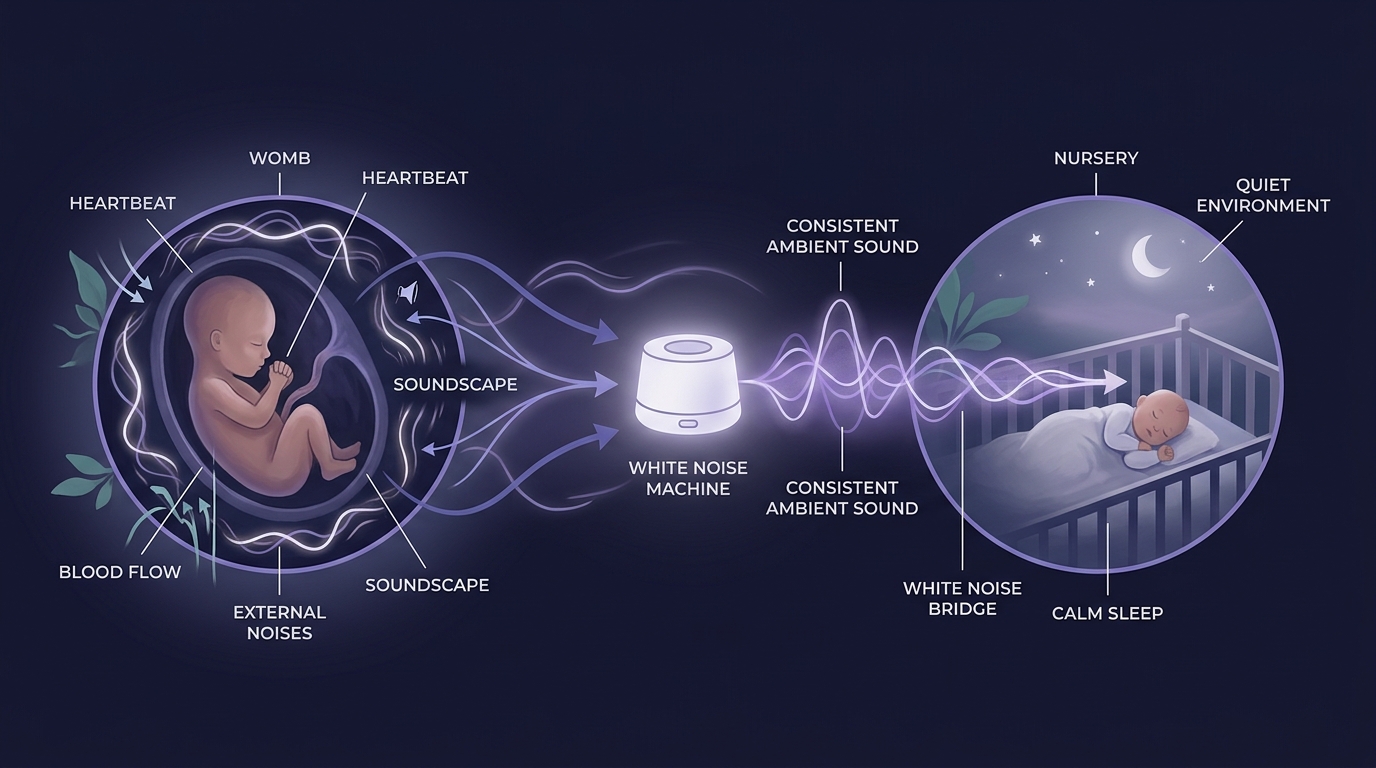
To understand why baby sleep sounds work, we have to look at where your baby just came from. For nine months, your baby’s environment wasn’t a quiet, serene nursery. The womb is incredibly loud.
Between your heartbeat, blood flow, and digestive system, the constant rhythmic noise in the womb is often compared to the volume of a running vacuum cleaner. When a newborn is suddenly placed in a completely silent room, it can feel jarring and unnatural.
Continuous, steady sound masks household noises and provides a familiar, comforting sonic blanket that signals safety to your baby’s developing nervous system.
The Best Sleep Sounds for Babies
Not all sounds are created equal when it comes to infant sleep. Here are the most effective options:
1. White Noise and Pink Noise
White noise contains all frequencies across the spectrum of human hearing at equal intensity. It’s excellent at masking sudden background noises (like a dog barking or a sibling playing) that might startle a sleeping baby.
Pink noise is similar but has louder low-frequency sounds and softer high-frequency sounds. Many parents find pink noise—which sounds more like steady rain or rustling leaves—to be gentler on the ears than the static-like quality of pure white noise.
2. Womb Sounds and Heartbeats
Audio that mimics a maternal heartbeat or the muffled, swooshing sounds of the womb can be incredibly effective, especially for newborns (0-3 months). These biological rhythms tap directly into the infant’s memory of their safest environment.
3. Gentle Nature Sounds
Steady rain, a soft river, or gentle ocean waves provide a continuous, predictable rhythm without the harshness of static. These are great options as your baby transitions out of the newborn phase and into older infancy.
Want to try these sounds tonight? Sleep Relax has 100+ calming sounds with a built-in sleep timer.
Try Sleep Relax FreeHow to Use Baby Sleep Sounds Safely
While sound is a powerful tool, it must be used correctly to protect your baby’s sensitive hearing.
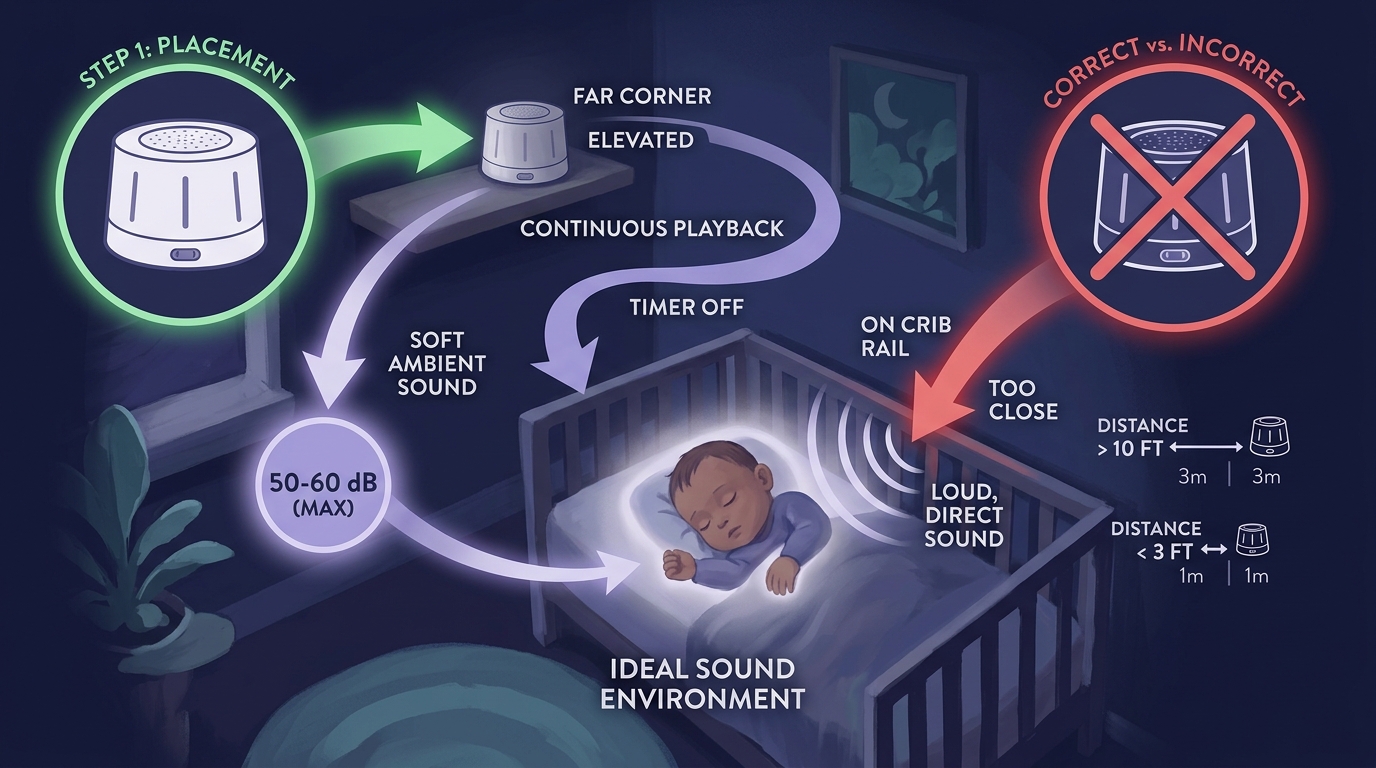
1. Keep the Volume Safe
The American Academy of Pediatrics recommends that sound machines be kept at around 50 decibels (about the volume of a quiet shower) and never louder than 65 decibels. If it’s difficult for you to hold a normal conversation in the room, the sound is too loud.
2. Placement Matters
Never place a phone or sound machine inside or directly attached to the crib. Place the audio source across the room, at least 7 feet (2 meters) away from your baby’s head. This provides a gentle ambient wash of sound rather than a direct blast.
3. Use Continuous Play
Sudden silence can be just as startling as a sudden noise. If a sound machine turns off on a timer after 45 minutes, the abrupt change in the environment might wake your baby during a light phase of sleep. Continuous play throughout the night is generally more effective.
FAQs About Baby Sleep Sounds
Will my baby become addicted to white noise?
Babies build sleep associations, which are simply cues that tell their brain it’s time to sleep. A sound machine is a positive sleep association because it doesn’t require you to be present (unlike rocking or feeding to sleep). When you’re ready to wean them off it (usually around toddlerhood), you can simply turn the volume down slightly every few nights.
Is brown noise better than white noise for babies?
Brown noise is deeper and has stronger low frequencies than both white and pink noise, resembling a deep roar or heavy rainfall. Because it lacks high-pitched frequencies, many parents and babies find it much more soothing and less abrasive than white noise.
Should I play sleep sounds during naps too?
Yes. Consistency is key for infant sleep. Using the same sleep sounds for daytime naps and nighttime sleep helps reinforce the cue that it’s time to rest, regardless of the time of day.
This article is for informational purposes only and is not a substitute for professional medical advice. If you have persistent concerns about your baby’s sleep or hearing, please consult a pediatrician.
Sleep better tonight
60+ calming sounds, breathing exercises and a gentle 14-night sleep plan — all in one app.
Download Sleep Relax