Brown Noise for Sleep: The Complete Guide to Deep, Restful Nights
White noise helps a lot of people sleep. But if it feels too sharp, too hissy, or weirdly stimulating, you’re not imagining it. Some sleepers need something lower, softer, and more grounding.
That’s where brown noise comes in. It has more energy in the low frequencies, so it sounds deeper and warmer than white noise. For the right person, that can make bedtime feel less like you’re covering up noise and more like you’re sinking into it.
This guide focuses on one question: when is brown noise actually the best sleep sound to use, and how do you test it properly?
What Brown Noise Sounds Like
Brown noise is a deep, steady sound often compared to:
- A distant waterfall
- Heavy rain on a roof
- Wind rumbling through a valley
- The low cabin hum on a plane
Technically, brown noise rolls off the higher frequencies more aggressively than white noise or pink noise, which is why it feels less bright and more bass-heavy.
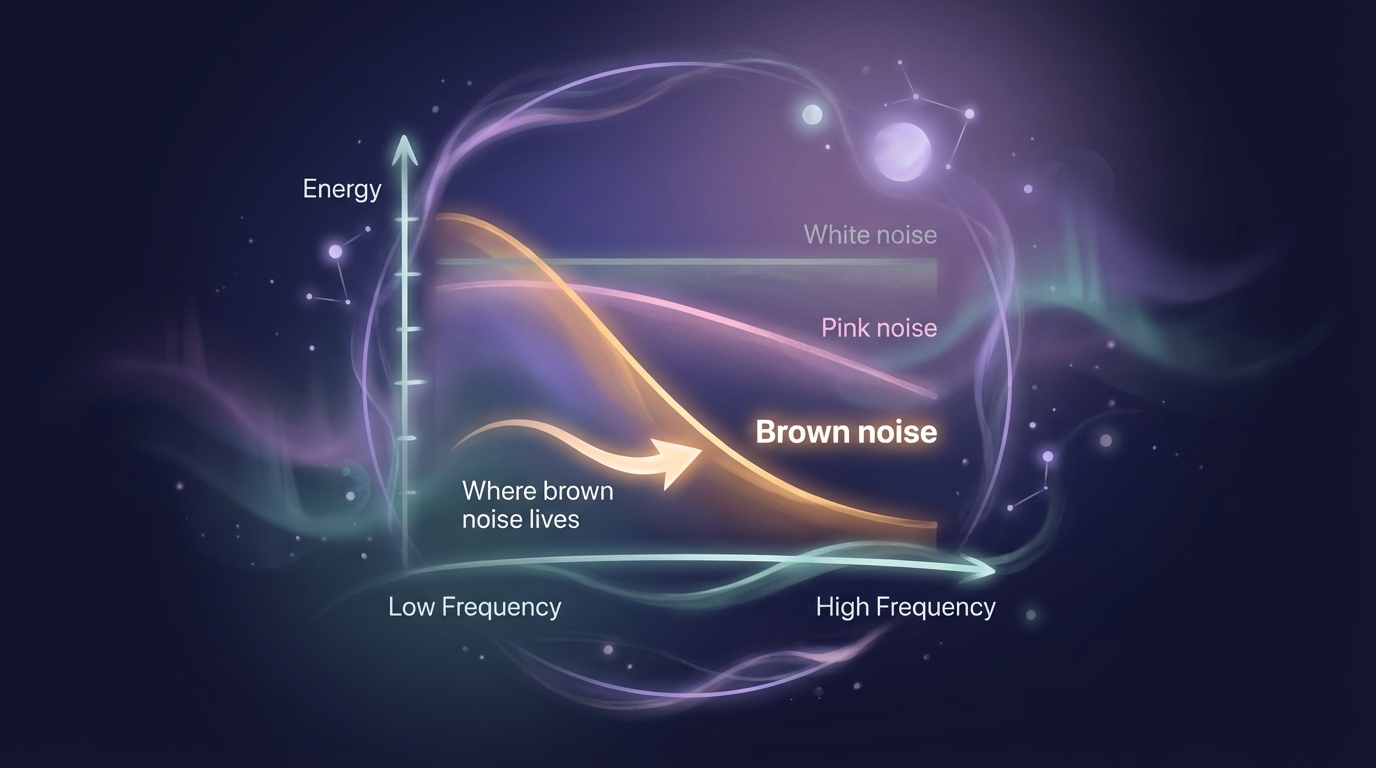
If you’re still deciding between the major noise colours, start with our comparison of pink noise, white noise, and brown noise. This article is for people who already suspect they want the deepest, warmest option.
Why Some People Sleep Better with Brown Noise
It Better Matches Low, Rumbly Disturbances
The biggest practical benefit is masking. Consistent background sound can make sudden environmental noise less noticeable, especially in cities, apartment buildings, or older homes.
Brown noise tends to work best when the sounds bothering you are low and droning:
- Traffic outside your window
- Bass from neighbours
- HVAC rumble
- A partner’s snoring
White noise can still help here, but some people find its higher-frequency hiss distracting. Brown noise often feels smoother because it puts less emphasis on the sharp top end.
It Feels More Grounding Than White Noise
For anxious sleepers, the quality of the sound matters as much as the masking itself. Brown noise gives your brain something steady to rest against without sounding clinical or mechanical.
That doesn’t mean it sedates you. It simply creates a more stable sensory environment, which can make it easier for your body to stop reacting to every little sound in the room.
It Can Reduce the “Too Much Silence” Problem
Some people don’t sleep badly because their room is noisy. They sleep badly because silence makes every thought louder. Brown noise can be helpful in that middle ground: not enough stimulation to keep you alert, but enough texture to interrupt the mental spiral.
What the Science Actually Says
Here’s the honest version: there isn’t much direct research on brown noise specifically.
Most sleep-and-sound research looks at broadband noise, white noise, or pink noise. What that research does support is the broader idea that consistent background sound can improve sleep in noisy environments by reducing the impact of sudden disturbances.
For brown noise itself, the evidence is mostly indirect:
- We know low-frequency-heavy sounds feel calmer to many listeners
- We know steady background sound can support sleep when outside noise is the problem
- We know personal preference matters a lot
So if brown noise helps you, that’s useful. But it doesn’t mean brown noise is universally “best” for sleep.
When Brown Noise Is a Better Choice Than White Noise
Brown noise is worth trying first if:
- White noise feels harsh, hissy, or fatiguing
- You live with traffic, bass, or other low-frequency noise
- You want a sound that feels more like distant weather than machine static
- You tend to fall asleep better with heavier sounds like storms or waterfalls
Brown noise may be a worse fit if:
- You prefer crisp fan-like sound
- Low bass feels oppressive or distracting to you
- The noises waking you are mostly high-pitched voices, notifications, or clattering sounds
If that sounds more like you, rain sounds or pink noise may be the better starting point.
How to Test Brown Noise Tonight
The best way to evaluate brown noise is not “Did I love it instantly?” but “Did I sleep more steadily with it over a few nights?”
1. Start Quieter Than You Think
The goal is gentle masking, not sonic wallpaper. Keep it low enough that it fades into the background after a few minutes. If it feels physically present in the room, it’s probably too loud.
For most adults, that means roughly 50-60 decibels, or about the level of moderate rainfall.
2. Match the Sound to the Problem
Ask yourself what is actually disturbing your sleep:
- Low city rumble: pure brown noise
- Irregular outside noise: brown noise plus light rain
- Racing thoughts: brown noise plus a breathing exercise
That last combination works especially well if you pair it with the 4-7-8 breathing technique.
3. Use a 3- to 7-Night Trial
Don’t judge it on one night. Sleep varies too much. Give yourself a short test window and look for patterns:
- Did you fall asleep faster?
- Did you wake up less from outside noise?
- Did the sound feel calming or claustrophobic?
- How did you feel in the morning?
4. Choose Timer or All-Night Playback Intentionally
If you mainly struggle with sleep onset, start with a 45-minute timer.
If you wake repeatedly because of environmental noise, continuous playback is usually better. The sound can’t mask the problem once it turns off.
5. Use Speakers, Not Earbuds
Earbuds can create pressure, discomfort, and volume mistakes. A phone on the nightstand or a small speaker across the room is safer and more natural for overnight use.
Sleep Relax lets you test pure brown noise, add rain or thunder, and use a built-in sleep timer so you can find the combination that actually works for your room.
Try Brown Noise Tonight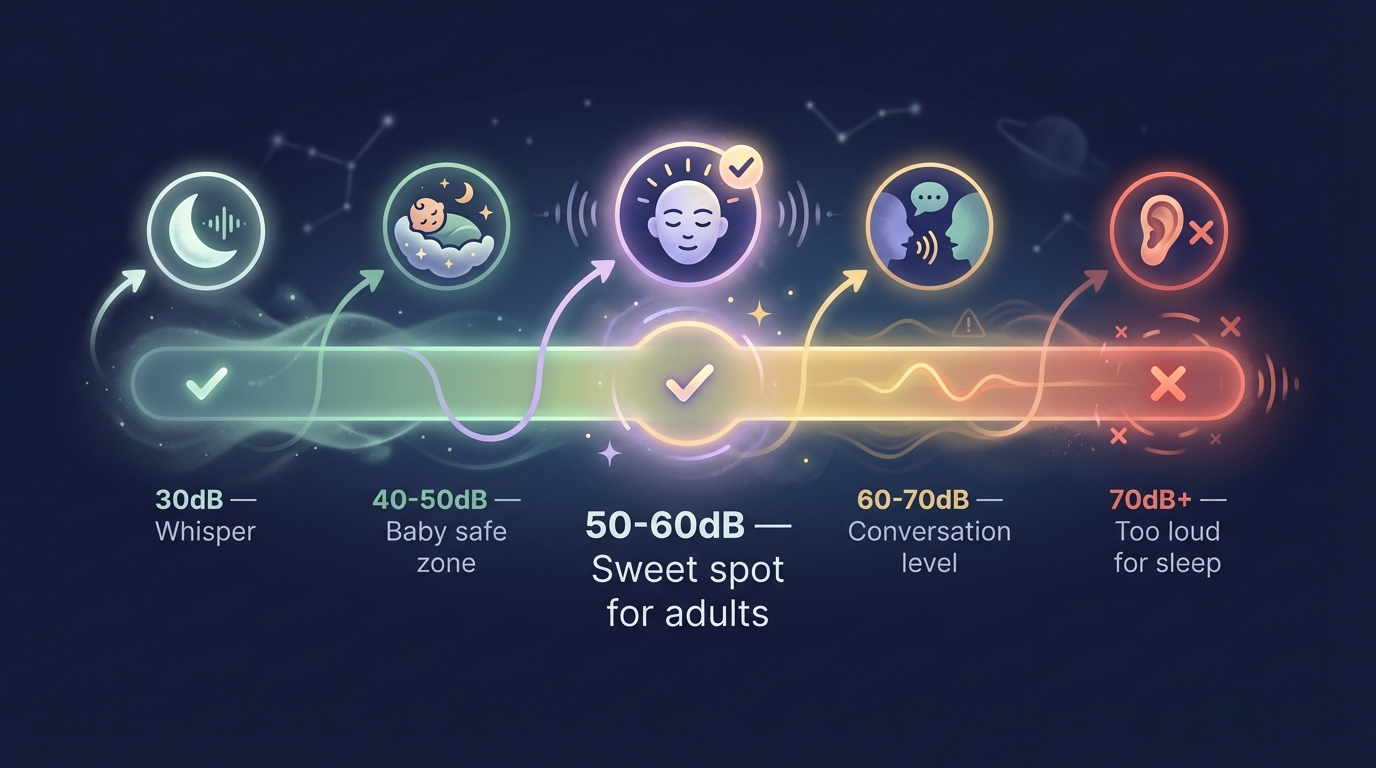
Common Brown Noise Mistakes
Playing It Too Loud
This is the most common mistake. Brown noise should reduce reactivity, not dominate the room. Louder is not better.
Using It for the Wrong Kind of Noise
If your real problem is sharp speech through thin walls or a barking dog, brown noise may not be the best tool. Pink noise, white noise, or rain may cover those sounds more effectively.
Expecting It to Knock You Out
Brown noise is not a sleep medication. Think of it as sleep support, not sleep force. It helps create conditions that make sleep easier.
Never Adjusting the Mix
Pure brown noise is not your only option. Many people get better results by layering it with a softer natural texture:
- Brown noise + rain for a more natural sleep sound
- Brown noise + thunder for strong low-frequency masking
- Brown noise + crickets for a summer-night feel without harsh top-end noise
Is Brown Noise Safe All Night?
For most adults, yes, as long as the volume stays moderate.
Keep these rules in mind:
- Use the lowest effective volume
- Avoid earbuds or sleeping with audio directly in your ears
- Keep speakers a little away from the bed
- If you’re using sound for a baby, follow lower volume guidance and crib-distance precautions from our baby sleep sounds guide
If you have tinnitus, brown noise can help some people and irritate others. Our tinnitus relief sounds guide explains how to test sound therapy more carefully.
Quick FAQ
Is brown noise better than white noise for sleep?
Not universally. It’s often better for people who dislike the hiss of white noise or need help masking low-frequency environmental noise.
Can you play brown noise all night?
Yes, if the volume is moderate and the sound is comfortable for you. If your wake-ups are caused by outside noise, all-night playback usually works better than a timer.
Does brown noise help with anxiety at night?
It can help some people feel more grounded because it creates a stable, low-frequency background. But it works best as part of a broader wind-down routine, not as a cure-all.
The Bottom Line
Brown noise is most useful when you want a deeper, gentler alternative to white noise, especially for masking traffic, bass, or that “my brain won’t settle down” feeling.
If white noise has never felt quite right, brown noise is absolutely worth testing for a few nights. And if pure brown noise feels too heavy, blend it with rain sounds until the room feels calm instead of crowded.
Sweet dreams.
Sleep better tonight
100+ calming sounds, breathing exercises, and a sleep timer — all in one app.
Download Sleep Relax