Deep Sleep: What It Is, Why You Need It, and How to Get More
You slept eight hours but woke up feeling like you hadn’t slept at all. The alarm went off, you dragged yourself upright, and the day started with a deficit you couldn’t explain.
The problem probably isn’t how long you slept — it’s how deep you slept.
Deep sleep (also called slow-wave sleep or N3) is the most physically restorative phase of your sleep cycle. It’s when your body repairs tissue, consolidates memories, and releases growth hormone. And most adults aren’t getting enough of it.
What Happens During Deep Sleep
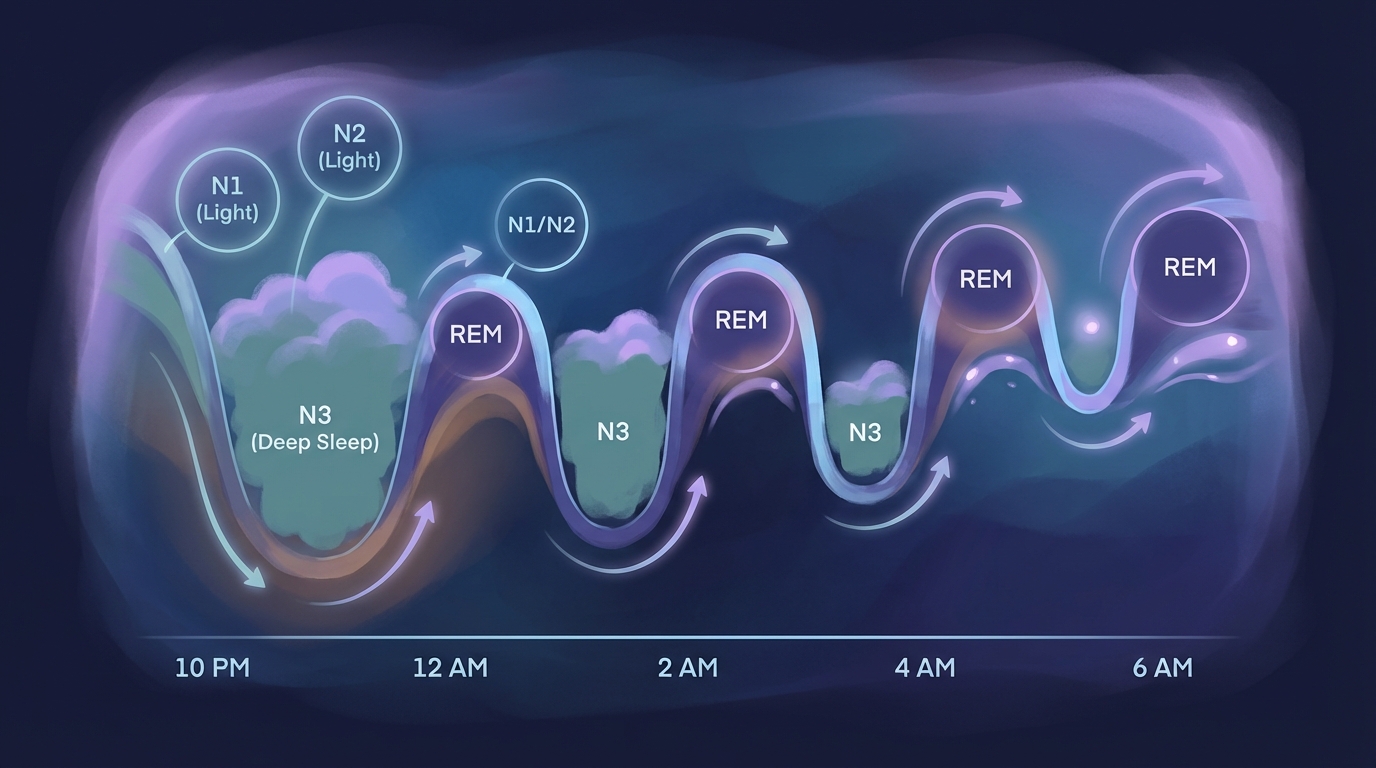
Your brain cycles through four stages every 90 minutes or so:
- N1 — Light sleep. You’re drifting off. Lasts a few minutes.
- N2 — Moderate sleep. Heart rate slows, body temperature drops. This is where you spend most of the night.
- N3 (Deep Sleep) — Slow, powerful delta waves dominate your brain. Extremely hard to wake from. This is the repair phase.
- REM — Rapid eye movement. Dreams happen here. Critical for emotional processing and creativity.
Deep sleep is concentrated in the first half of the night. This is why going to bed late doesn’t just mean less sleep — it means disproportionately less deep sleep, even if you sleep the same number of hours.
Why Deep Sleep Matters More Than You Think
Physical Recovery
During deep sleep, your body releases human growth hormone (HGH) — essential for muscle repair, cell regeneration, and immune function. Athletes who don’t get enough deep sleep recover more slowly and are more prone to injury.
Memory Consolidation
Your brain transfers short-term memories to long-term storage during deep sleep. A 2020 study in Nature Neuroscience showed that slow-wave sleep is essential for declarative memory — facts, events, and things you’ve learned during the day.
Metabolic Health
Insufficient deep sleep is linked to insulin resistance, weight gain, and increased appetite. Your body’s ability to regulate blood sugar depends partly on getting enough N3 sleep.
Emotional Resilience
While REM handles emotional processing, deep sleep provides the physical foundation. Without it, you wake up not just tired but more reactive, more irritable, and less able to handle stress.
If you consistently wake up exhausted despite sleeping “enough,” you might be dealing with non-restorative sleep — and insufficient deep sleep is one of the most common causes.
How Much Deep Sleep Do You Need?
Most adults need 1-2 hours of deep sleep per night, which typically represents 15-25% of total sleep time. Here’s a rough breakdown:
| Age | Deep Sleep % | Approximate Hours |
|---|---|---|
| 18-25 | 20-25% | 1.5-2 hours |
| 26-45 | 15-20% | 1-1.5 hours |
| 45-60 | 10-15% | 0.75-1.25 hours |
| 60+ | 5-10% | 0.5-1 hour |
Deep sleep naturally declines with age — this is normal. But lifestyle factors can accelerate that decline unnecessarily.
Want to try these sounds tonight? Sleep Relax has 100+ calming sounds with a built-in sleep timer.
Try Sleep Relax Free8 Ways to Get More Deep Sleep
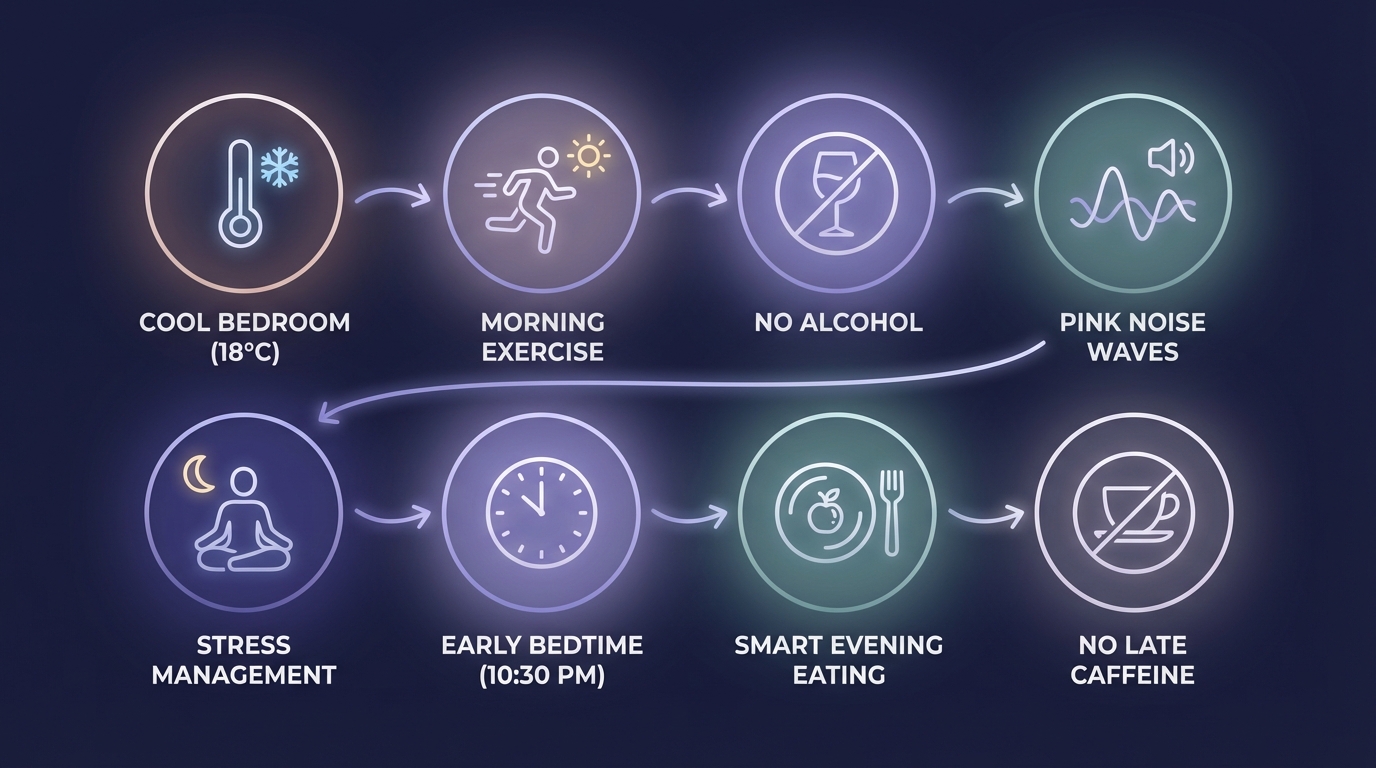
1. Prioritise the First Half of the Night
Since deep sleep is front-loaded, going to bed earlier (not just sleeping longer) directly increases deep sleep opportunity. Shifting your bedtime from midnight to 10:30pm — even with the same wake time — can significantly boost N3 time.
2. Keep Your Bedroom Cool
Your body needs to drop its core temperature by about 1-2°F to initiate and maintain deep sleep. Room temperature of 16-19°C (60-67°F) is ideal. If you tend to sleep hot, this single change can be transformative.
3. Exercise — But Not Too Late
Regular physical activity, especially resistance training and vigorous cardio, consistently increases deep sleep in research. But exercising within 2-3 hours of bedtime can delay sleep onset. Morning or afternoon is ideal.
4. Reduce Alcohol
This is the one nobody wants to hear. Alcohol sedates you faster but suppresses deep sleep dramatically. Even moderate drinking (2 drinks) can reduce deep sleep by 24%. If you want to test this, try a week without alcohol and notice how different your mornings feel.
5. Use Sound to Deepen Sleep
This is where it gets interesting. Research from Northwestern University found that playing gentle sounds (specifically pink noise) timed to slow-wave brain activity increased deep sleep duration and improved next-day memory.
You don’t need a lab to benefit. Consistent ambient sound — brown noise, pink noise, or rain sounds — masks environmental disruptions that pull you out of deep sleep without fully waking you.
6. Manage Stress Before Bed
Cortisol (the stress hormone) directly suppresses deep sleep. If you go to bed with your mind racing, your body stays in a state of arousal that prevents the slow delta waves deep sleep requires.
A wind-down routine matters. Simple breathing exercises — like the 4-7-8 technique — or a sleep meditation can measurably lower cortisol before bed.
7. Eat Smart in the Evening
Heavy meals close to bedtime force your body to prioritise digestion over sleep processes. But going to bed hungry isn’t great either. A light snack containing tryptophan (turkey, bananas, dairy) or magnesium (nuts, seeds) about an hour before bed supports sleep quality.
8. Limit Caffeine After 2pm
Caffeine has a half-life of 5-6 hours. That afternoon coffee at 3pm still has half its caffeine in your system at 9pm. Research shows caffeine doesn’t just delay sleep onset — it specifically reduces deep sleep, even when you feel like you slept fine.
The Deep Sleep Test
Try this for one week:
- Go to bed 30 minutes earlier than usual
- Keep your room at 18°C or cooler
- No alcohol for 7 days
- Play ambient sound (brown noise or rain) through the night
Track how you feel each morning. Most people notice a difference within 3-4 nights.
Sleep Relax lets you set a sleep timer with brown noise, pink noise, or nature sounds that play through the night — no ads, no interruptions. If sound is going to protect your deep sleep, it needs to be consistent.
Want to try these sounds tonight? Sleep Relax has 100+ calming sounds with a built-in sleep timer.
Try Sleep Relax FreeThis article is for informational purposes only and is not a substitute for professional medical advice. If you have persistent sleep issues, please consult a healthcare provider.
Sleep better tonight
100+ calming sounds, breathing exercises, and a sleep timer — all in one app.
Download Sleep Relax