Your Brain Can't Tell Real Stress From Imagined Stress — And It's Destroying Your Sleep
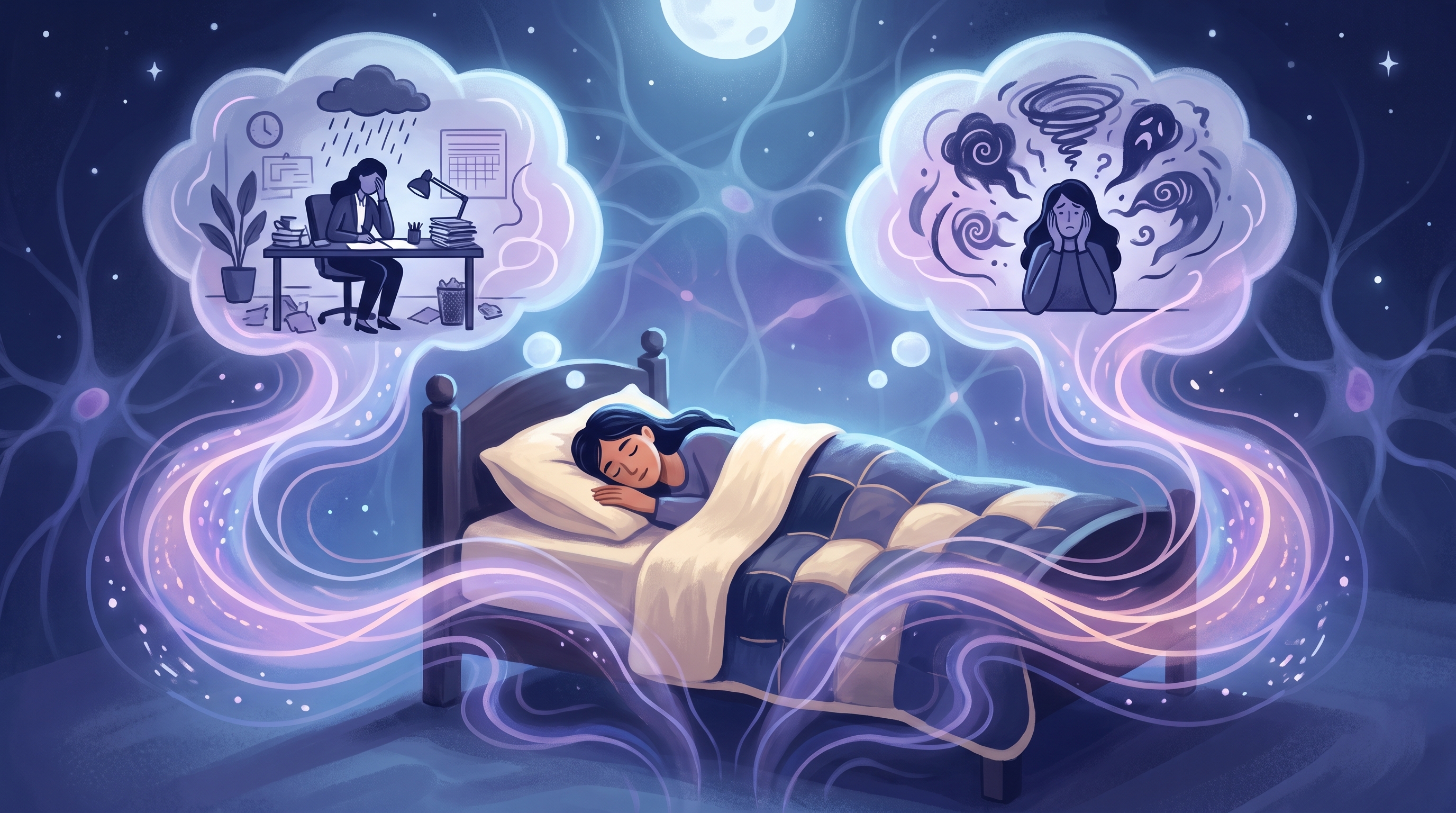
You’re lying in bed, replaying a conversation from three days ago. You rehearse what you should have said. You imagine tomorrow’s meeting going badly. None of it is happening right now — but your heart rate climbs, your muscles tense, and sleep moves further away with every thought.
This isn’t a character flaw. It’s neuroscience. And understanding why your brain does this is the first step toward stopping it.
Your Brain Runs the Same Stress Program for Real and Imagined Threats
Researchers at CU Boulder and the Karolinska Institute in Stockholm have used fMRI brain imaging to study what happens when people vividly imagine stressful scenarios versus experiencing real ones. The findings are striking: the brain’s stress circuitry activates in nearly identical patterns regardless of whether the threat is real or imagined.
When you picture your boss criticising you tomorrow, your hypothalamic-pituitary-adrenal (HPA) axis fires up and releases cortisol — the same cascade that would occur if the criticism were happening right now. Your amygdala, the brain’s threat detector, doesn’t have a “this is just a thought” filter. It treats vivid mental imagery as incoming sensory data and responds accordingly.
This means that lying in bed worrying about something that might happen produces the same physiological stress response as the thing actually happening. Your body prepares for a fight that never comes — elevated cortisol, increased heart rate, suppressed melatonin production — all triggered by thoughts alone.
Why This Matters More at Night
During the day, your brain has competing demands. You’re walking, talking, working, eating — real sensory input constantly pulls your attention away from imagined scenarios. But at night, in the dark and quiet, your brain has no competition. The mental theatre becomes the only show in town.
This is why worry spirals feel more intense at bedtime. With fewer external stimuli to anchor your attention, your imagination runs with higher fidelity. The scenarios feel more vivid, the emotional responses more powerful, and the cortisol keeps flowing.
Research on pre-sleep cognitive arousal confirms this pattern: the harder you try to control anxious thoughts, the more your brain fixates on them. It’s a feedback loop — stress about not sleeping becomes its own stressor, producing more cortisol, pushing sleep further away.
The Cortisol-Sleep Collision
Cortisol and melatonin exist in opposition. As evening approaches, cortisol should naturally decline while melatonin rises, preparing your body for sleep. But when your brain is generating stress responses to imagined events, cortisol stays elevated and actively suppresses melatonin production.
This isn’t just about feeling stressed. It’s a biochemical collision that delays sleep onset and reduces sleep quality even after you finally drift off. Elevated evening cortisol is associated with lighter sleep, more frequent awakenings, and less time in the deep slow-wave stages your body needs for physical restoration.
If you’ve ever had a night where you eventually fell asleep but woke up feeling unrested, this mechanism may be why. Your body was running its stress programme all night, powered by thoughts you weren’t even conscious of anymore.
For a deeper look at how cortisol disrupts sleep architecture, see our complete guide to lowering cortisol naturally.
Breaking the Loop: What Actually Works
Since the problem is that your brain can’t distinguish imagined stress from real stress, the solution isn’t to “think positive” — it’s to interrupt the stress response at the physiological level. Here are techniques backed by evidence:
Physiological Sigh
The physiological sigh — a double inhale through the nose followed by an extended exhale — is one of the fastest ways to activate the parasympathetic nervous system. Stanford research shows it reduces cortisol more effectively than mindfulness meditation in real-time. It works because it directly stimulates the vagus nerve, sending a “safe” signal that overrides the HPA axis.
Cognitive Reappraisal
Rather than fighting anxious thoughts, cognitive reappraisal involves reframing them with specific self-talk. fMRI studies show this activates the ventrolateral prefrontal cortex, which dampens amygdala activity. Sentences like “This feeling will pass — it always does” aren’t positive thinking platitudes. They’re instructions that redirect neural activity away from the threat-detection circuit.
The Cognitive Shuffle
The cognitive shuffle technique works by occupying the working memory that worry needs to sustain itself. By picturing random, unrelated images (a balloon, a barn, a lemon), you deny the brain the cognitive resources required to maintain a coherent worry narrative. A trial of over 150 people found it significantly eased sleep onset.
Sound as a Pattern Interrupt
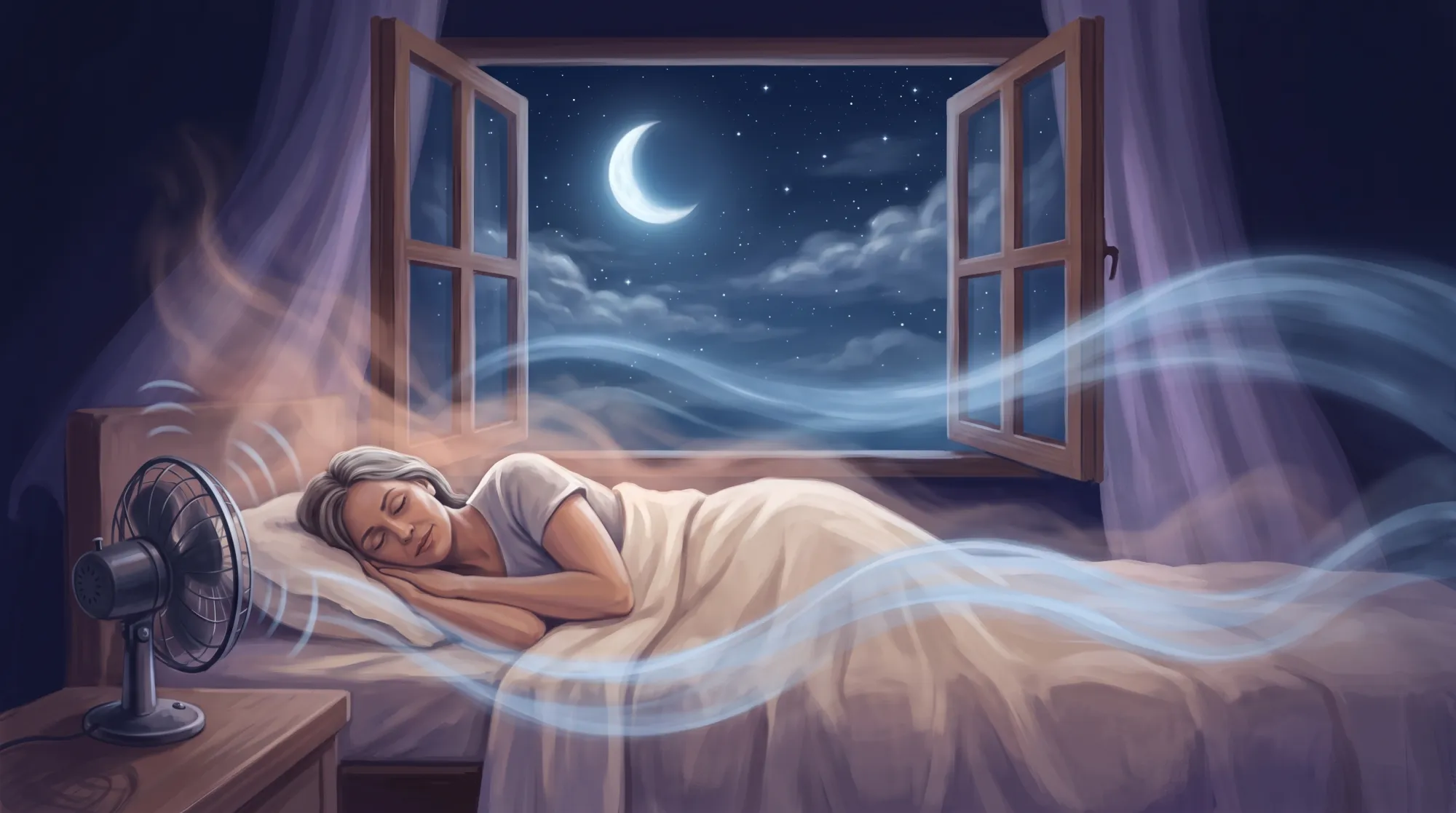
External auditory input gives your brain something real to process, pulling attention away from imagined scenarios. This is one reason people find it easier to fall asleep with background sound — it provides competing sensory data that the brain prioritises over internal thought loops.
Brown noise, rain sounds, or nature soundscapes work particularly well because they’re complex enough to engage attention but predictable enough not to stimulate alertness. Apps like Sleep Relax let you build a custom soundscape — mixing rain with brown noise, for example — that creates a consistent auditory environment your brain can anchor to instead of your thoughts.
Want to try these sounds tonight? Sleep Relax has 100+ calming sounds with a built-in sleep timer.
Try Sleep Relax FreeWhen Worry Becomes a Nightly Pattern
If you find yourself caught in imagined-stress spirals most nights, it’s worth noting that this pattern can become self-reinforcing. Your brain learns to associate the bed with the stress response, making it harder to relax there over time.
A few structural changes can help break this association:
- Write worries down before bed. Externalising thoughts onto paper reduces the brain’s need to “hold” them in working memory. A study from Baylor University found that writing a specific to-do list for the next day helped people fall asleep significantly faster than journaling about completed tasks.
- Set a “worry window” earlier in the evening. Give yourself 15 minutes after dinner to actively think through concerns. This satisfies the brain’s need to process threats without doing it at bedtime.
- Keep your bedroom for sleep. If you’re lying awake for more than 20 minutes, get up and do something calming in another room. This prevents the bed-stress association from strengthening.
If anxious thoughts persistently interfere with your sleep despite these strategies, consider speaking with a healthcare provider. Cognitive behavioural therapy for insomnia (CBT-I) is highly effective and specifically targets the thought patterns that fuel sleep-onset anxiety.
The Key Insight
Your brain’s inability to distinguish real threats from imagined ones is a feature, not a bug — it evolved to keep you safe by preparing for danger before it arrives. But in a modern world where the “dangers” are emails, deadlines, and social awkwardness, this ancient system works against you at bedtime.
The good news: you don’t need to stop your brain from generating anxious thoughts. You just need to interrupt the stress response before it derails your night. A physiological sigh, a cognitive reframe, or a calming soundscape can be enough to remind your nervous system that right now, in this moment, you’re safe.
And that’s all your brain needs to let you sleep.
This article is for informational purposes only and is not a substitute for professional medical advice. If you have persistent sleep issues, please consult a healthcare provider.
Sleep better in 14 nights
A gentle 14-night sleep plan based on CBT-I principles, a one-tap 3am button and calming sleep sounds. Nights 1–3 are free.
Download Sleep Relax