Melatonin Isn't a Sleeping Pill: What Actually Helps You Fall Asleep
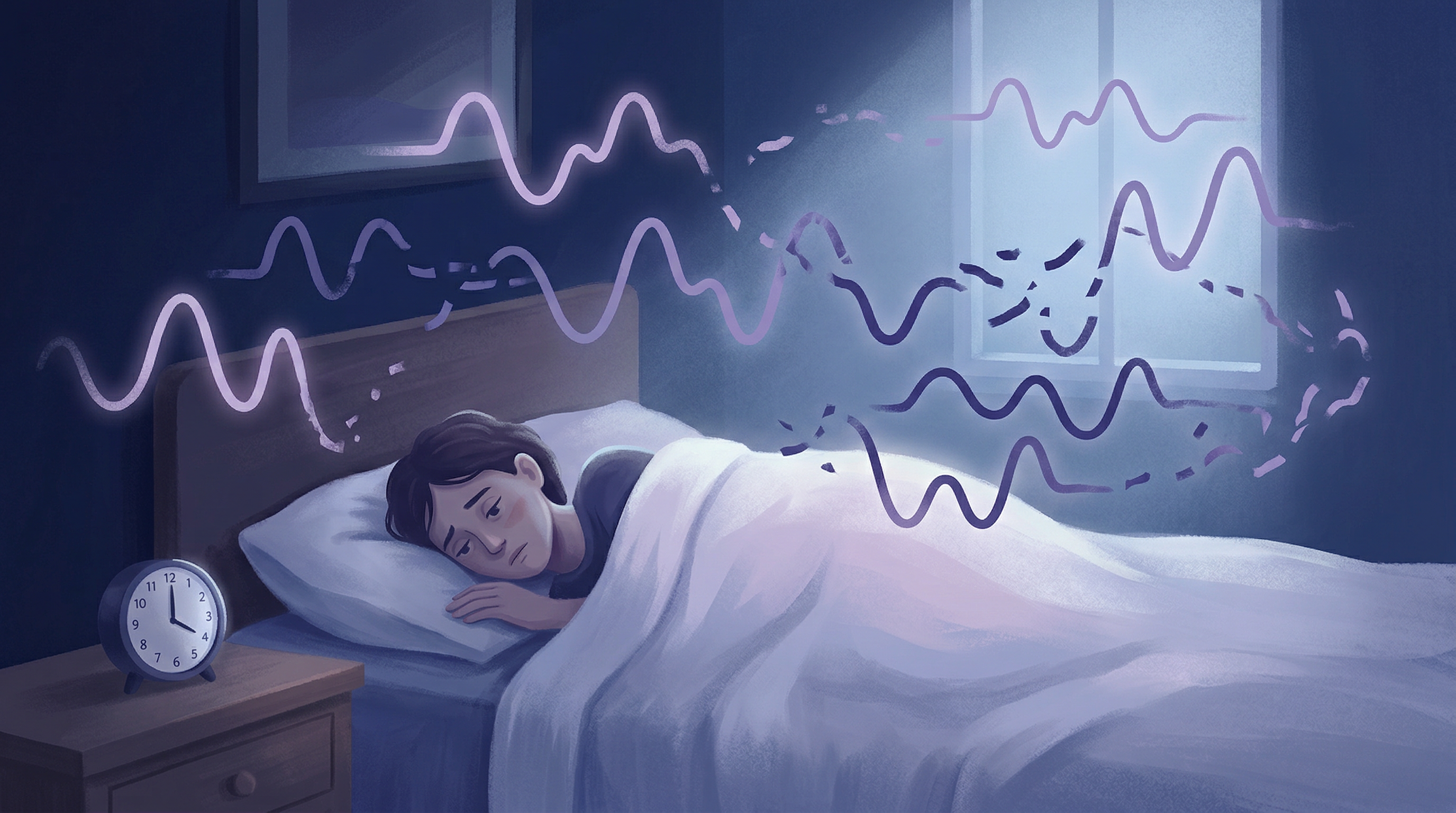
You’re lying in bed at midnight, staring at the ceiling. You took a melatonin gummy twenty minutes ago. It was supposed to knock you out. Instead, you’re wide awake, wondering if you should take another one.
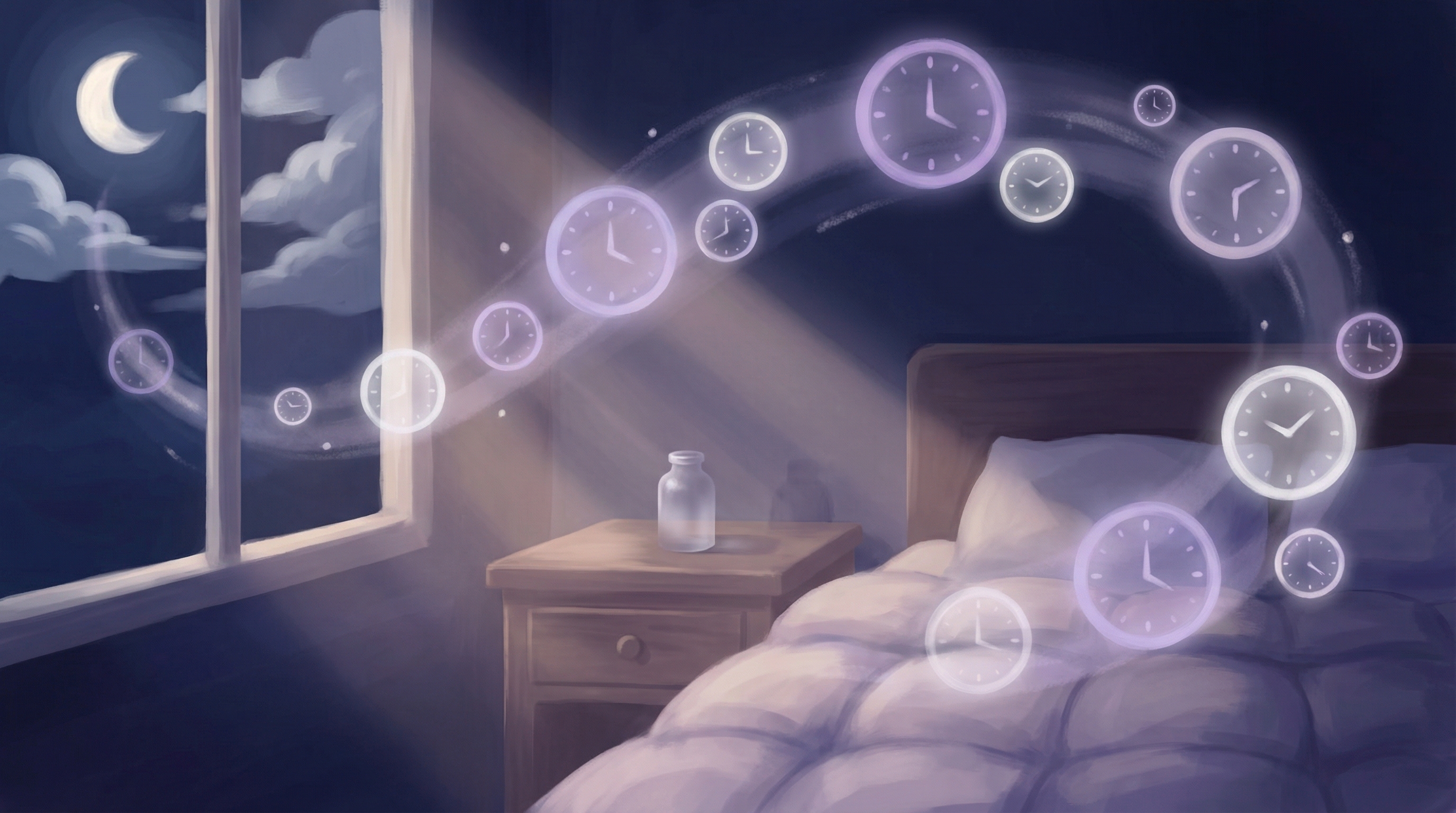
Here’s the thing most people never learn: melatonin isn’t a sleeping pill. It doesn’t make you sleep. It’s more like a clock - a signal that tells your body “hey, it’s nighttime now.” And if you’re using it wrong (which most people are), it’s doing almost nothing for you.
Let’s talk about what melatonin actually does, why the way most people use it doesn’t work, and what genuinely helps you fall asleep faster.
What Melatonin Actually Does
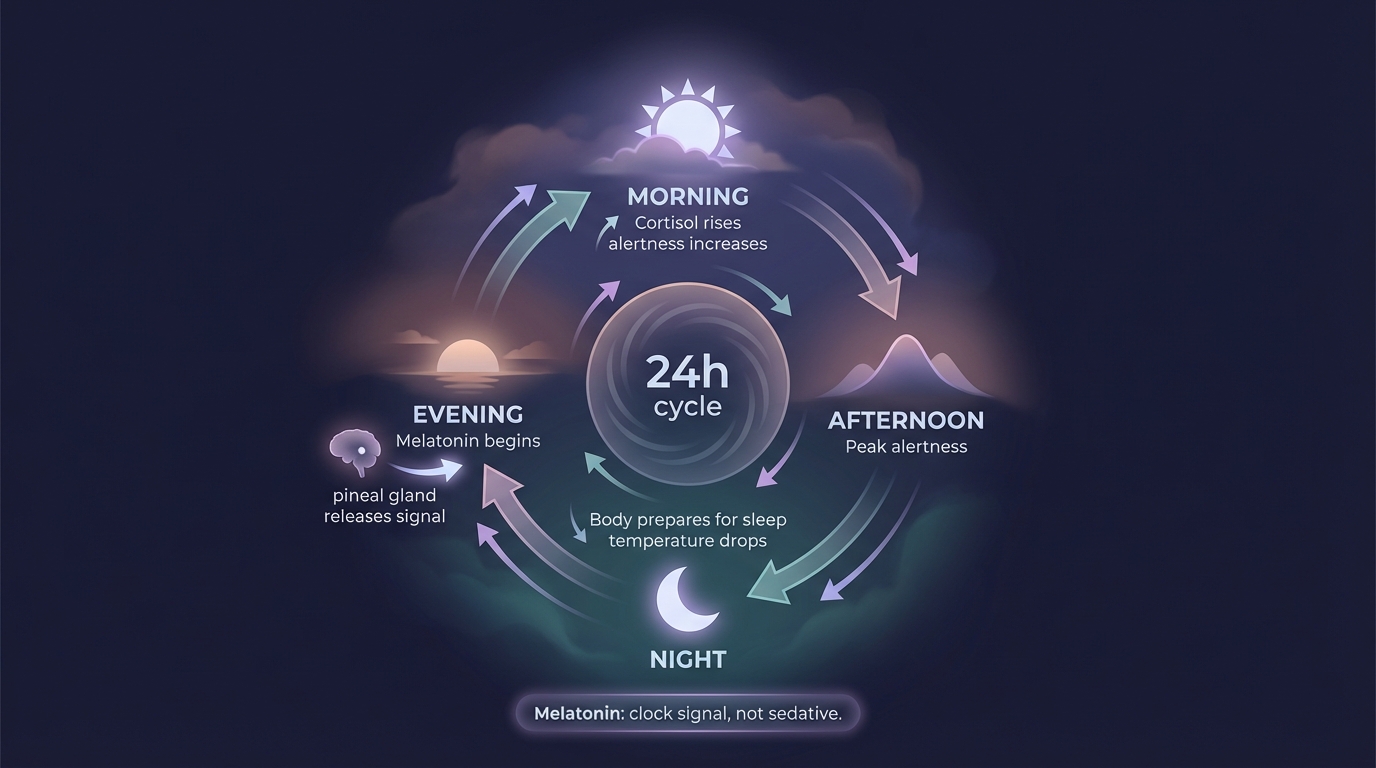
Your brain produces melatonin naturally every evening. As daylight fades, your pineal gland starts releasing it, essentially announcing to your entire body: night has arrived.
That’s it. That’s the job. Melatonin is a messenger, not a sedative.
Sleep researcher Matt Walker puts it perfectly: melatonin is your brain’s “clock whisperer.” It synchronises your internal clock with the outside world. It tells your body when to start preparing for sleep - lowering core temperature, slowing heart rate, shifting into rest mode.
But here’s the crucial part: melatonin doesn’t generate sleep itself. That’s like saying a dinner bell makes you hungry. The bell is a signal. The hunger comes from somewhere else entirely.
Why Most People Use Melatonin Wrong
The Dose Problem
Walk into any pharmacy and you’ll find melatonin supplements in doses of 3mg, 5mg, even 10mg. Your brain naturally produces about 0.1 to 0.3mg per night.
That means a standard 5mg supplement is roughly 20 to 50 times what your body makes on its own.
Research from Italy analysing 1,700 observations found that the sleep-promoting effect of melatonin peaks at around 4mg. Going higher doesn’t improve sleep - it just increases the chance of side effects like grogginess, headaches, and weirdly vivid dreams.
If you do use melatonin, less is genuinely more. Start at 0.5 to 1mg. You might be surprised.
The Timing Problem
Most people pop a melatonin right before bed. That’s too late.
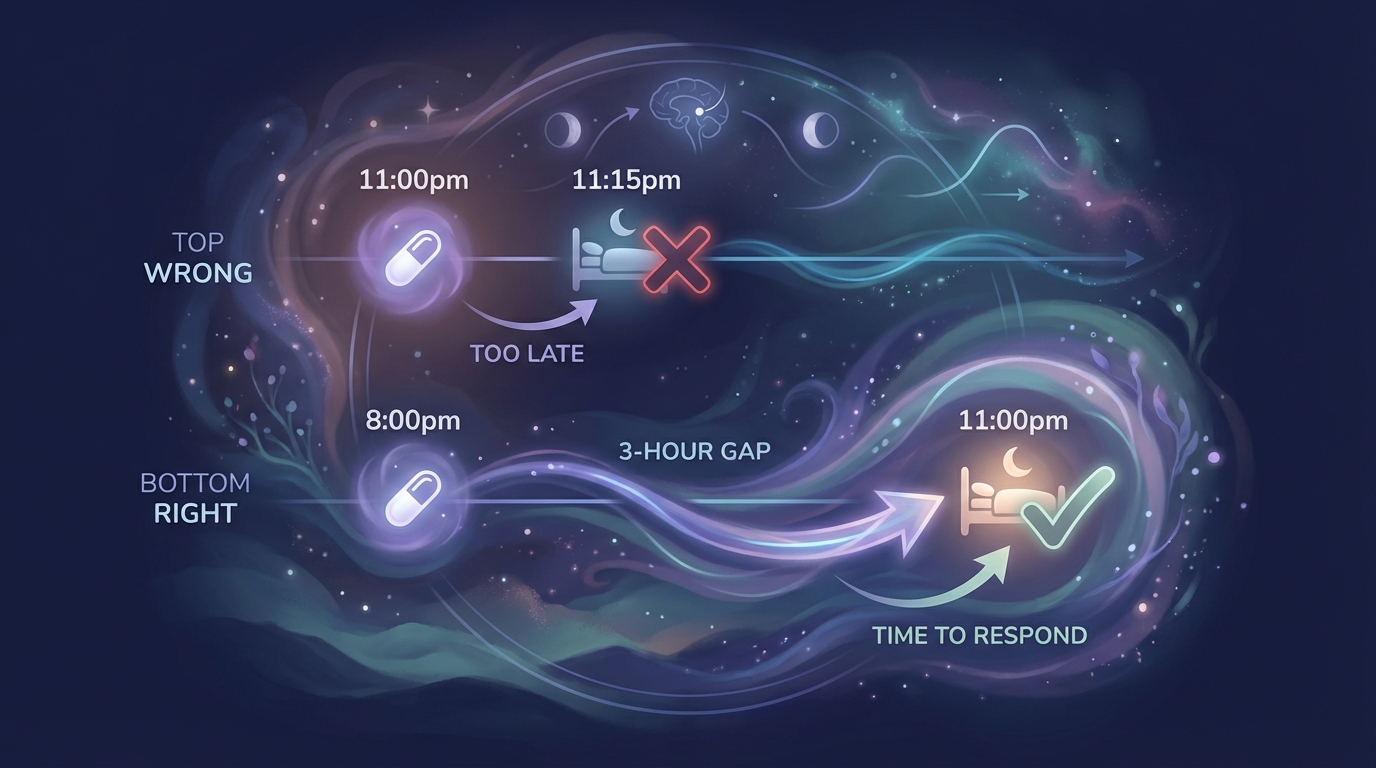
The same Italian research found that melatonin is far more effective when taken about 3 hours before your intended bedtime - not 30 minutes before. Why? Because your body needs time to receive and act on the “it’s nighttime” signal. Taking it at 11pm when you want to sleep at 11:15pm is like showing up to a meeting after everyone’s already left.
If you usually go to bed at 11pm, taking melatonin at 8pm gives your circadian system time to actually respond.
The Expectation Problem
Here’s where it gets frustrating. If you’re lying in bed anxious about tomorrow, replaying stressful conversations, or doom-scrolling with the phone two inches from your face - melatonin can’t fix that. No supplement can.
Melatonin works best for specific timing issues: jet lag, shift work, or when your internal clock has drifted out of sync with your schedule. For chronic insomnia driven by stress, anxiety, or poor sleep habits, cognitive behavioural therapy for insomnia (CBT-I) remains the gold standard. Not a pill.
Quick Reality Check: Is Melatonin Even the Right Tool?
Before you buy another bottle, ask which problem you’re actually trying to solve:
- Your schedule is off: jet lag, shift work, or a very late body clock. Melatonin may help.
- Your mind is racing: stress, anxiety, or bedtime overthinking. Melatonin is usually not the main fix.
- Your environment is the problem: bright lights, a hot room, noise, or phone use in bed. Start there first.
- You keep waking in the night: melatonin may not do much unless the root cause is circadian timing.
This is the big distinction most marketing leaves out. Melatonin can be useful, but it’s not a universal answer to “I can’t sleep.”
What Actually Helps You Fall Asleep
If melatonin is just a clock signal, what actually generates sleep? Several things, all of which you can influence starting tonight.
1. Light Exposure (Free, Most Powerful)
Light is the number one regulator of your sleep-wake cycle, and it costs nothing.
Morning: Get bright light within 30 minutes of waking. Even 10 minutes outside on a cloudy day gives your brain the signal that daytime has started. This sets the entire cascade that leads to natural melatonin release 14-16 hours later.
Evening: Dim your lights 2 hours before bed. Your brain can’t start producing melatonin if it thinks the sun is still up. Those bright bathroom lights at 10pm? They’re pushing your melatonin release later.
Night: Screens in bed suppress melatonin for up to 90 minutes after you put the phone down. That midnight scroll isn’t just eating into your sleep time - it’s chemically delaying your ability to fall asleep.
2. Temperature (Simple, Surprisingly Effective)
Your body needs to drop its core temperature by about 1 degree Celsius to fall asleep. This is why a room that’s too warm feels impossible to sleep in.
The ideal bedroom temperature is around 18°C (65°F). Most people keep their bedrooms closer to 22°C and wonder why they can’t stop tossing.
A warm bath 90 minutes before bed works beautifully - not because the warmth helps, but because the rapid cooling afterwards mimics the natural temperature drop that triggers sleepiness.
And yes, the socks trick is real. Wearing socks to bed dilates blood vessels in your feet, pulling heat away from your core. A Swiss study found that warm feet predicted sleep onset speed better than any other single factor.
3. Breathing Exercises (2 Minutes, Works Tonight)
This is where things get immediately actionable. Unlike light exposure (which takes days to recalibrate your rhythm) or temperature (which requires some setup), breathing exercises work in real-time.
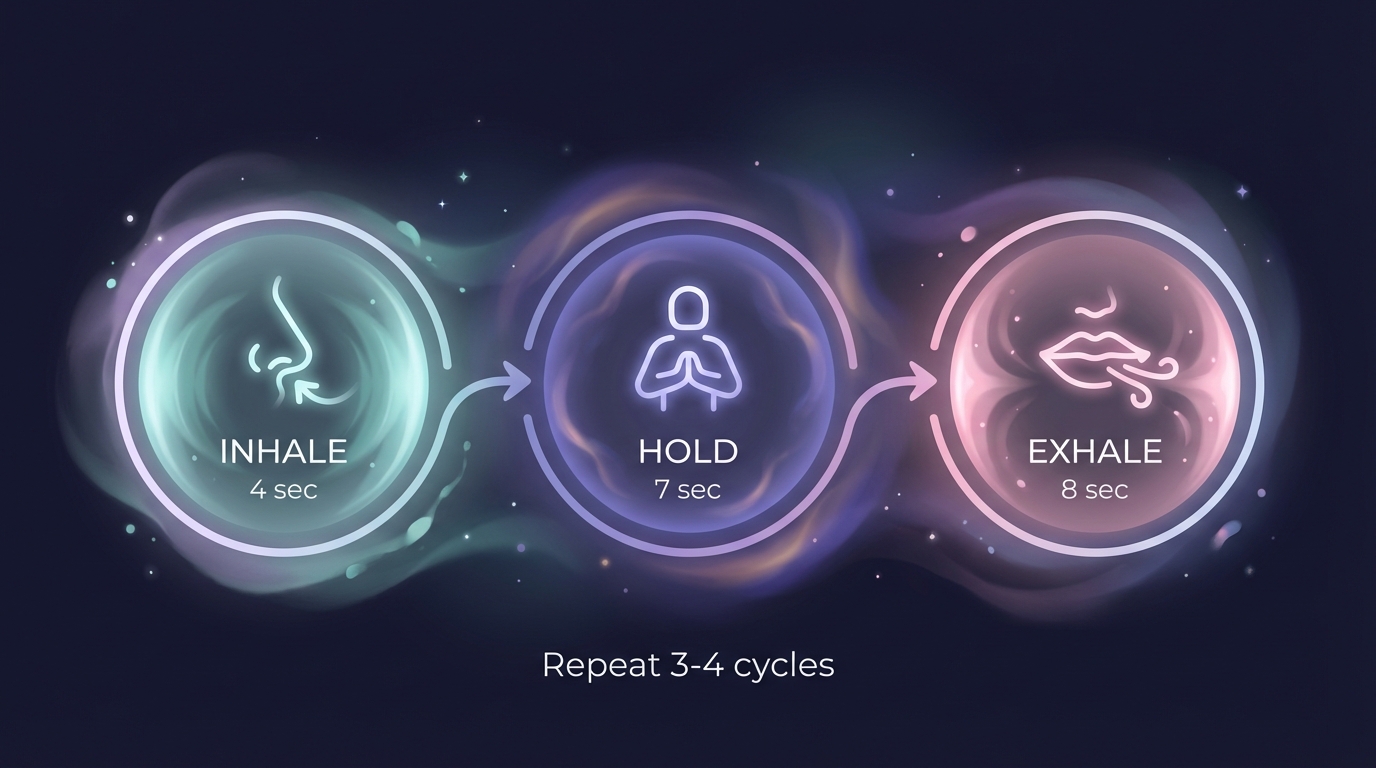
The 4-7-8 technique: Inhale through your nose for 4 seconds, hold for 7 seconds, exhale through your mouth for 8 seconds. Repeat 3-4 times. The extended exhale activates your parasympathetic nervous system - literally flipping the switch from “fight or flight” to “rest and digest.”
If you want the full walkthrough, use our 4-7-8 breathing guide.
Box breathing: Inhale 4 seconds, hold 4, exhale 4, hold 4. Repeat 4 times. Navy SEALs use this under combat stress, so it can probably handle your Sunday night anxiety.
Diaphragmatic breathing: Place one hand on your chest, one on your belly. Breathe so only your belly rises. If your chest moves, slow down. Chest breathing signals stress. Belly breathing signals safety. Your body follows the signal.
Want to try these sounds tonight? Sleep Relax has 100+ calming sounds with a built-in sleep timer.
Try Sleep Relax Free4. Cognitive Shuffling (Stops the Thought Spiral)
Racing thoughts at 2am are the enemy of sleep. Your brain gets stuck in a loop - anxiety about tomorrow, regret about yesterday, and that inexplicable memory from 2009.
Cognitive shuffling breaks the loop. Pick a random letter, think of words starting with it, and briefly visualise each one. Banana, bridge, butterfly, basket. Your verbal mind stays occupied without engaging emotional circuits. Sleep sneaks in while you’re busy picturing bananas.
5. The 20-Minute Rule (Counterintuitive, Essential)
If you’ve been lying in bed for 20 minutes and can’t sleep, get up. Go to another room. Do something boring - read a paper book, fold laundry, sit quietly. Come back to bed when you’re actually drowsy.
This sounds wrong. But lying in bed frustrated trains your brain that bed equals stress. Over time, just getting into bed can trigger anxiety. The 20-minute rule retrains the association: bed equals sleep, nothing else.
If outside noise makes that harder, pairing the reset with rain sounds or brown noise can make the transition back to bed smoother.
When Melatonin Actually Makes Sense
Melatonin isn’t useless - it’s just misunderstood. It genuinely helps in specific situations:
- Jet lag: Taking melatonin close to local bedtime significantly reduces disruption when travelling east across multiple time zones.
- Shift work: Daytime sleepers benefit from the “it’s nighttime” signal, though it can’t fully erase the biological cost of working against your clock.
- Delayed sleep phase: If your natural rhythm has drifted late (you can’t fall asleep until 2am and naturally wake at 10am), low-dose melatonin taken 3-5 hours before your target bedtime can gradually shift the clock earlier.
For everyone else, especially people whose insomnia is driven by stress, anxiety, or poor sleep habits, the techniques above will do far more than any supplement.
Quick FAQ
How long before bed should you take melatonin?
Usually earlier than people think. For circadian timing issues, many studies and clinicians suggest taking it a few hours before your target bedtime rather than right as your head hits the pillow.
Is more melatonin stronger?
Not necessarily. Higher doses can increase side effects without improving results. More is not automatically better.
What should you try instead of melatonin tonight?
If your problem is stress or overthinking, start with a breathing exercise, dimmer light, a cooler room, and less phone use. Those usually move the needle faster than a supplement.
The Bottom Line
Melatonin tells your body it’s night. It doesn’t make you sleep. Most people take too much, too late, and expect it to do something it was never designed to do.
The real sleep toolkit is simpler than you think: morning light, a cool room, and a breathing exercise you can do in bed tonight. No supplement required.
Your body already knows how to sleep. Sometimes it just needs you to stop getting in the way.
If you experience persistent difficulty sleeping, please consult a healthcare provider. Chronic insomnia may benefit from professional treatment such as CBT-I (cognitive behavioural therapy for insomnia).
Sleep better tonight
100+ calming sounds, breathing exercises, and a sleep timer — all in one app.
Download Sleep Relax