Menopause and Sleep: Why Your Nights Changed and What Actually Helps
You used to sleep through the night. Now you wake at 3am soaked, kick the duvet off, lie there wide awake, and pull it back on twenty minutes later when you’re cold. Or there are no sweats at all. You just wake up and stay awake, and nobody seems to have an explanation.
If you’re in your 40s or 50s, this is one of the most common things that happens to sleep, and one of the least talked about. Research reviews suggest that somewhere between 40% and 60% of women report sleep difficulties during the menopause transition. It isn’t in your head, and it isn’t simply “getting older”. There are specific mechanisms behind it, and knowing which one is keeping you up tells you which fix to try.
Why Menopause Disrupts Sleep: Three Separate Problems
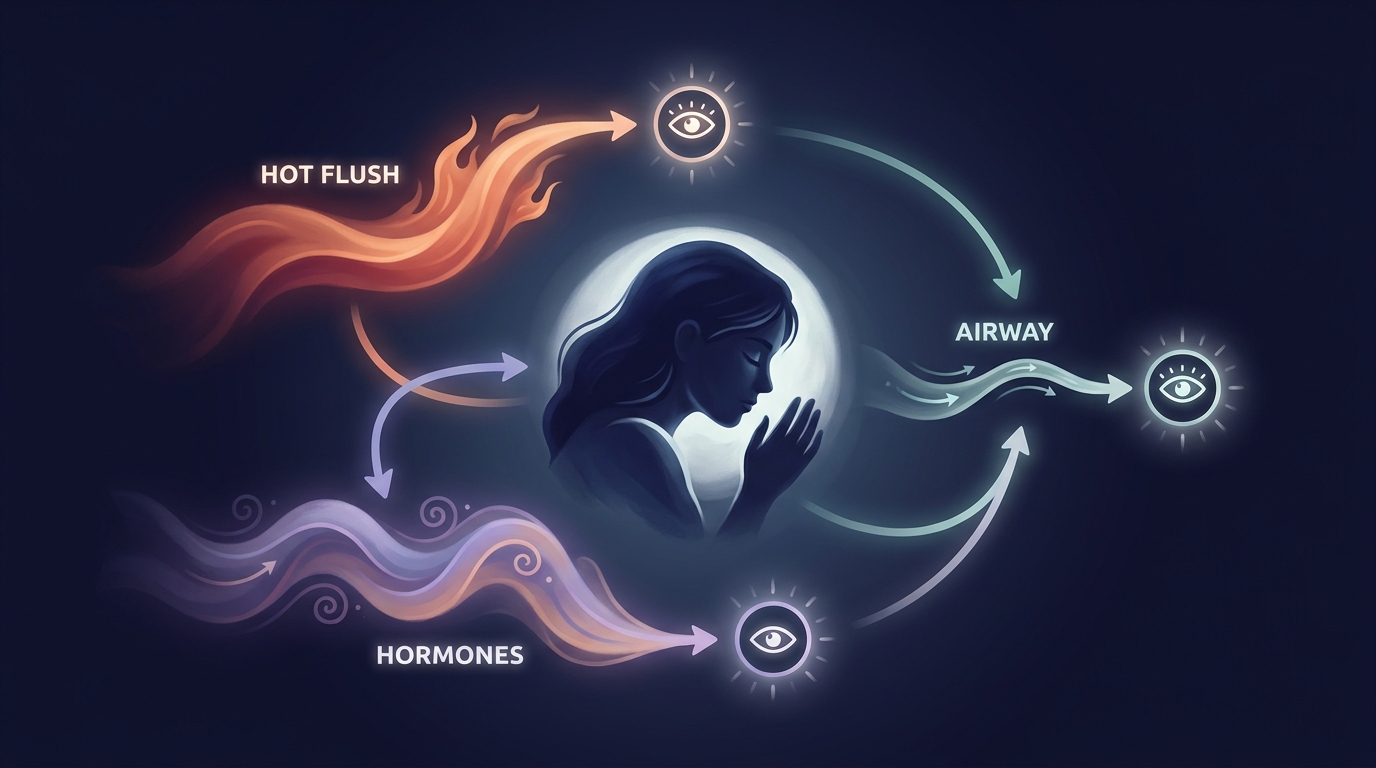
“Menopause insomnia” gets treated as one thing, but it’s usually a mix of three distinct problems. They respond to different solutions.
1. Hot flushes and night sweats
Vasomotor symptoms, the clinical name for hot flushes and night sweats, are the most visible cause. Falling oestrogen narrows the brain’s “thermoneutral zone”, the temperature range your body tolerates before it acts to cool down. A tiny rise in core temperature that you’d once have ignored now triggers a full cooling response: blood vessels dilate, you flush, you sweat.
Sleep studies have found that night-time hot flushes are closely tied to awakenings. The timing is still debated, though: sometimes the waking seems to begin just before the flush. Either way, the night gets broken into pieces.
2. The loss of progesterone’s calming effect
Progesterone does more than regulate your cycle. One of its breakdown products, allopregnanolone, acts on the same GABA receptors in the brain that calming medications target. It’s part of what makes sleep feel easy.
As progesterone falls during perimenopause, that built-in sedative effect fades. Many women notice they sleep more lightly and wake more easily, even with no hot flushes at all. Add the life stage many people are in at this point (teenagers, ageing parents, career pressure) and your stress system has less of a buffer. We cover the stress hormone side of this in our cortisol guide.
3. Airway changes nobody mentions
This is the one most often missed. Before menopause, women have a much lower risk of obstructive sleep apnoea than men. After menopause that gap narrows considerably. Hormonal changes affect muscle tone in the upper airway, and weight tends to shift towards the neck and middle.
Apnoea in women often doesn’t look like the textbook version. Instead of loud snoring, it can show up as insomnia, morning headaches, low mood and exhaustion that sleep doesn’t fix. If that sounds familiar, read our guide to the signs of sleep apnoea and raise it with your doctor. It’s very treatable, and no amount of sleep hygiene will fix it.
Which One Is Waking You? A Quick Self-Check
Before you try anything, spend a week noticing the pattern:
- You wake hot, sweaty or throwing covers off → mainly vasomotor. Start with temperature control and speak to your doctor about treatment.
- You wake for no obvious reason, often around 3–4am, mind switching on → mainly arousal and hormonal. The 3am waking pattern and the techniques below apply.
- You wake unrefreshed despite enough hours, with headaches, dry mouth, or a partner mentions pauses in breathing → get checked for sleep apnoea.
- You can’t fall asleep at all, and bed has started to feel like a battleground → conditioned insomnia may have set in on top of everything else. CBT-I (below) is built for exactly this.
Most people have more than one. That’s normal. It just means working on more than one front.
Want to try these sounds tonight? Sleep Relax has 100+ calming sounds with a built-in sleep timer.
Try Sleep Relax FreeWhat Actually Helps (Ranked by Evidence)
Talk to your doctor about treatment first
We’re a sleep sounds app, not a clinic, so we’ll keep this short. For moderate to severe hot flushes, hormone replacement therapy (HRT) is the most effective treatment available, and UK NICE guidance recommends discussing it. There are also non-hormonal prescription options for women who can’t or don’t want to take HRT, including newer drugs that target the brain’s temperature control centre directly. If night sweats are wrecking your sleep, this conversation is worth having before anything else on this list.
CBT for insomnia (CBT-I)
Cognitive behavioural therapy for insomnia is the recommended first-line treatment for chronic insomnia, and it has been tested specifically in women going through menopause. In the MsFLASH trials, a short course of telephone-delivered CBT-I produced meaningful improvements in insomnia severity that lasted months after treatment ended.
The core ideas:
- Only go to bed when sleepy, not just tired
- Get up if you’re awake for what feels like 20 minutes and do something quiet in dim light
- Keep a fixed wake time, even after a bad night
- Stop trying to force sleep. Effort is the enemy of sleep
CBT-I is available through the NHS in many areas, including digital programmes.
Build a cooler bed
This won’t stop hot flushes, but it can raise the threshold at which they wake you:
- Keep the bedroom cool (around 16–18°C is a common recommendation)
- Layer bedding so you can remove one layer instead of the whole duvet
- Choose breathable cotton or linen, or moisture-wicking sleepwear
- Keep a glass of cold water and a spare top by the bed so you don’t have to fully wake up
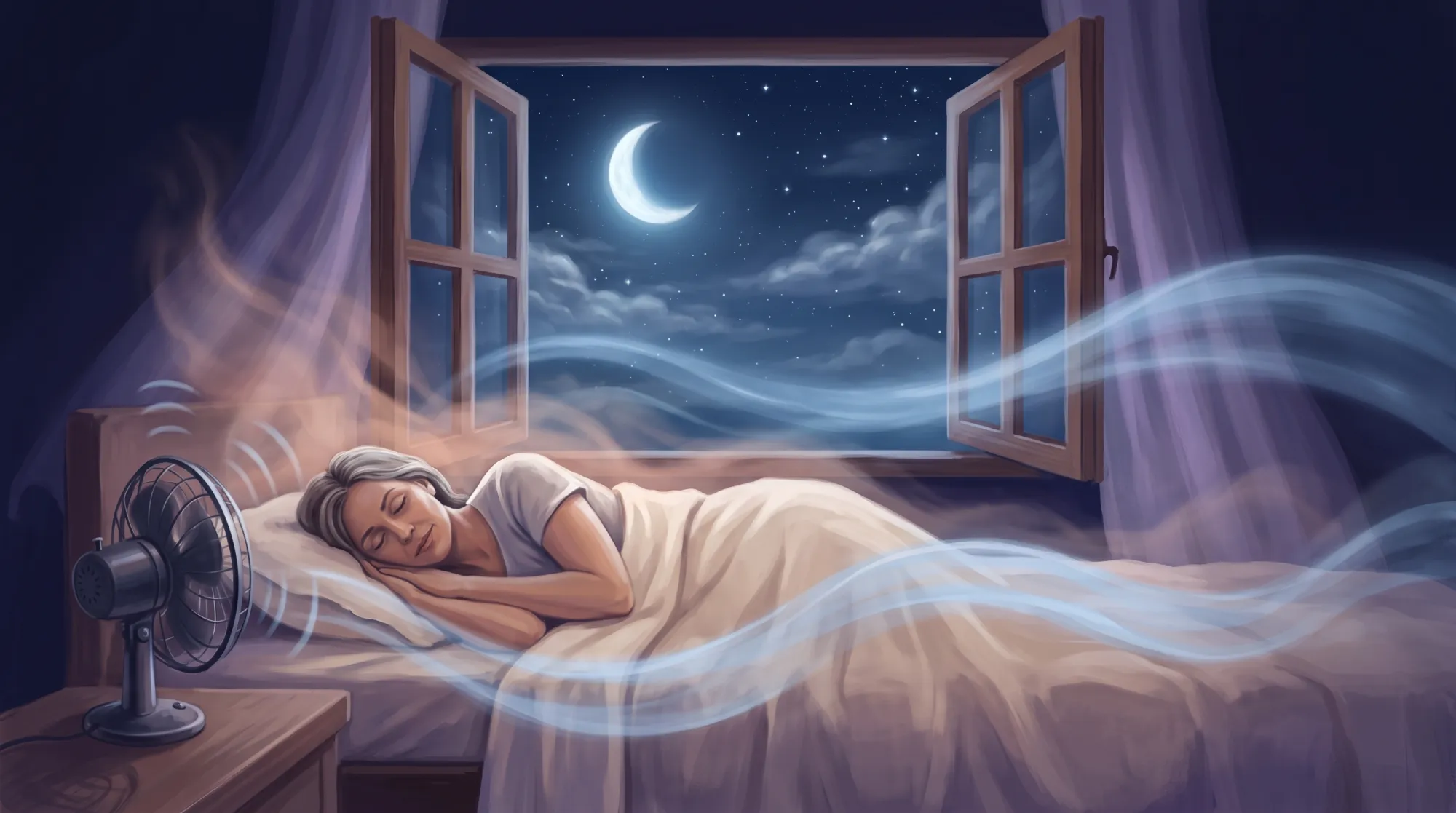
- A bedside fan does double duty: airflow plus steady background sound
Calm the 3am awakening
When you wake and your mind starts racing, the goal is to stop the arousal from escalating. Slow breathing, such as the 4-7-8 technique, gives your nervous system something rhythmic to follow.
One honest caveat: slow “paced breathing” has been studied as a treatment for the hot flushes themselves, and a large trial found it didn’t reduce them. So use breathing to settle yourself back down after you wake, not as a way to prevent the flush.
Clinical hypnosis is more interesting. Randomised trials by Gary Elkins and colleagues found it substantially reduced hot flush frequency and improved sleep, and it’s recognised in North American Menopause Society guidance. Guided relaxation audio isn’t the same as a clinical hypnosis programme, but the principle (focused attention plus imagery of coolness and calm) is close.
Use sound to cover the fragile moments
Menopausal sleep is lighter, so small noises that you once slept through now wake you. Steady background sound like pink or brown noise smooths out sudden changes in your environment. If you do wake, a familiar sound gives your brain a cue it associates with sleep. Sleep Relax lets you set a sound to play through the night, so it’s still there at 3am.
Watch the usual suspects
Alcohol and late caffeine both hit harder during menopause. Alcohol dilates blood vessels and can trigger flushes, and it fragments the second half of the night. Spicy food and hot drinks close to bedtime are common flush triggers for some women. Track yours rather than cutting everything.
The Bigger Picture
The menopause transition typically lasts several years, and for many women sleep does settle after it. But “wait it out” isn’t much of a plan when you’re exhausted today. Chronic poor sleep in midlife affects mood, weight, heart health and work, so it’s worth taking seriously now.
The most useful shift is to stop treating it as one vague problem. Work out which of the three drivers is waking you, treat that one directly, and give yourself a calmer, cooler environment to fall back asleep in.
FAQ
Can perimenopause cause insomnia before periods stop?
Yes. Sleep problems often begin in perimenopause, sometimes years before your final period, as progesterone and oestrogen start to fluctuate. Many women first notice lighter sleep and early waking in their early to mid 40s.
Why do I wake up at 3am during menopause?
Early-morning waking during menopause is usually a combination of lighter sleep from lower progesterone, small temperature rises that trigger arousal, and a stress system that’s more reactive. The second half of the night naturally has lighter sleep, which makes you more vulnerable to waking.
Does HRT help with menopause sleep problems?
HRT can improve sleep, especially when hot flushes and night sweats are the main cause of waking. It’s less clear-cut for insomnia without vasomotor symptoms, where CBT-I has stronger evidence. Discuss the benefits and risks for your situation with your doctor.
When should I see a doctor about menopause sleep problems?
See your GP if poor sleep lasts more than a few weeks and affects your day, if night sweats are frequent, or if you have signs of sleep apnoea such as loud snoring, breathing pauses, morning headaches or constant exhaustion.
This article is for informational purposes only and is not a substitute for professional medical advice. If you have persistent sleep issues or menopause symptoms, please consult a healthcare provider.
Sleep better tonight
100+ calming sounds, breathing exercises, and a sleep timer — all in one app.
Download Sleep Relax