Non-Restorative Sleep: Why You Wake Up Tired and What to Do About It
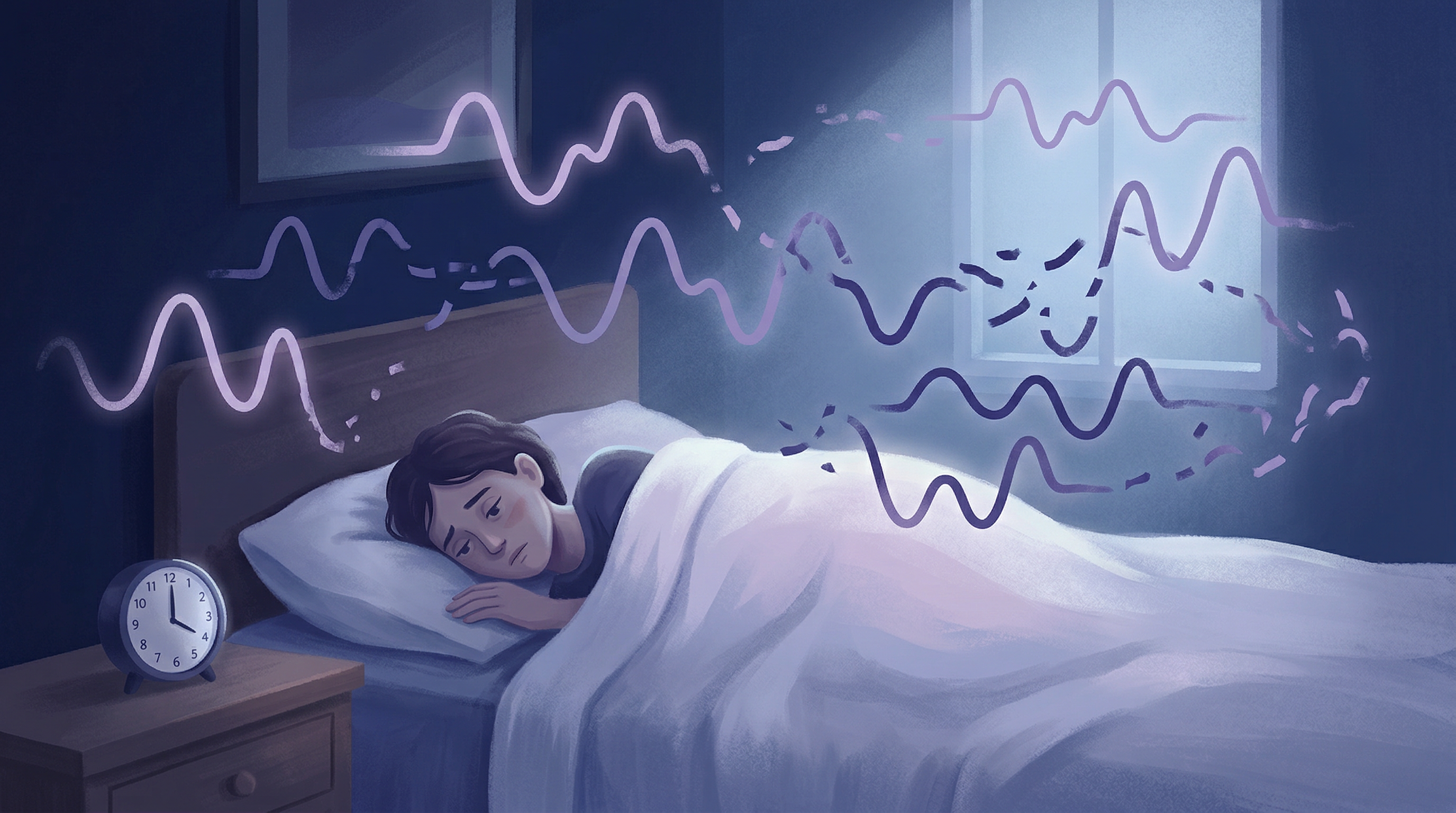
You went to bed at 10:30. You fell asleep within 20 minutes. You didn’t wake up during the night. Your alarm went off after a solid eight hours. And yet — you feel like you haven’t slept at all.
This isn’t laziness. It isn’t “just needing more coffee.” What you’re experiencing has a name: non-restorative sleep. And it’s far more common than most people realise.
What Is Non-Restorative Sleep?
Non-restorative sleep (NRS) is exactly what it sounds like — sleep that doesn’t restore you. You log enough hours, you might even sleep through the night, but you wake up feeling unrefreshed, foggy, and drained.
Sleep researcher Matthew Walker describes it as a problem of sleep quality rather than sleep quantity. You’re getting the hours but not the deep, restorative stages your brain and body need to repair, consolidate memories, and regulate emotions.
Think of it like eating a full meal of food with no nutritional value. Your stomach is full. Your body is still starving.
NRS isn’t classified as a sleep disorder on its own — it’s a symptom that can point to several underlying issues. But it’s incredibly common. A 2023 study in Sleep Medicine Reviews estimated that 10-15% of the general population experiences chronic non-restorative sleep, with even higher rates among people with chronic pain, depression, or high-stress jobs.
Why You’re Sleeping But Not Recovering
Several factors can steal the restorative value from your sleep, even when the total hours look fine on paper.
1. Shallow Sleep Architecture
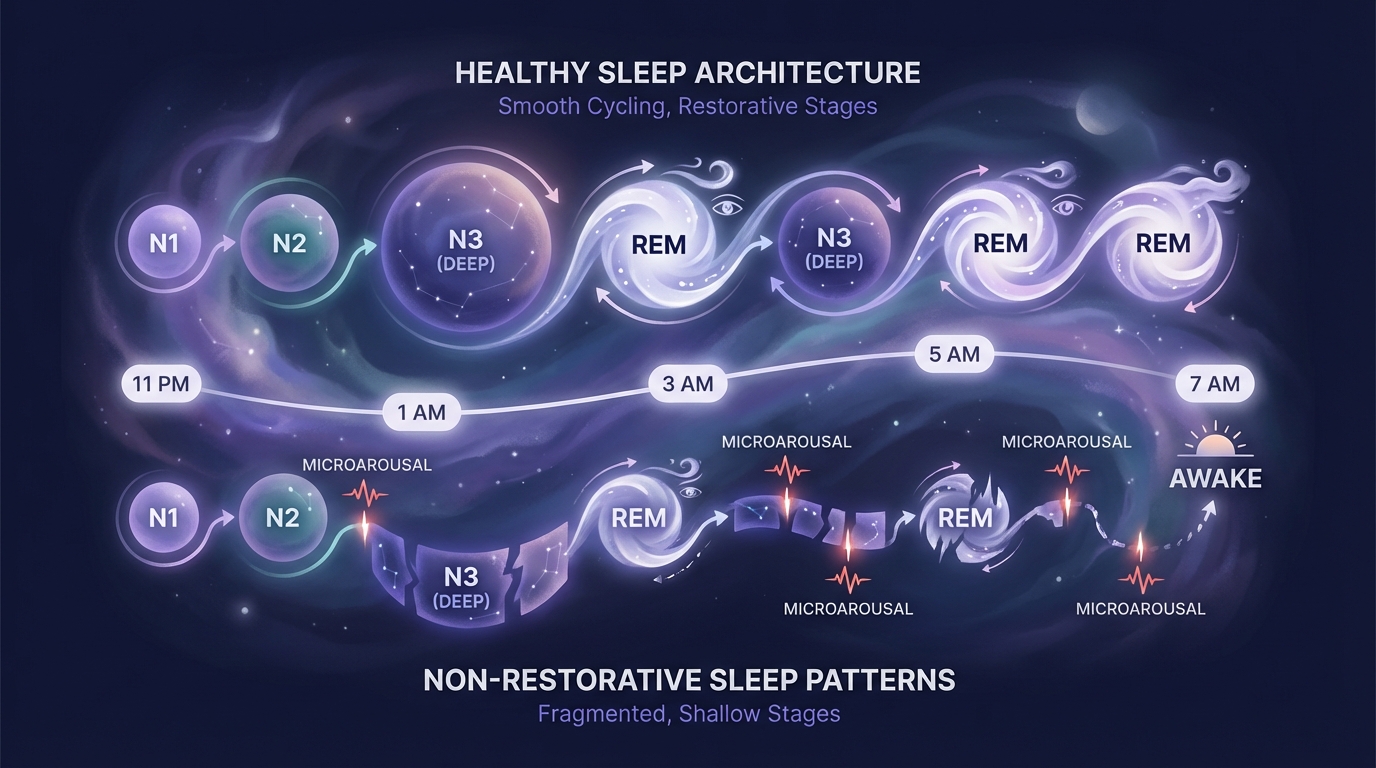
Sleep isn’t one uniform state. You cycle through light sleep (N1, N2), deep sleep (N3), and REM sleep roughly every 90 minutes. Each stage does different work:
- Deep sleep (N3): Physical repair, immune function, memory consolidation
- REM sleep: Emotional processing, creativity, learning
Non-restorative sleep often means you’re spending too much time in light sleep stages and not enough in deep sleep and REM. You’re technically asleep, but your brain never gets to do its maintenance work.
Common culprits:
- Alcohol within 3 hours of bedtime — it sedates you into sleep but fragments REM and suppresses deep sleep
- Late-night screen use — blue light delays melatonin and can reduce deep sleep duration
- Sleeping in a warm room — your core temperature needs to drop 1-2°C for deep sleep; a warm room fights this
2. Microarousals
You might not remember waking up, but your brain might be briefly surfacing dozens of times per night. These microarousals — lasting just seconds — don’t fully wake you but they pull you out of deep sleep.
Common triggers:
- A partner’s movement or snoring
- Street noise, early-morning birds, or building sounds
- Mild sleep apnoea (more common than most people think — it doesn’t always involve dramatic snoring)
- Teeth grinding (bruxism)
You won’t see these on a fitness tracker. You won’t remember them. But they fragment your sleep architecture like someone pressing pause on a download every 30 seconds — the file eventually completes, but it took far longer and something got corrupted along the way.
3. Stress and Hyperarousal
Even when you manage to fall asleep, chronic stress can keep your nervous system partially activated throughout the night. Your cortisol levels stay elevated. Your heart rate doesn’t drop as low as it should. Your brain stays in a state of light vigilance.
This is your body doing what it’s designed to do — staying ready for threats. The problem is that your brain can’t tell the difference between an approaching predator and an approaching deadline.
4. Medical Factors
Sometimes non-restorative sleep signals something medical:
- Sleep apnoea — breathing interruptions that fragment sleep (affects an estimated 1 in 5 adults)
- Restless leg syndrome — involuntary leg movements disrupting deep sleep
- Chronic pain — prevents the body from fully relaxing into deeper stages
- Depression — alters sleep architecture, often reducing deep sleep and causing early-morning waking
- Thyroid dysfunction — both hyper- and hypothyroidism can affect sleep quality
If you’ve been waking up tired for weeks despite good sleep habits, it’s worth talking to a doctor. A sleep study can reveal issues that no amount of meditation or sound therapy will fix.
Want to try these sounds tonight? Sleep Relax has 100+ calming sounds with a built-in sleep timer.
Try Sleep Relax FreeWhat Actually Helps
Here’s the good news: if your non-restorative sleep isn’t caused by an underlying medical condition, there are concrete steps that can improve sleep quality — often within a week or two.
Cool Your Bedroom
This is the single highest-impact change most people can make. Research consistently shows that a room temperature of 16-18°C (60-65°F) is optimal for deep sleep. Your brain needs core body temperature to drop to initiate and maintain deep sleep stages.
If you can’t control room temperature, try lighter bedding, sleeping with a window cracked, or wearing lighter clothes to bed.
Create a Sound Environment
Environmental noise is one of the most underestimated disruptors of sleep quality. You might not wake up fully, but traffic, pipes, a partner’s breathing, or urban noise cause the microarousals that steal your deep sleep.
Consistent ambient sound — like brown noise or rain sounds — works by masking these disruptions. Instead of your brain detecting sudden changes in the sound environment (which triggers alertness), it hears a steady, non-threatening signal that promotes sustained deep sleep.
This isn’t about drowning out noise with louder noise. It’s about creating a stable acoustic environment where your brain can safely stay in deeper sleep stages.
Protect the Last 90 Minutes Before Bed
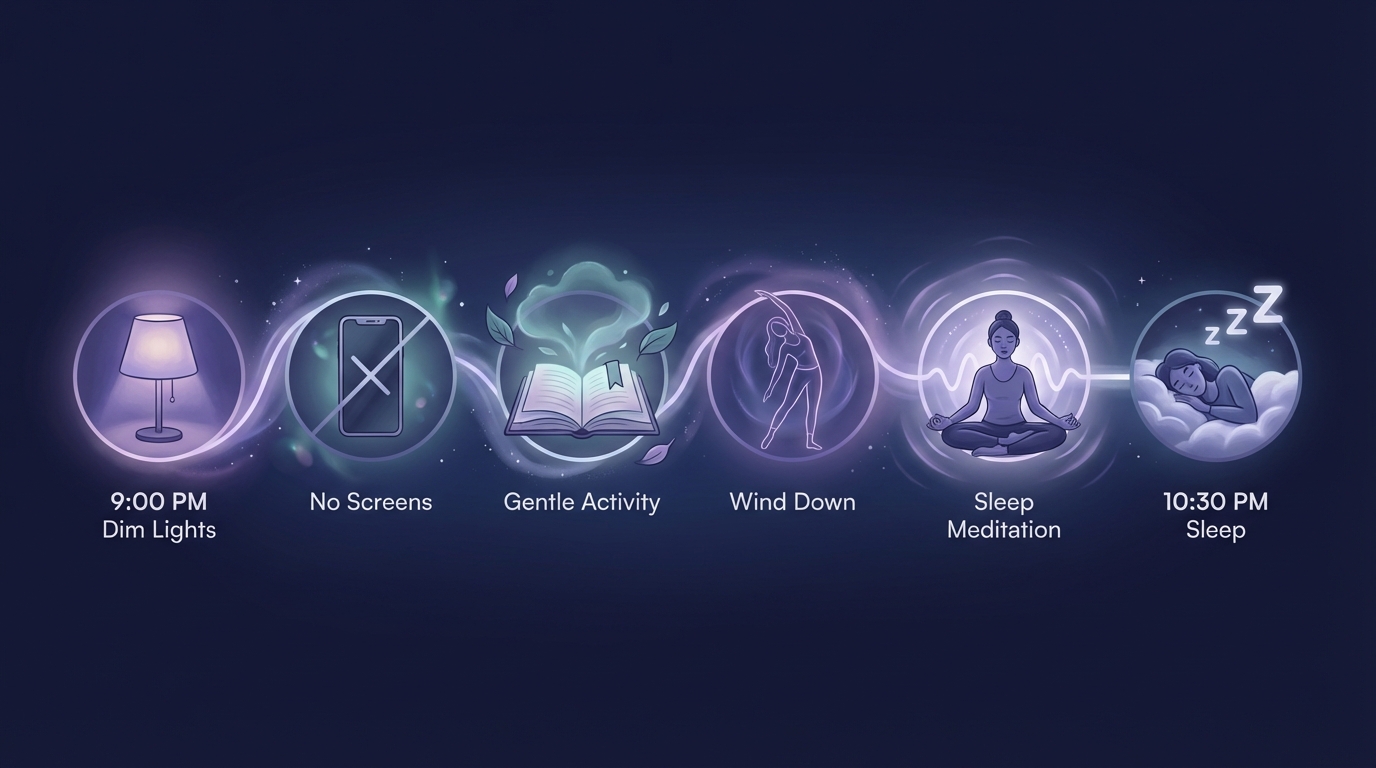
What you do in the final 90 minutes before sleep has an outsized effect on sleep quality:
- Dim the lights. Bright light suppresses melatonin — the hormone that signals nighttime to your brain.
- Avoid screens or use warm-toned night mode. The content matters as much as the light — doomscrolling activates your stress response.
- Skip the nightcap. Alcohol is the single biggest thief of deep sleep. Even one drink within 3 hours of bedtime measurably reduces deep sleep duration.
- Wind down deliberately. Reading, gentle stretching, or a sleep meditation signals to your nervous system that the day is done.
Fix Your Wake Time (Not Your Bedtime)
Counterintuitively, the most important time to control isn’t when you go to bed — it’s when you wake up. A consistent wake time anchors your circadian rhythm, which in turn makes your sleep stages more regular and predictable.
Set a fixed wake time seven days a week (yes, weekends too) and let your bedtime adjust naturally based on when you feel sleepy. Within two weeks, your body will start producing deeper, more structured sleep.
Address the Stress Layer
If hyperarousal is the root cause, no amount of temperature or sound optimisation will fully solve it. You need to actively downregulate your nervous system.
Effective approaches:
- Progressive muscle relaxation before bed — systematically tensing and releasing muscle groups
- The 4-7-8 breathing technique — activates the parasympathetic nervous system
- Journalling for 5 minutes — writing down worries externalises them so your brain stops looping
- Consistent meditation practice — even 10 minutes of sleep meditation can reduce cortisol levels
When to See a Doctor
Non-restorative sleep that persists for more than 2-3 weeks despite good sleep habits deserves professional attention. Specifically, see a doctor if:
- You snore loudly or your partner notices you stop breathing during sleep
- You wake with headaches regularly
- You experience excessive daytime sleepiness that affects your work or driving
- You have restless legs or involuntary movements at night
- Your fatigue is accompanied by unexplained weight changes, mood shifts, or pain
A sleep study (polysomnography) can measure your actual sleep stages and identify issues invisible to consumer sleep trackers.
The Bottom Line
Non-restorative sleep is your body telling you that something in your sleep environment, routine, or health needs attention. The hours on the clock aren’t the whole story — what matters is whether your brain is reaching and sustaining the deep, restorative stages that make sleep actually count.
Start with the highest-impact changes: cool your room, mask noise disruptions, protect your wind-down window, and fix your wake time. Give it two weeks. If you’re still waking up feeling like you haven’t slept, talk to your doctor.
You deserve to wake up feeling like you actually rested. That’s not a luxury — it’s how sleep is supposed to work.
Want to try these sounds tonight? Sleep Relax has 100+ calming sounds with a built-in sleep timer.
Try Sleep Relax FreeThis article is for informational purposes only and is not a substitute for professional medical advice. If you have persistent sleep issues, please consult a healthcare provider.
Sleep better tonight
100+ calming sounds, breathing exercises, and a sleep timer — all in one app.
Download Sleep Relax