Permanent Daylight Saving Time and Your Sleep: Why Scientists Say Standard Time Is Better
On July 15th, 2026, the US House of Representatives passed the Sunshine Protection Act — a bill that would lock the country into permanent Daylight Saving Time year-round. No more clock changes. An extra hour of evening light in winter. Sounds appealing, right?
Almost every sleep and circadian scientist in the world disagrees. The Society for Research on Biological Rhythms, the American Academy of Sleep Medicine, and researchers like Andrew Huberman have all issued the same message: permanent DST is the wrong solution. If you’re going to pick one time and stick with it, the science overwhelmingly favours standard time.
Here’s why this matters for your sleep — and your health.
Your Body Runs on Sunlight, Not Clocks
Your internal body clock — the circadian system — doesn’t care what number is on the clock on your wall. It cares about when light hits your eyes.
Your brain’s master clock sits in the suprachiasmatic nucleus (SCN), a cluster of roughly 20,000 neurons that synchronise every cell in your body to the 24-hour day. Without external light cues, this clock drifts backward by about 14 minutes each day. Morning sunlight is what resets it.
When morning light enters your eyes, it triggers a cascade: cortisol rises to wake you up, body temperature increases, and melatonin production is suppressed. This morning light anchor is the single most important signal your body receives for maintaining healthy sleep timing.
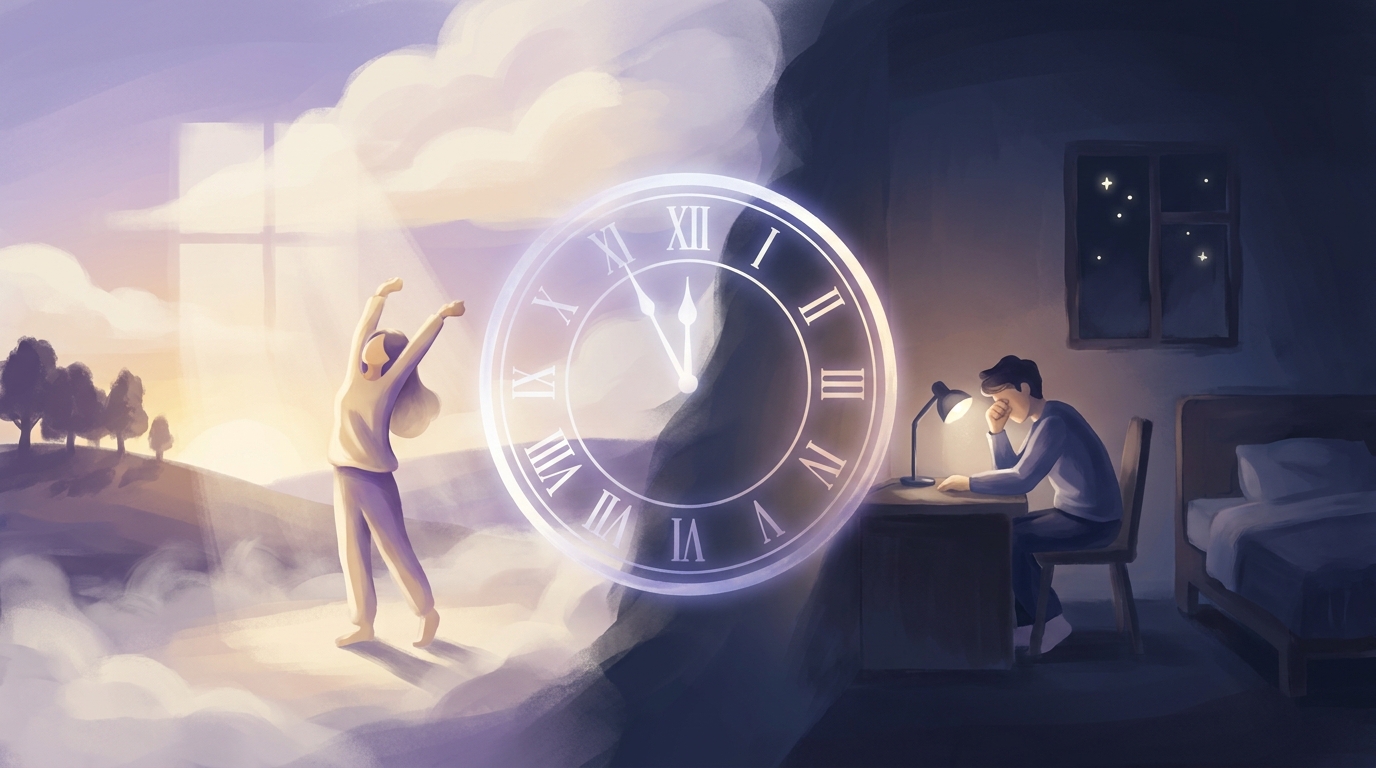
Permanent DST pushes sunrise later by roughly an hour during winter months. In northern cities like Seattle, Detroit, or Indianapolis, that means sunrise wouldn’t arrive until nearly 9:00 AM in December and January. For millions of people, the morning commute, school run, and first hours of work would happen entirely in darkness.
What Happens When You Lose Morning Light
The consequences aren’t just theoretical. Researchers have studied populations living on the western edges of time zones — where sunrise is naturally later — and found consistent patterns:
More depression. A study spanning over 26 years of data found that later sunrise times correlate with higher rates of depression. Morning light exposure boosts cortisol by roughly 50% and has been shown to halve the risk of depressive symptoms. Without it, the brain’s mood-regulating systems struggle.
Worse sleep. When your circadian clock can’t anchor properly to morning light, sleep onset shifts later. You stay up later because your body doesn’t recognise the evening as truly “evening” — melatonin release is delayed. But your alarm still goes off at the same time, so you accumulate chronic sleep debt.
Higher health risks. Research from the western edges of time zones shows increased rates of obesity, diabetes, heart disease, and certain cancers — all linked to chronic circadian misalignment. One patient in a clinical case study shifted their sleep onset by 20 minutes simply by opening a curtain at dawn. That’s how powerful morning light is.
The “More Evening Light” Trap
The appeal of permanent DST is intuitive: who doesn’t want an extra hour of daylight after work? But this framing misses how circadian biology actually works.
Evening light isn’t just a nice bonus — it actively disrupts sleep timing. Light exposure in the evening delays melatonin onset by up to 90 minutes. Under permanent DST, you’d get more evening light at the cost of less morning light. That’s the worst possible combination for your body clock: a weaker morning anchor and a stronger evening disruptor.
As Andrew Huberman put it: “The data clearly show locking to standard is best. For mental and physical health. That morning sunlight is key.”
The Society for Research on Biological Rhythms was even more direct: “Permanent DST is the wrong solution — it misaligns internal clocks from the natural light-dark cycle.”
What About the Clock Changes?
Here’s where the science and public sentiment actually agree on something: the biannual clock change itself is harmful. The spring forward transition is associated with a measurable spike in heart attacks, car accidents, and workplace injuries in the days that follow. Losing an hour of sleep abruptly is genuinely dangerous.
But the solution isn’t to lock into DST permanently. It’s to lock into standard time — the time zone that most closely aligns clock time with solar time. Under standard time, noon is roughly when the sun is highest. Your body clock and your social clock work together rather than fighting each other.
What This Means for Your Sleep Tonight
Regardless of what happens with the legislation, the underlying science applies to everyone:
Morning light is your most powerful sleep tool. Get outside within 30-60 minutes of waking, even on cloudy days. Outdoor light — even overcast — is 50 times brighter than typical indoor lighting. If sunrise is late in your region, a 10,000-lux light therapy lamp can partially substitute.
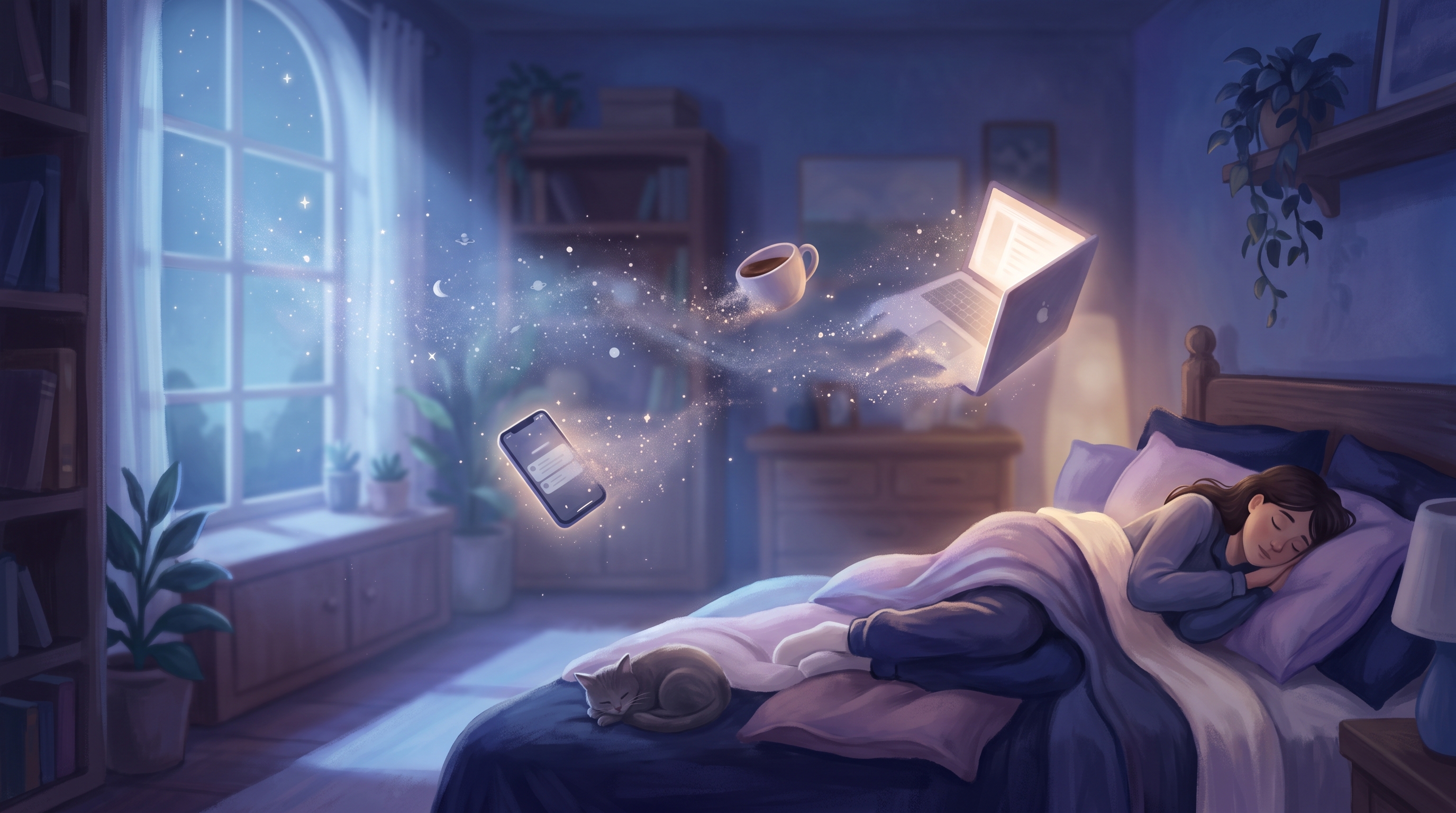
Evening light is your biggest sleep disruptor. Dim your environment 2-3 hours before bed. This isn’t just about screens — overhead lighting, bright bathrooms, and even well-lit kitchens all signal “daytime” to your circadian clock.
Your body has a “sky detector.” Specialised retinal cells called intrinsically photosensitive retinal ganglion cells (ipRGCs) don’t contribute to vision at all. Their sole job is reporting brightness and colour temperature to your brain’s clock. Even people who are clinically blind can maintain circadian rhythm through these cells. They respond most strongly to the blue-enriched light of morning sky.
Consistency matters more than duration. A regular wake time anchors your circadian rhythm far more effectively than sleeping longer on weekends. Research on irregular bedtimes and heart health confirms that consistency protects more than duration. If you’re waking up before your alarm, that’s your body’s anticipatory cortisol response working correctly — a sign of a well-calibrated clock.
Want to try these sounds tonight? Sleep Relax has 100+ calming sounds with a built-in sleep timer.
Try Sleep Relax FreeThe Bigger Picture
The permanent DST debate illustrates something important about sleep health: our modern environment is already pushing us away from our natural circadian alignment. We spend most of our time indoors under artificial light that’s too dim during the day and too bright at night. We’ve created a world where our body clocks are chronically confused.
Whether your country adopts permanent DST, permanent standard time, or continues switching twice a year, the principles remain the same. Your sleep quality depends on getting bright light in the morning and darkness in the evening. No legislation can change that biology.
If you find yourself lying awake at night, struggling with the gap between when your body wants to sleep and when your schedule demands it, the answer usually starts with the morning. Open the curtain. Step outside. Let your brain’s ancient light meter do what 20,000 neurons have been doing for millions of years — synchronise your internal world with the one outside.
FAQ
Is permanent daylight saving time bad for sleep?
Research strongly suggests it is. Permanent DST pushes sunrise later, depriving your brain of the morning light it needs to anchor your circadian rhythm. Populations living in conditions similar to permanent DST show higher rates of depression, obesity, and sleep disorders. Most sleep scientists recommend permanent standard time instead.
Why do sleep scientists prefer standard time over DST?
Standard time aligns clock time with solar time — noon is roughly when the sun is highest. This means your morning light exposure happens earlier, giving your circadian system a strong daily reset. Under DST, sunrise is delayed by about an hour, weakening this critical morning signal.
How can I protect my sleep from time changes?
Prioritise morning light exposure within 30-60 minutes of waking. Dim your evening environment 2-3 hours before bed. Maintain a consistent wake time — this anchors your circadian rhythm more than any other single habit. If you’re in a region with very late sunrise, consider a 10,000-lux light therapy lamp for the darkest months.
This article is for informational purposes only and is not a substitute for professional medical advice. If you have persistent sleep issues, please consult a healthcare provider.
Sleep better in 14 nights
A gentle 14-night sleep plan based on CBT-I principles, a one-tap 3am button and calming sleep sounds. Nights 1–3 are free.
Download Sleep Relax