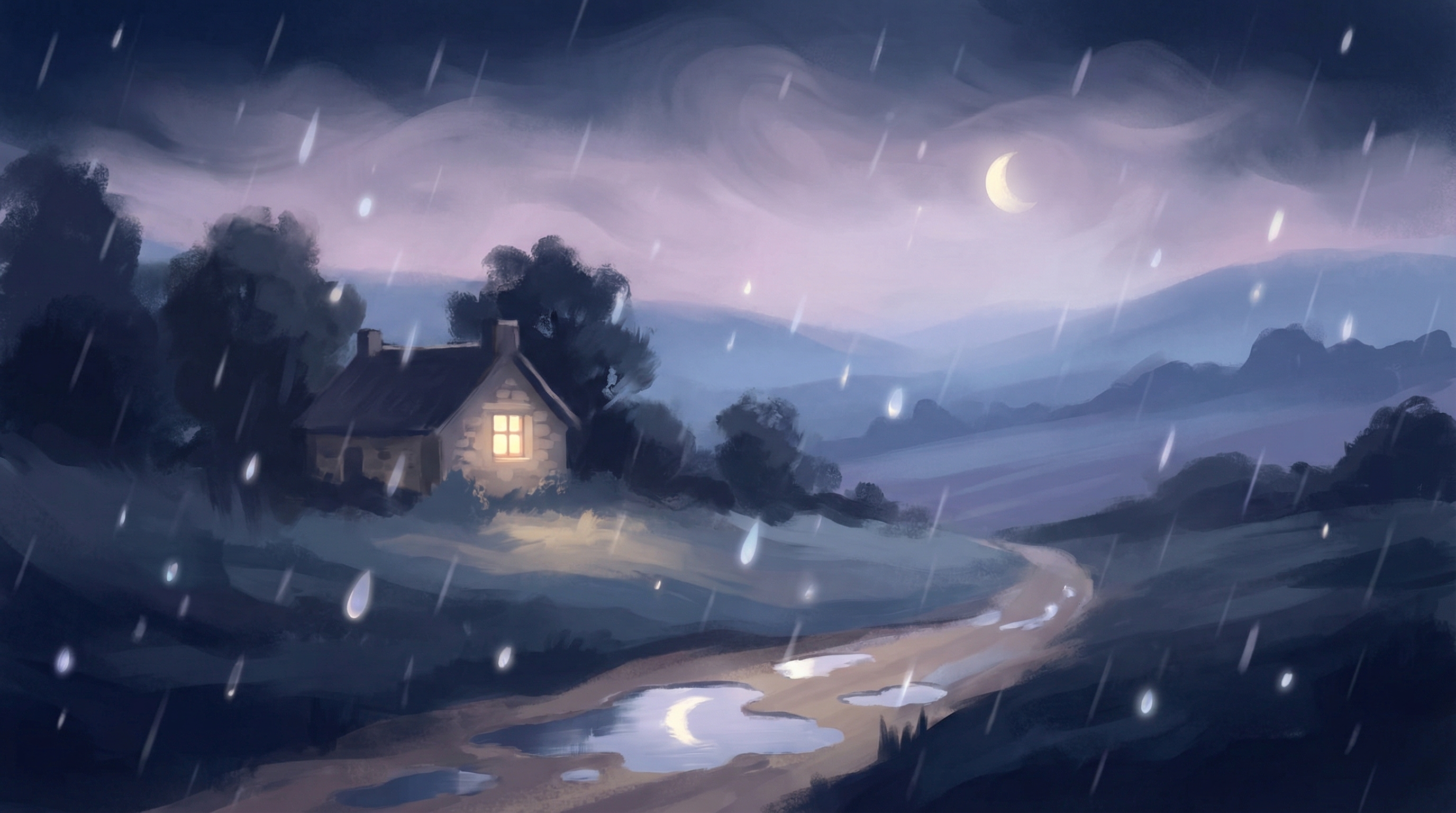
Rain Sounds for Sleeping: Why Your Brain Loves the Sound of Rain
There’s something primal about the sound of rain. You’re lying in bed, warm under the covers, and rain is tapping against the window. Within minutes, you feel your body soften and your thoughts quiet down. It happens almost automatically.
But why? What is it about rain that makes our brains switch off so readily? And can recorded rain sounds deliver the same effect?
The answers are yes — and the science behind it is fascinating.
Why Rain Sounds Calm Your Brain
The “Non-Threat” Signal
Our brains are wired to constantly scan for danger — it’s a survival mechanism that kept our ancestors alive. Sudden, sharp sounds trigger alertness. But the sound of rain is the opposite: it’s consistent, predictable, and natural.
Evolutionarily, rain signalled safety. When it was raining, predators were less active. Visibility was low, which meant threats were reduced. Your brain learned, over hundreds of thousands of years, that rain meant “you can relax.”
This is why rain sounds feel so instinctively calming — they tap into a deep evolutionary signal that your conscious mind can’t override.
Pink Noise Properties
Rain naturally produces sound that closely matches the profile of pink noise — energy that decreases at higher frequencies, creating a balanced, full-bodied sound. Research has shown that pink noise exposure during sleep can enhance slow-wave (deep) sleep activity.
A 2012 study published in the Journal of Theoretical Biology found that exposure to pink noise during sleep significantly improved sleep quality and memory retention. Rain doesn’t just sound soothing — its frequency profile actively promotes deeper sleep.
Masking Without Distracting
Rain sounds are remarkably effective at masking environmental noise because they contain a broad spectrum of frequencies. The patter of individual drops covers high-frequency sounds (voices, alerts), while the overall wash of rainfall covers mid and low frequencies (traffic, appliances).
Unlike pure noise generators, rain also has natural micro-variations — slight changes in intensity, the occasional heavier drop, distant thunder. These variations keep the sound interesting enough that your brain doesn’t tune it out, but predictable enough that it doesn’t alert you.
Types of Rain Sounds for Sleep
Not all rain is equal when it comes to sleep. Different types create different moods:
Light Drizzle
- Gentle, sparse drops
- Very quiet and subtle
- Best for: people who find heavier rain too stimulating, quiet environments
Steady Rainfall
- Consistent, moderate intensity
- The “classic” rain sound most people imagine
- Best for: general sleep use, most effective for sound masking
Heavy Downpour
- Intense, rushing water sound
- More like brown noise with texture
- Best for: very noisy environments, people who need strong masking
Rain on Different Surfaces
- Rain on a tin roof — sharper, more rhythmic, nostalgic
- Rain on leaves — softer, more organic, forest-like
- Rain on a window — intimate, close, comforting
- Rain on a tent — immersive, surrounding, popular with campers
Rain with Extras
- Rain + distant thunder — dramatic but soothing, popular combination
- Rain + fireplace crackling — cozy winter night feeling
- Rain + ocean waves — layered water sounds for maximum immersion
Sleep Relax features multiple types of rain sounds you can mix with thunder, fireplace, and other nature sounds. Create your perfect rainy night.
Try Sleep Relax FreeHow to Use Rain Sounds for Sleep
Volume
Keep rain sounds at a natural volume — loud enough to mask disturbances, quiet enough that it feels like actual rainfall outside your window. If you can’t carry on a whispered conversation over the sound, it’s probably too loud.
Duration
Two approaches work well:
- All night — set it and forget it. The consistency helps maintain sleep throughout the night.
- Sleep timer (30-60 minutes) — fall asleep with rain, sleep in silence. Better if you prefer quiet for deep sleep phases.
Speaker Placement
- Place speakers at a distance, not right next to your head
- If using a phone, face it away from you on a nightstand
- Consider a small speaker by the window for a more realistic effect
Rain Sounds and Children
Rain sounds are excellent for babies and young children too. The combination of consistent white/pink noise frequencies with natural variation makes rain one of the most effective sleep sounds for little ones.
For more on using sound to help babies sleep, including safety guidelines, see our guide to baby sleep sounds.
What If Rain Sounds Don’t Work for You?
Not everyone responds to rain. Some alternatives to try:
- Brown noise — if you like rain’s low frequencies but want something more consistent
- Ocean waves — similar rhythm and masking properties
- Forest ambience — birds, leaves, gentle wind — for people who prefer daytime nature sounds
- Breathing exercises — if sound alone isn’t enough, combine with a breathing technique
The comparison of noise colours can also help you find your ideal base sound to mix with rain.
The Bottom Line
Rain sounds aren’t just pleasant — they’re one of nature’s most effective sleep aids. They work on multiple levels: evolutionary comfort, pink noise frequency profile, and broad-spectrum sound masking. Whether it’s a light drizzle or a heavy downpour, there’s a type of rain sound that’s likely to help you drift off.
Tonight, try putting on some rain sounds as you get into bed. Start with steady rainfall at a gentle volume. Give yourself 15 minutes. Your brain already knows what to do with the sound of rain — it just needs the reminder.
Let the rain sing you to sleep. 🌧️
Sleep better tonight
100+ calming sounds, breathing exercises, and a sleep timer — all in one app.
Download Sleep Relax