Revenge Bedtime Procrastination: Why You Stay Up Late (And How to Break the Cycle)
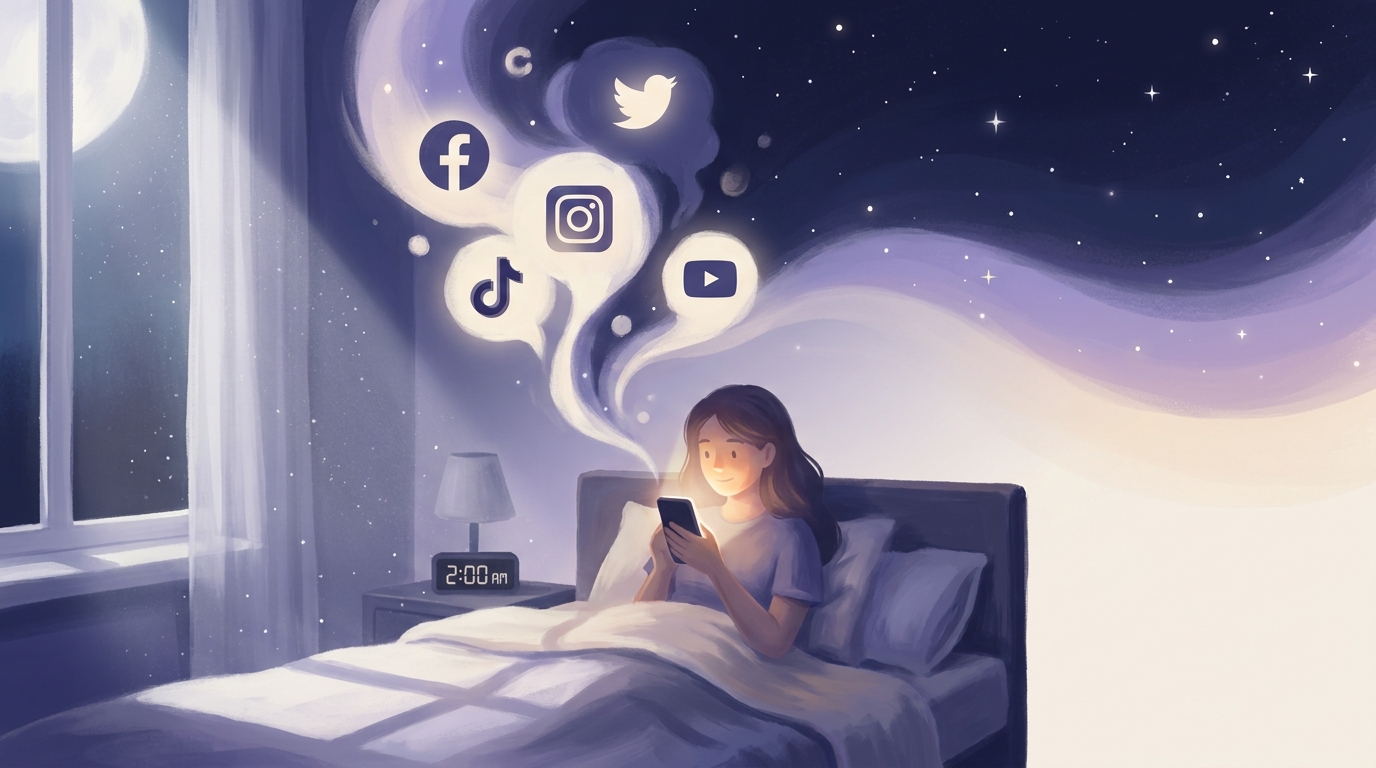
It’s midnight. Your alarm is set for 6:30am. You know — with absolute certainty — that staying up will make tomorrow miserable. And yet here you are, scrolling through your phone, watching one more episode, reading one more article. Not because you’re not tired. Because this is your time.
If this sounds familiar, you’re not broken. You’re experiencing revenge bedtime procrastination — and once you understand what’s actually driving it, you can start to break free.
What Is Revenge Bedtime Procrastination?
The term originated from a Chinese expression (報復性熬夜) that went viral because it named something millions of people feel but couldn’t articulate: deliberately sacrificing sleep to reclaim personal time that you feel was stolen during the day.
Researchers at Utrecht University formally defined bedtime procrastination as failing to go to bed at the intended time without any external reason preventing it. The “revenge” part adds an emotional layer — it’s not forgetting to sleep, it’s refusing to, because sleep feels like surrendering the only free hours you have.
This isn’t laziness. It’s a response to feeling like your daytime hours don’t belong to you.
Why It Happens: The Psychology Behind Late Nights
It’s a Control Issue, Not a Sleep Issue
At its core, revenge bedtime procrastination is about autonomy. When your day is filled with obligations — work demands, caregiving, meetings, commutes, other people’s needs — nighttime becomes the only window where nobody is asking anything of you.
As one viral post put it: “People who go to sleep late don’t have insomnia. They just finally found a time when no one’s making demands on them.”
Your brain isn’t choosing entertainment over rest. It’s choosing freedom over obligation. Sleep feels like the last thing someone else is telling you to do.
The ADHD Connection
Research published in sleep medicine journals suggests that a significant majority of people with ADHD experience delayed circadian rhythms, making them natural night owls in a world built for early risers. For neurodivergent brains, the quiet late-night hours aren’t just free time — they’re often the only time the world stops being overwhelming.
The ADHD brain craves stimulation. Scrolling, watching, reading — these provide dopamine hits that are harder to access during a structured day. Going to bed means giving up the stimulation and facing the transition to sleep, which for many ADHD brains feels impossibly boring.
The FOMO Mechanism
Sleep researcher Matthew Walker has described how the fear of missing out fuels a specific pathway: FOMO creates rumination, which creates cognitive arousal, which makes falling asleep harder — which makes you think “well, I’m awake anyway, might as well keep scrolling.” The cycle reinforces itself nightly.
The Real Cost
Revenge bedtime procrastination wouldn’t be a problem if it didn’t carry consequences. But consistently going to bed 1-2 hours later than intended adds up fast:
- Cognitive decline: Even mild sleep deprivation impairs decision-making, creativity, and emotional regulation — the exact things you need to feel in control of your day
- Stress amplification: Less sleep raises cortisol levels, making the next day feel more overwhelming, which makes you want more revenge time tomorrow night
- Health impacts: A 2026 study from the University of Oulu found that irregular bedtimes combined with short sleep duration doubled the risk of cardiac events over 10 years
The cruel irony: revenge bedtime procrastination makes the very problem it’s trying to solve — feeling out of control — significantly worse.
How to Break the Cycle (Without Willpower)
Willpower doesn’t work here. You’ve already used all your willpower during the day. These strategies work with your psychology, not against it.
1. Create a “Me Time” Buffer Before Bed
The real solution isn’t going to bed earlier — it’s building free time into your evening intentionally. Schedule 30-60 minutes of genuinely unstructured time before your intended bedtime. Read, stretch, listen to music, sit outside — whatever feels like freedom to you.
When your brain knows it’s getting its personal time, the midnight rebellion loses its purpose.
2. Make the Transition Gentle
The reason “just go to bed” doesn’t work is that bed represents the end of freedom. Instead of a hard cutoff, create a gradual wind-down:
- Set a “screens off” alarm 30 minutes before bed (not a “go to sleep” alarm)
- Switch to calming audio — ambient sounds or a breathing exercise can signal your brain that you’re choosing rest, not having it imposed on you
- Keep your phone outside the bedroom. This single change removes the path of least resistance for “just one more scroll”
3. Reclaim Daytime Autonomy
If your revenge is against a day that doesn’t feel like yours, the structural fix is making the day more yours:
- Block 15-minute “sacred” breaks during the day that are entirely yours
- Learn to say no to one thing per week that drains you without benefit
- Identify which obligations are truly non-negotiable versus which feel that way out of habit
4. Address the Underlying Need
Ask yourself what you’re actually doing during those late hours:
- If it’s mindless scrolling: Your brain is seeking stimulation after a day of depletion. Try replacing screen stimulation with calming soundscapes that satisfy the need for engagement without the blue light and cognitive arousal
- If it’s creative work: You might genuinely be a night owl. Rather than fighting your chronotype, consider adjusting your schedule to honour it
- If it’s avoiding tomorrow: That’s anxiety, not procrastination. Grounding techniques or a simple breathing practice can help process the dread
5. The “One Enjoyable Thing Tomorrow” Trick
Before bed, identify one specific thing you’re looking forward to tomorrow. It doesn’t need to be big — a coffee you like, a playlist, a walk. This reframes sleep not as the end of your free time, but as the bridge to something good.
When It’s More Than a Habit
If revenge bedtime procrastination is happening every single night despite genuine effort to change, consider whether there’s something deeper at play:
- Chronic burnout may mean your life genuinely lacks balance, not that you lack discipline
- ADHD or delayed sleep phase disorder may require professional support and potentially medication to address the circadian component
- Depression or anxiety can manifest as sleep avoidance — staying up feels safer than lying in the dark with your thoughts
There’s no shame in seeking help. A tired brain can’t fix itself.
Want to try these sounds tonight? Sleep Relax has 100+ calming sounds with a built-in sleep timer.
Try Sleep Relax FreeYour Night Doesn’t Have to Be a Battle
Revenge bedtime procrastination is your mind’s way of telling you something important: you need more of your own time. The fix isn’t better sleep discipline. It’s a life that doesn’t make you feel like sleep is the enemy.
Start small. Tonight, try giving yourself 30 minutes of guilt-free, screen-free wind-down time. Put on some rain sounds or ambient noise. Let yourself decompress without the phone. You might find that when freedom is built into your evening, sleep stops feeling like something being taken from you — and starts feeling like something you’re choosing for yourself.
This article is for informational purposes only and is not a substitute for professional medical advice. If you have persistent sleep issues or suspect ADHD, please consult a healthcare provider.
Sleep better tonight
100+ calming sounds, breathing exercises, and a sleep timer — all in one app.
Download Sleep Relax