How Sleep Changes Across Your Lifespan: From Newborn to Elder
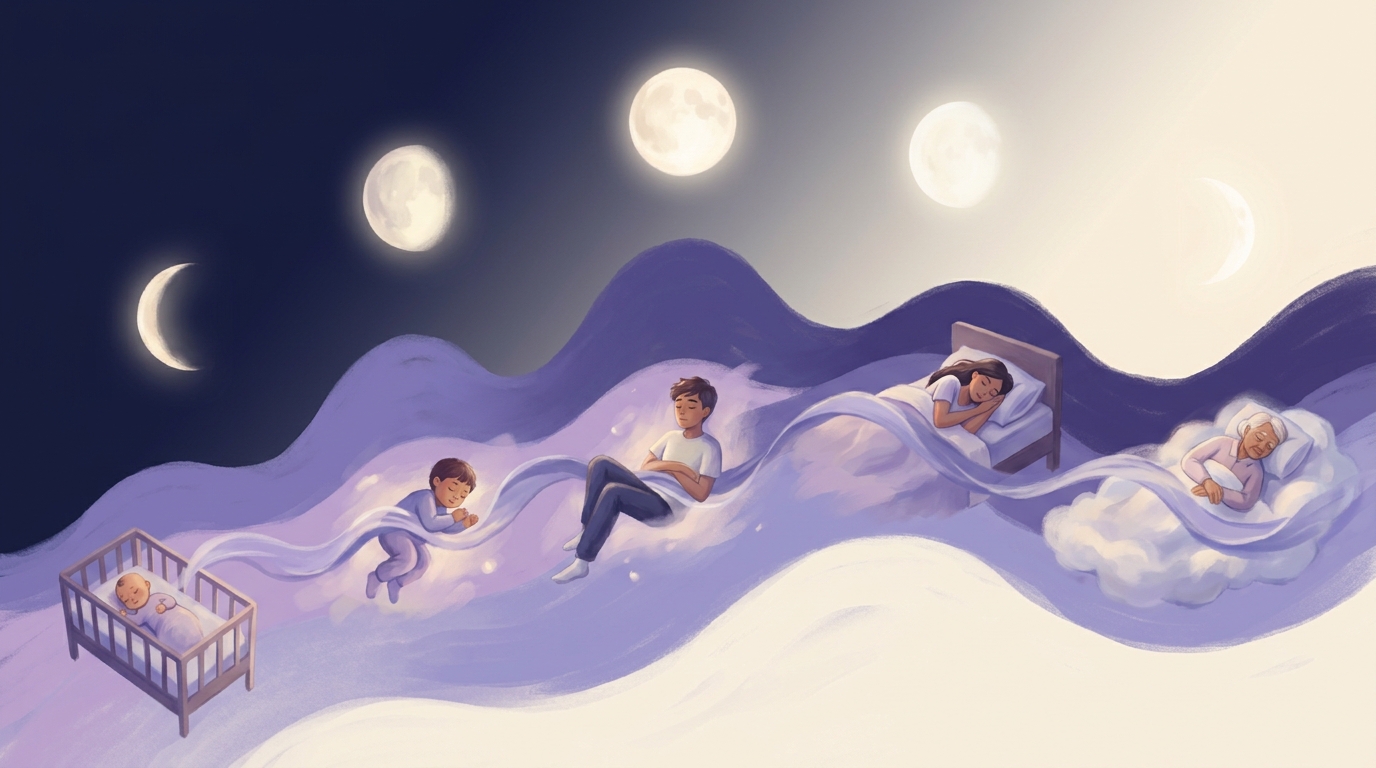
A newborn sleeps 16 hours a day. A teenager can’t fall asleep before midnight. Your grandmother wakes up at 4am and insists she’s fine with 6 hours. Are they all sleeping “wrong”?
None of them are. Sleep isn’t a fixed biological constant — it’s a system that transforms dramatically across your lifetime, and understanding those transformations can help you stop fighting your biology and start working with it.
The Newborn Brain: 50% Active Sleep
Newborns spend roughly half their sleep time in what researchers call “active sleep” — the infant version of REM. Their brains are building neural connections at an extraordinary rate, and this active sleep state is when much of that wiring happens.
This is why newborns cycle between sleep and wakefulness every 2-4 hours regardless of whether it’s day or night. Their circadian rhythm — the internal clock that distinguishes day from night — doesn’t fully develop until around 3-4 months of age.
If you’re a parent reading this at 3am while your baby sleeps in 90-minute bursts: this is biology, not a problem to solve. The frequent waking is your baby’s brain under construction. Sound can help extend those sleep windows — rhythmic, predictable sounds like white noise mimic the womb environment and reduce the startle reflex that interrupts sleep cycles.
Safe Sleep Note
The American Academy of Pediatrics recommends babies sleep on their backs, on a firm flat surface, without soft bedding, pillows, or toys. This “Safe Sleep” protocol has reduced SIDS rates dramatically since its introduction.
Childhood: The Deep Sleep Peak
Between ages 5 and 12, children experience their lifetime peak of deep slow-wave sleep. A child’s brain can generate deep sleep waves of enormous amplitude — far larger than what an adult brain produces.
This is also why children can sleep through thunderstorms, car rides, and being carried to bed. Their deep sleep is genuinely deeper than yours ever will be again.
This deep sleep serves a crucial function: growth hormone is released primarily during deep slow-wave sleep. The old advice that “children grow in their sleep” is literally true.
Puberty: The Biological Phase Delay
Here’s where things get controversial. Around puberty, the circadian clock shifts later by 1-3 hours. This isn’t laziness, poor discipline, or too much screen time (though screens don’t help). It’s a biological change in the timing of melatonin release.
A teenager’s brain genuinely doesn’t signal “sleepy” until around 11pm–midnight, and their natural wake time shifts to 8-9am. Asking a 15-year-old to be alert at 7am is the biological equivalent of asking an adult to perform at 4am.
Dr. Matthew Walker, in his podcast series on sleep across the lifespan, notes this is one of the most well-documented findings in sleep science — and one of the most ignored by school systems. Early school start times force teenagers into chronic sleep deprivation during a period when their brains are undergoing massive restructuring.
What can teenagers (and their parents) do?
- Honour the phase delay where possible. Weekend sleep-ins aren’t laziness; they’re debt repayment
- Limit bright light after 9pm to avoid pushing the already-late clock even later
- Morning light exposure helps anchor the clock — even 10 minutes of outdoor light after waking
- Don’t panic about late bedtimes. A teenager falling asleep at 11:30pm and waking at 8am is getting a healthy, biologically appropriate 8.5 hours
Young Adulthood: The Balance Point
In your 20s and early 30s, sleep architecture reaches something of a balance. You still have reasonable amounts of deep sleep (around 15-20% of total sleep time), healthy REM cycles, and a circadian rhythm that’s settled into its adult pattern.
This is also, paradoxically, when many people treat sleep the worst. Late nights, irregular schedules, alcohol, caffeine — the resilience of a young body masks the accumulating cost.
The habits you build (or break) in your 20s shape your sleep health for decades. Consistent bedtimes matter more than total hours, and the effects of caffeine on sleep are already reducing your growth hormone secretion, even when you “feel fine.”
Want to try these sounds tonight? Sleep Relax has 100+ calming sounds with a built-in sleep timer.
Try Sleep Relax FreeMiddle Age: The Deep Sleep Decline
This is the change nobody warns you about. Starting in your late 30s, deep slow-wave sleep begins a steady, measurable decline:
- Age 25: ~19% deep sleep
- Age 35: ~15% deep sleep
- Age 45: ~10% deep sleep
- Age 50: ~3.4% deep sleep
Read that last number again. By 50, you may be getting barely any deep slow-wave sleep at all.
The consequences are significant. Deep sleep is when your brain’s glymphatic system clears metabolic waste, including amyloid-beta proteins associated with Alzheimer’s disease. It’s when growth hormone repairs tissues. It’s when memories consolidate from short-term to long-term storage.
This isn’t just “getting older.” It’s a specific, measurable reduction in the sleep stage most critical for brain health and physical recovery.
What Helps Preserve Deep Sleep
- Regular exercise — the single most effective intervention for maintaining deep sleep quality
- Consistent sleep schedule — irregular timing fragments the deep sleep you do get
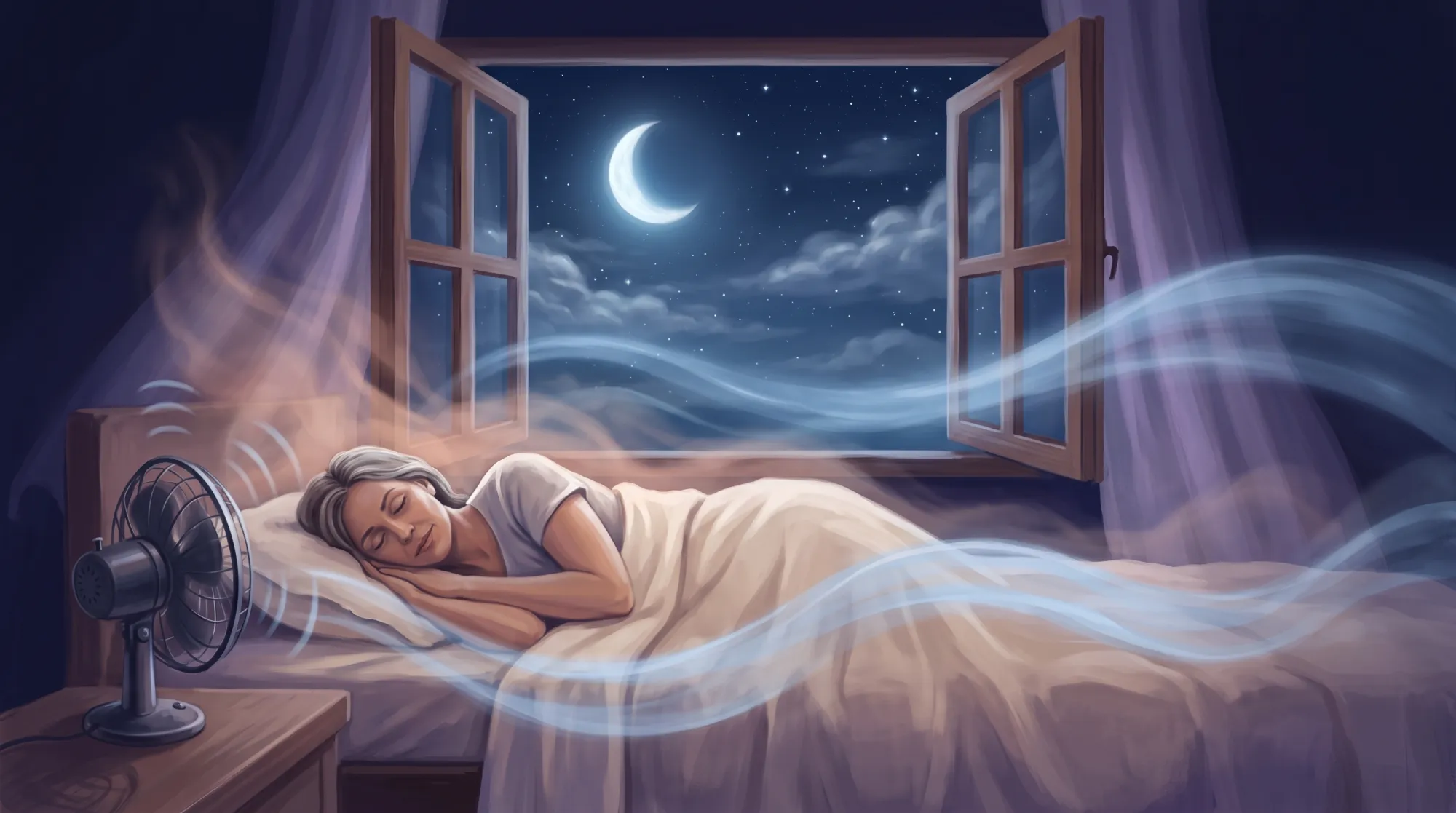
- Cool bedroom — your body needs to drop core temperature for deep sleep onset
- Limit alcohol — even one drink reduces deep sleep quality
- Sound environment — pink noise timed to slow waves has been shown to enhance deep sleep in research settings
Older Age: The Fragmentation Problem
After 60, the primary sleep challenge isn’t falling asleep — it’s staying asleep. Sleep becomes increasingly fragmented, with more frequent awakenings throughout the night.
Several factors converge:
- Circadian advance: The internal clock shifts earlier, causing early-morning waking (4-5am) and early-evening drowsiness
- Reduced melatonin: The pineal gland produces less melatonin with age
- Medical conditions: Pain, medications, nocturia (needing to urinate), and sleep apnea all increase with age
- Reduced sleep pressure: The build-up of adenosine (the chemical that makes you feel sleepy) becomes less efficient
The common belief that “old people need less sleep” is a myth. Sleep need doesn’t decrease significantly with age — but the ability to generate and maintain sleep does. Many older adults are chronically sleep-deprived without knowing it, attributing their fatigue, cognitive changes, and mood shifts to “just getting older.”
Practical Strategies for Older Adults
- Bright light in the morning to counteract circadian advance
- Avoid long daytime naps — they reduce sleep pressure for nighttime
- Review medications with a doctor — many common drugs (beta-blockers, corticosteroids, SSRIs) affect sleep architecture
- Stay physically active — even moderate walking improves sleep continuity
- Sound masking at night can help with the lighter, more easily disturbed sleep that comes with age
The Thread Through Every Age
Across every life stage, three principles hold:
- Consistency matters more than duration. A regular sleep-wake schedule protects sleep quality at every age.
- Light is the master clock. Morning light anchors your circadian rhythm whether you’re 15 or 75.
- Sleep is not optional. Every major disease that kills people in developed nations has a causal link to insufficient sleep.
Understanding how your sleep changes with age isn’t about accepting decline — it’s about adapting your habits to protect what matters most at each stage. A 50-year-old who exercises regularly and maintains consistent sleep timing may preserve more deep sleep than a sedentary 30-year-old with erratic habits.
Your sleep system is changing. The question is whether you’re changing with it.
FAQ
How much deep sleep do I need?
Deep sleep typically comprises 13-23% of total sleep in young adults but declines with age. Rather than targeting a specific percentage, focus on factors that preserve deep sleep: regular exercise, consistent sleep timing, cool bedroom, and limiting alcohol.
Why can’t teenagers wake up early?
Puberty triggers a 1-3 hour delay in the circadian clock, shifting natural melatonin release to around 11pm-midnight. This is a biological change, not a behavioural choice. Their natural wake time shifts to 8-9am accordingly.
Do older people really need less sleep?
No. Sleep need remains roughly 7-8 hours throughout adulthood. What changes is the ability to generate and maintain continuous sleep. Older adults who feel fine on 6 hours may actually be chronically sleep-deprived without recognising the symptoms.
This article is for informational purposes only and is not a substitute for professional medical advice. If you have persistent sleep issues at any age, please consult a healthcare provider.
Sleep better tonight
100+ calming sounds, breathing exercises, and a sleep timer — all in one app.
Download Sleep Relax