Sleep Pressure Explained: How Adenosine Controls Your Urge to Sleep
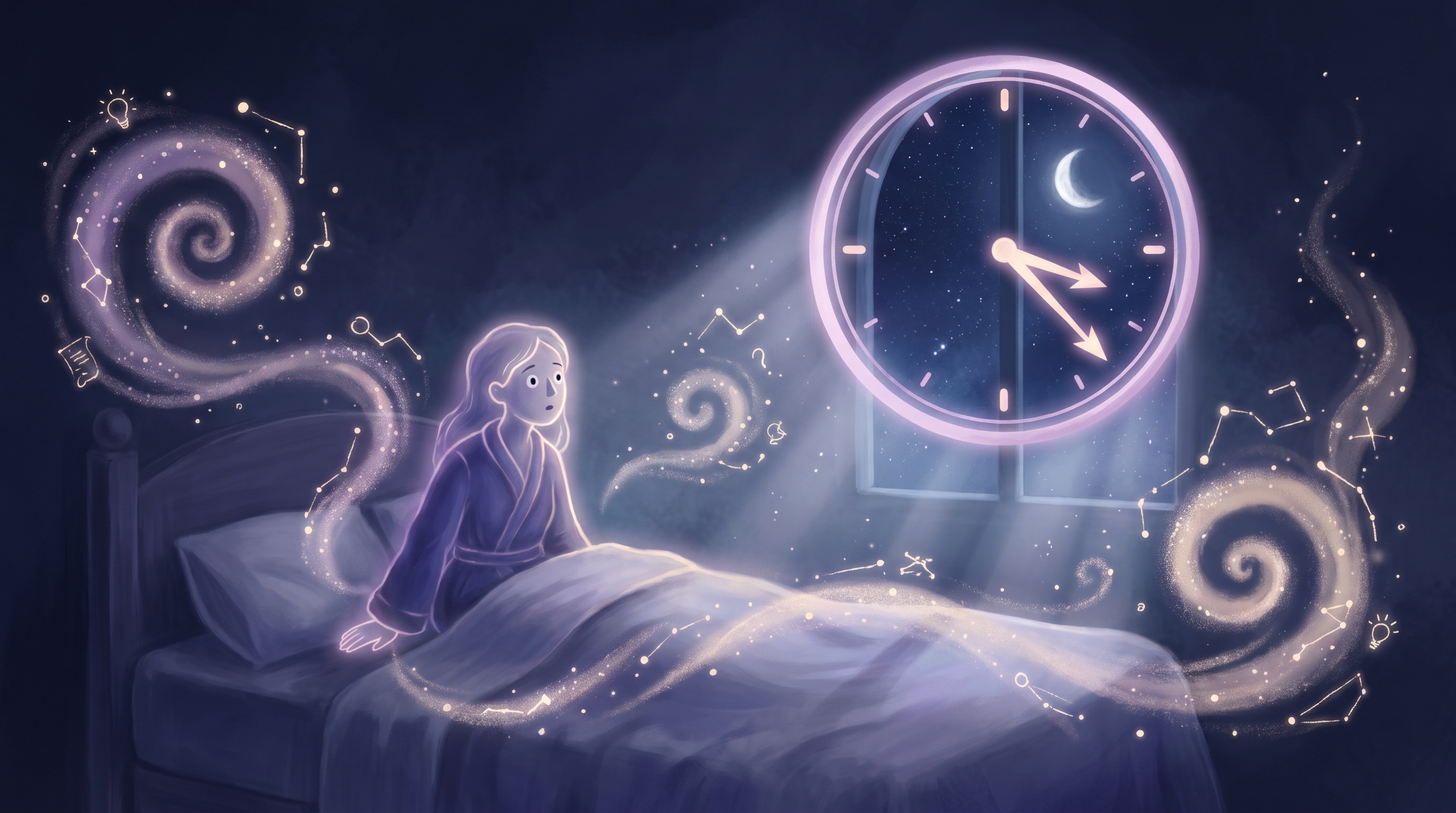
By mid-afternoon, some invisible weight begins pressing on your eyelids. The book you are reading starts losing its grip. Your thoughts slow. You did nothing special to bring this on — it built itself, hour by hour, starting the moment you woke up.
That weight has a name. Sleep researchers call it sleep pressure, and the molecule responsible is adenosine. Understanding how this system works changes the way you think about tiredness, napping, caffeine and why some nights feel impossible while others pull you under effortlessly.
The Chemical That Counts Your Waking Hours
Every cell in your body runs on adenosine triphosphate (ATP), the basic energy currency of biology. As your neurons fire and your muscles work, ATP breaks down. One of the by-products is adenosine, which accumulates in the brain while you are awake.
Adenosine binds to specific receptors — primarily A1 and A2A receptors — in areas of the brain involved in wakefulness. As more adenosine binds, those wake-promoting circuits become progressively inhibited. The result is a steadily growing urge to sleep that increases the longer you stay awake.
Sleep scientists call this Process S, one half of the two-process model of sleep regulation proposed by Alexander Borbély in 1982. The other half, Process C, is your circadian clock — the 24-hour rhythm governed by light exposure and your suprachiasmatic nucleus. Good sleep happens when the two align: high sleep pressure meeting a circadian window that says “now.”
Think of it like a dam filling with water. Each hour of wakefulness adds more water. Sleep is what opens the floodgates. When you wake refreshed in the morning, the reservoir is mostly empty. By evening, it is full again.
Why You Feel Sleepy (and Why It Is Not Always at Bedtime)
Sleep pressure rises in a roughly linear fashion from the moment you wake. But you do not feel progressively sleepier all day long. Most people experience a dip in mid-afternoon — the classic post-lunch slump — followed by a temporary recovery in the early evening.
That recovery is not because adenosine dropped. It is because your circadian alerting signal strengthens in the late afternoon and early evening, temporarily masking the rising sleep pressure. The two systems are working in opposition: adenosine pushes toward sleep while the circadian clock pushes toward wakefulness.
When your circadian alerting signal fades in the late evening, the accumulated sleep pressure is finally felt at full force. This is why the transition to sleepiness can feel sudden — it is not that you became tired all at once, but that the counterbalancing alertness signal withdrew.
This also explains why irregular bedtimes cause problems. If you stay up well past the point where your circadian signal drops, you are fighting both systems at once when you finally try to sleep: the pressure is extremely high but the circadian window may have shifted.
What Happens to Adenosine While You Sleep
During sleep — particularly during deep slow-wave sleep — the brain clears adenosine. The glymphatic system, which becomes most active during deep sleep, helps wash metabolic waste from the brain, and adenosine levels decline progressively through the night.
The first sleep cycles of the night contain the most deep sleep, which is when the bulk of adenosine clearance happens. This is why the first few hours of sleep are disproportionately restorative. It is also why cutting sleep short — even by an hour or two — leaves residual adenosine that carries into the next day.
If you have ever pulled an all-nighter, you have experienced what happens when adenosine is never cleared. By morning, the pressure is enormous. You may feel a brief second wind as your circadian alerting signal kicks in with daylight, but that is just the clock masking the debt. The adenosine is still there, waiting.
Want to try these sounds tonight? Sleep Relax has 100+ calming sounds with a built-in sleep timer.
Try Sleep Relax FreeCaffeine: The Adenosine Impersonator
Caffeine does not give you energy. It blocks you from feeling tired. The caffeine molecule is structurally similar to adenosine and binds to the same A1 and A2A receptors — but without activating them. While caffeine occupies those receptors, adenosine cannot deliver its sleep signal.
The adenosine itself continues accumulating. It simply cannot dock. When the caffeine eventually clears (its half-life is roughly five to six hours in most adults), the accumulated adenosine floods the now-vacant receptors all at once. This is the caffeine crash: not new tiredness, but the sudden arrival of tiredness that was always there.
This is why afternoon coffee can wreck your evening. As we detailed in our article on caffeine’s effect on deep sleep, even when you feel like you can fall asleep fine after a late coffee, the caffeine may still be occupying enough receptors to reduce the quality of your deep sleep — the very sleep stages needed to clear adenosine properly.
The practical rule: stop caffeine at least eight to ten hours before your intended bedtime. For someone sleeping at 11pm, that means no coffee after 1pm. Some people metabolise caffeine faster or slower depending on genetics, but eight hours is a sensible starting point.
Why Naps Reset the Pressure (and Why That Can Backfire)
A nap clears some adenosine, which is why a 20-minute rest in the early afternoon can feel remarkably refreshing. Even a short period of sleep allows the brain to begin its clearance process.
But this is also why long or late naps make it harder to fall asleep at night. A 90-minute nap at 4pm can drain enough adenosine to significantly reduce your sleep pressure by bedtime. You arrive at 11pm without enough pressure to overcome the natural resistance to sleep onset.
The guidelines are straightforward:
- Nap before 2pm if possible
- Keep naps under 20–30 minutes to avoid entering deep sleep (which causes sleep inertia)
- Skip the nap entirely if you struggle with insomnia — the short-term relief is not worth the reduced nighttime pressure
If you are experimenting with biphasic sleep, the adenosine model explains why some segmented sleep schedules work and others do not. The total clearance across both sleep periods needs to be sufficient to start the next day without a significant deficit.
Using Sleep Pressure to Your Advantage
Once you understand the adenosine system, several common sleep problems start to make more sense — and some counter-intuitive strategies become logical.
If you cannot fall asleep at your intended bedtime, one possibility is that your sleep pressure is not high enough. This can happen if you woke up late, napped during the day, or spent significant time resting (even without sleeping). The fix is not to try harder — it is to ensure you have been awake long enough. Most adults need 14 to 16 hours of continuous wakefulness to build adequate sleep pressure.
If you feel exhausted but cannot sleep, the problem may be the opposite system: your circadian clock is out of alignment. High adenosine with a misaligned circadian signal creates the frustrating state of being exhausted but wired. The sleep effort paradox describes how trying to force sleep in this state makes it worse.
If you wake up and still feel tired, residual adenosine from insufficient deep sleep is a likely contributor. Strategies that protect deep sleep — avoiding late caffeine, keeping a consistent wake time, and reducing alcohol (which suppresses deep sleep) — help ensure the overnight clearance is thorough.
If your mornings are brutal, the grogginess is partly adenosine-related. Sleep inertia occurs because adenosine clearance is not instantaneous upon waking. Morning light exposure helps by strengthening the circadian alerting signal, and giving yourself 15 to 20 minutes before demanding peak performance allows the remaining adenosine to dissipate.
The System Is Simple. Respecting It Is the Hard Part
Sleep pressure is one of the most elegant feedback loops in human biology. You use energy, a by-product accumulates, and eventually the accumulation forces you to rest so the system can reset. No willpower required — just time awake and time asleep.
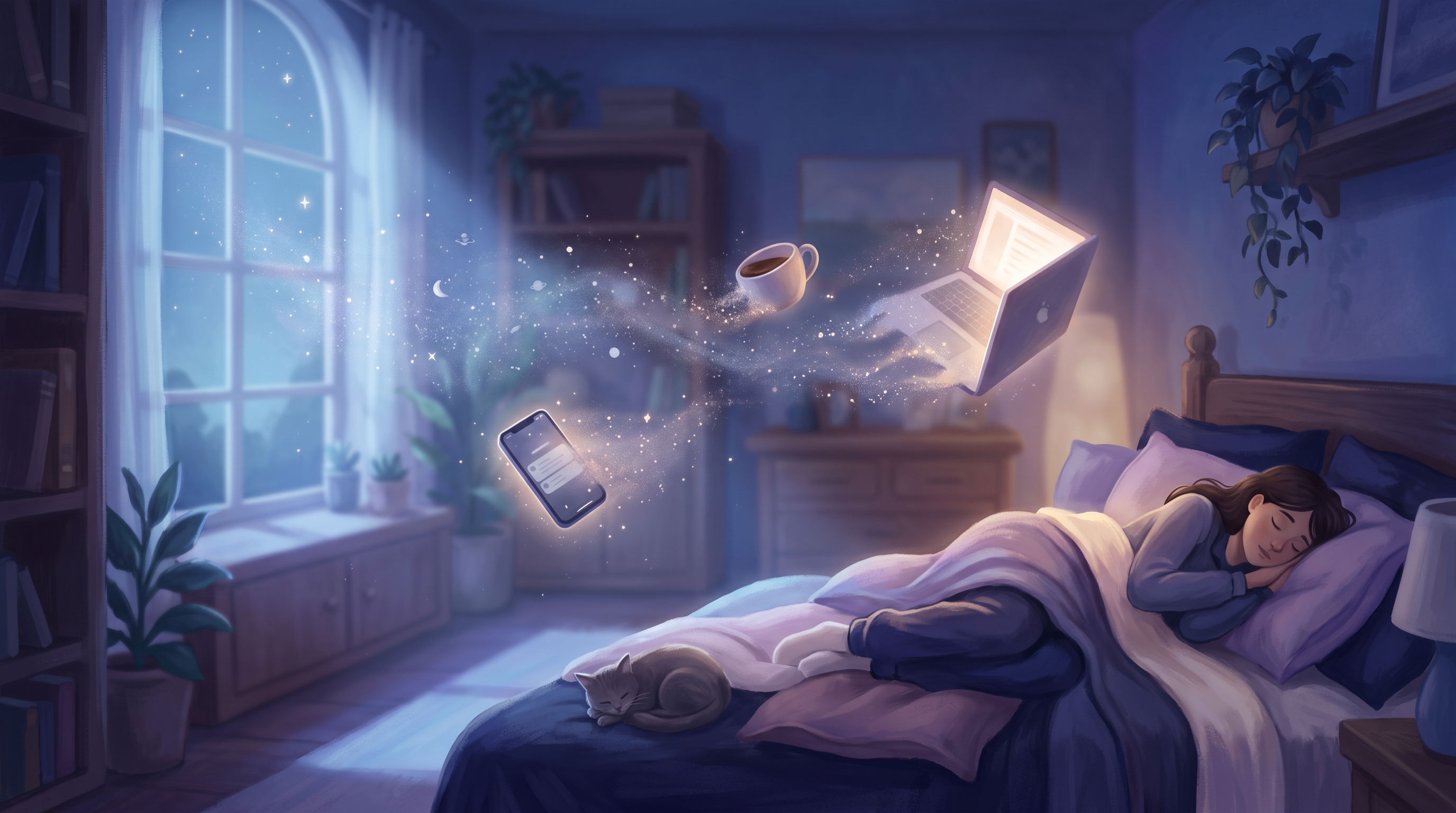
The modern challenge is that we have found ways to mask, delay and confuse this system. Caffeine blocks the signal. Irregular schedules prevent the circadian alignment that makes the pressure effective. Screens and stimulation override the drowsiness that adenosine is trying to create.
The fundamentals remain unchanged: wake at a consistent time, stay awake through the day, limit caffeine to the morning, and protect the deep sleep that clears the slate. Your brain already knows how to build sleep pressure. The job is to stop getting in its way.
This article is for informational purposes only and is not a substitute for professional medical advice. If you have persistent sleep issues, please consult a healthcare provider.
Sleep better in 14 nights
A gentle 14-night sleep plan based on CBT-I principles, a one-tap 3am button and calming sleep sounds. Nights 1–3 are free.
Download Sleep Relax