Thunderstorm Sounds for Sleep: Why Storms Help You Fall Asleep Faster
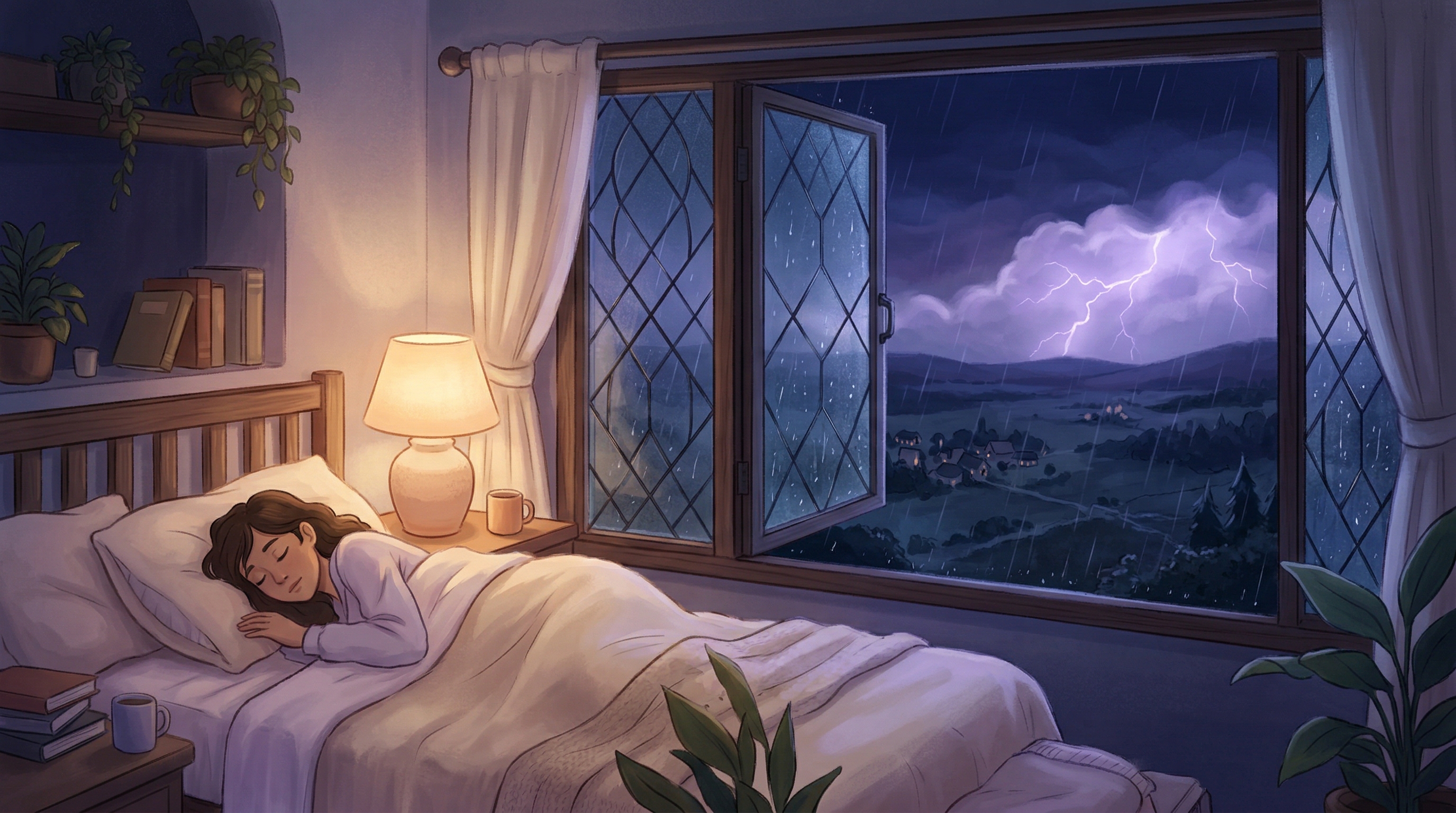
There’s something deeply calming about falling asleep to the sound of a thunderstorm — rain drumming on the roof, distant thunder rolling through the night, wind rustling leaves outside. For many people, thunderstorm sounds are the ultimate sleep trigger.
But here’s the curious part: thunderstorms in real life can be unsettling, even stressful. So why do the sounds of storms help us sleep better?
Why Thunderstorm Sounds Work for Sleep
Thunderstorm audio is a triple-layered sleep tool. It combines three scientifically validated sound elements — rain, rumbling thunder (low-frequency noise), and wind — into one cohesive, calming soundscape.
1. Rain Provides Rhythmic White Noise
The rain component of thunderstorm sounds creates a consistent white noise blanket that masks sudden environmental noises — the car door slamming, the neighbour’s dog, the partner who snores. Your brain stops scanning for threats and relaxes into the predictable pattern of falling rain.
Studies on rain sounds have found that the rhythmic, non-repetitive nature (it’s similar but not identical from moment to moment) keeps your brain engaged just enough to prevent it from wandering into anxious thoughts, but not so much that it keeps you awake.
2. Thunder Adds Low-Frequency Rumble (Like Brown Noise)
Distant thunder — the deep, rolling rumble you hear in a good thunderstorm recording — produces low-frequency sound waves similar to brown noise. These bass-heavy frequencies are particularly calming because they:
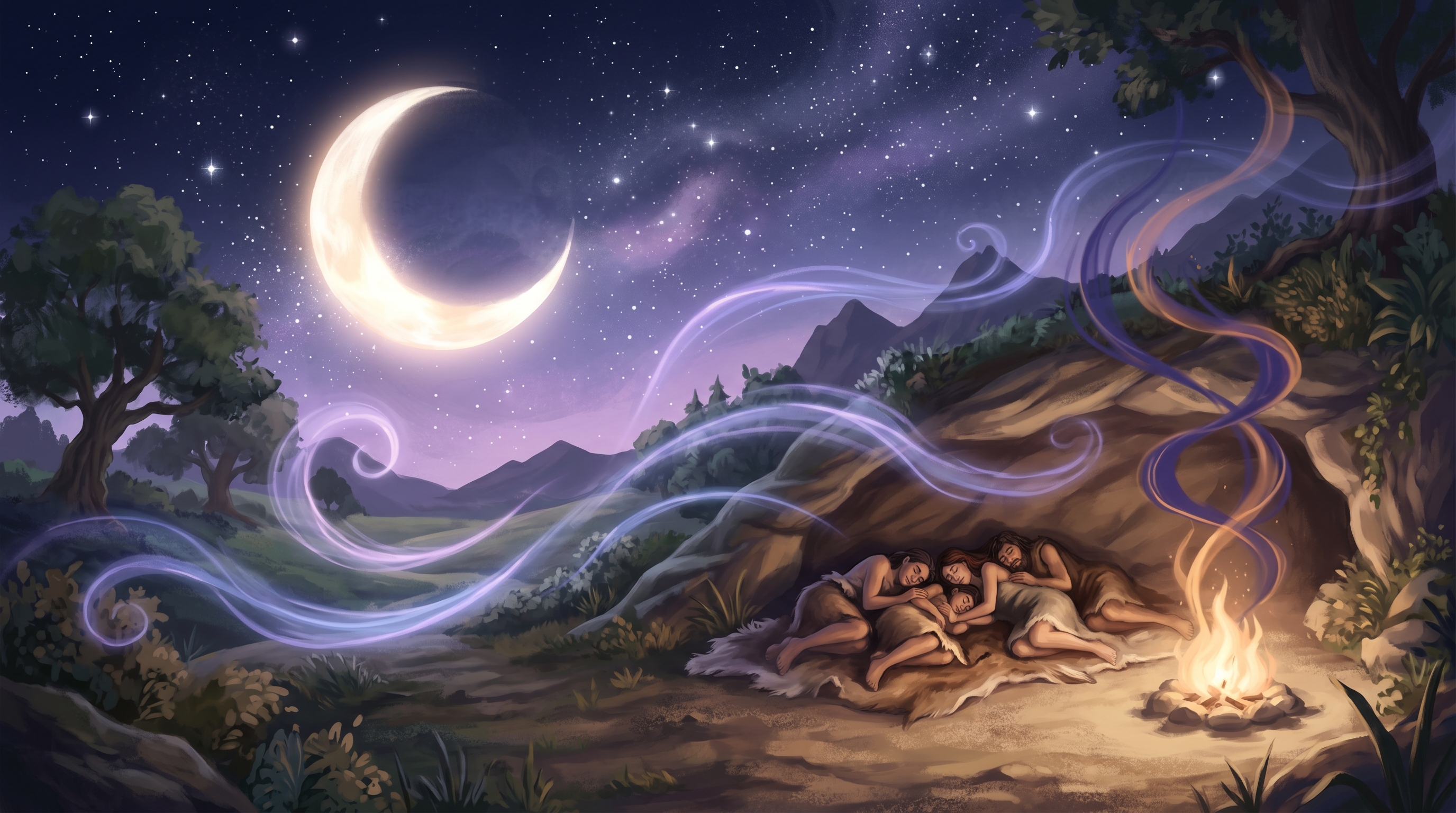
- Mimic natural sounds your ancestors would have heard in caves or sheltered spaces (safety association)
- Vibrate at frequencies that promote alpha and theta brainwave states (the transition into sleep)
- Feel physically grounding in a way higher-pitched sounds don’t
Important distinction: We’re talking about distant thunder here — the low rumble, not the sharp crack of lightning striking nearby. Good sleep thunderstorm recordings prioritise the gentle roll over jarring claps.
3. Wind and Environmental Ambience Create Immersion
The background sounds of a storm — wind through trees, the subtle shift in rain intensity, the sense of space and weather — create an immersive soundscape. This is where thunderstorm sounds differ from pure white noise or rain alone.
Your brain doesn’t just hear the storm; it places you inside the scene. You’re in a cozy cabin while the storm rages outside. You’re safe, warm, and protected. This narrative element taps into a primal sense of security that pure tones can’t replicate.
The “Safe Shelter” Effect
Here’s why thunderstorm sounds work when real thunderstorms might not: you’re in control.
In a real storm, there’s unpredictability. Will the power go out? Is that branch going to hit the house? Will the dog freak out? But when you press play on thunderstorm audio, you’re choosing a controlled version of the experience — all the calming elements, none of the actual risk.
Psychologically, this creates what researchers call the “safe shelter effect.” The storm sounds signal that the world outside is harsh, which makes your bed feel even more like a sanctuary. You’re tucked in while nature does its thing. It’s the audio equivalent of watching snow fall from inside a warm house.
Distant Thunder vs. Close Thunder: What to Look For
Not all thunderstorm recordings are created equal. If you’re using storm sounds for sleep, here’s what to prioritise:
Look for:
- Distant thunder — low, rolling rumbles that blend into the rain
- Consistent rain — steady downpour, not erratic bursts
- Minimal sharp cracks — occasional is fine, but constant loud thunder will jolt you awake
- Natural ambience — wind, forest sounds, the sense of a real place
- No music or “enhancement” — pure storm, no added synths or melodies
Avoid:
- Close lightning strikes — sudden, sharp cracks designed for dramatic effect (great for YouTube thumbnails, terrible for sleep)
- Overly dynamic storms — recordings that shift from gentle rain to torrential downpour every 30 seconds
- Looped audio with obvious seams — if you can tell when the recording restarts, it’ll pull you out of sleep
How to Use Thunderstorm Sounds for Sleep
1. Start Before Bed
Don’t wait until you’re already lying awake frustrated. Start playing thunderstorm sounds 10-15 minutes before you want to sleep. This gives your nervous system time to shift into relaxation mode.
You can even use storm sounds as part of your wind-down routine — dim the lights, start the audio, and read or do gentle stretching while your brain begins associating the sounds with sleep.
2. Volume Matters
Thunderstorm sounds should be background presence, not foreground entertainment. Set the volume just loud enough to mask other noises but quiet enough that you could have a conversation over it.
A good rule of thumb: if the thunder makes you flinch, it’s too loud. You want to feel like the storm is outside your safe, cozy space, not directly overhead.
3. Use All Night (If Helpful)
Some people prefer to fall asleep to the storm and then have it fade out after 30-60 minutes. Others find that playing it all night prevents middle-of-the-night wake-ups when the house creaks or a car drives by.
Experiment with both approaches. If you wake up and immediately notice the absence of the storm sounds (which can be jarring), all-night play is probably better for you.
Want to try these sounds tonight? Sleep Relax has 100+ calming sounds with a built-in sleep timer.
Try Sleep Relax FreeCombining Thunderstorm Sounds with Other Elements
One advantage of apps like Sleep Relax is the ability to layer sounds. You can create custom mixes that enhance the storm experience:
Thunderstorm + brown noise: Add a layer of brown noise underneath the storm to deepen the low-frequency rumble and increase the “grounding” effect.
Thunderstorm + distant wind chimes: A subtle layer of wind chimes can add a gentle, melodic element without disrupting the natural storm atmosphere.
Thunderstorm + fireplace crackle: If you’re layering storm sounds with a cozy indoor element (like a crackling fire), you create an even stronger “warm cabin during a storm” vibe.
Avoid: Mixing thunderstorms with other rain sounds or ocean waves. It muddies the soundscape and creates an unnatural, cluttered effect.
Who Benefits Most from Thunderstorm Sounds?
Thunderstorm sounds are particularly helpful if you:
- Grew up in a rainy climate — nostalgic association with cozy, safe childhood memories
- Find pure white noise too “flat” — the variation in a storm keeps it interesting without being distracting
- Need deeper bass frequencies — the thunder rumble provides low-end richness that higher-pitched rain alone doesn’t offer
- Struggle with racing thoughts — the immersive nature of a storm soundscape gives your mind something neutral to focus on
Less helpful if:
- You have a genuine phobia of storms (in which case, pure rain or brown noise might be better)
- You’re a very light sleeper and any variation in sound (even gentle thunder) pulls you out of sleep
Real Thunderstorms vs. Recorded: What’s the Difference?
People often ask: “If I love thunderstorm sounds for sleep, why don’t I sleep well during actual thunderstorms?”
The answer comes down to control and unpredictability:
Recorded storms:
- Consistent volume and intensity
- No sudden loud cracks or bright flashes
- No risk of power outages or falling branches
- You can turn it off if needed
Real storms:
- Unpredictable intensity (sudden loud thunder can jolt you awake)
- Lightning flashes through windows
- Potential anxiety about damage, leaks, or safety
- You can’t control when it starts or stops
That’s why curated storm recordings work better for sleep than the real thing. You get the calming elements without the stress triggers.
The Science of Low-Frequency Sounds and Sleep
Thunder produces sound waves in the 20-200 Hz range — the low-frequency “rumble” you feel as much as hear. Research on sound and sleep has found that low-frequency sounds are particularly effective at promoting slow-wave sleep (deep sleep) because they:
- Synchronise with delta brainwaves (0.5-4 Hz), which dominate during deep sleep stages
- Reduce high-frequency brain activity associated with alertness and anxiety
- Create a sense of physical presence that higher-pitched sounds don’t provide
This is why brown noise and ocean waves — both low-frequency dominant — are so popular for sleep. Thunderstorm sounds offer the same benefit, but with added environmental richness.
Creating Your Own “Perfect Storm” for Sleep
If you’re new to thunderstorm sounds, here’s a simple approach:
Week 1: Start with a gentle rain-and-distant-thunder mix. No dramatic cracks, just soft rolling thunder in the background. Get used to the rhythm.
Week 2: Experiment with intensity. Some nights, try heavier rain. Other nights, more thunder. Notice what your brain prefers.
Week 3: Explore layering. Add brown noise or wind sounds to deepen the atmosphere.
Week 4: Establish a consistent ritual. Same storm, same volume, same time every night. Your brain will start associating that specific soundscape with sleep.
A Note on Headphones vs. Speakers
For thunderstorm sounds, speakers or a phone speaker are generally better than headphones. Here’s why:
- Spatial immersion: Thunderstorms sound more natural when they’re coming from around you, not directly in your ears.
- Safety: You can still hear important sounds (alarm, baby crying, smoke detector) with speakers.
- Comfort: No need to worry about wires, ear discomfort, or AirPods falling out.
If you must use headphones (shared bedroom, travel), choose over-ear or sleep-specific headphones designed for side sleeping.
Your Turn
Tonight, try thunderstorm sounds. Not as background noise while you scroll your phone — as a dedicated sleep tool. Dim the lights, get into bed, press play, and let the storm do its work.
Notice how your body responds. Does your breathing slow? Do your shoulders drop? Does the rumble of distant thunder feel grounding in a way other sounds don’t?
For many people, thunderstorm sounds become the sleep tool they didn’t know they needed. All the calming power of nature, none of the wet shoes.
This article is for informational purposes only and is not a substitute for professional medical advice. If you have persistent sleep issues, please consult a healthcare provider.
Sleep better tonight
60+ calming sounds, breathing exercises and a gentle 14-night sleep plan — all in one app.
Download Sleep Relax