Why You Always Wake Up at 3am (And How to Fall Back Asleep)
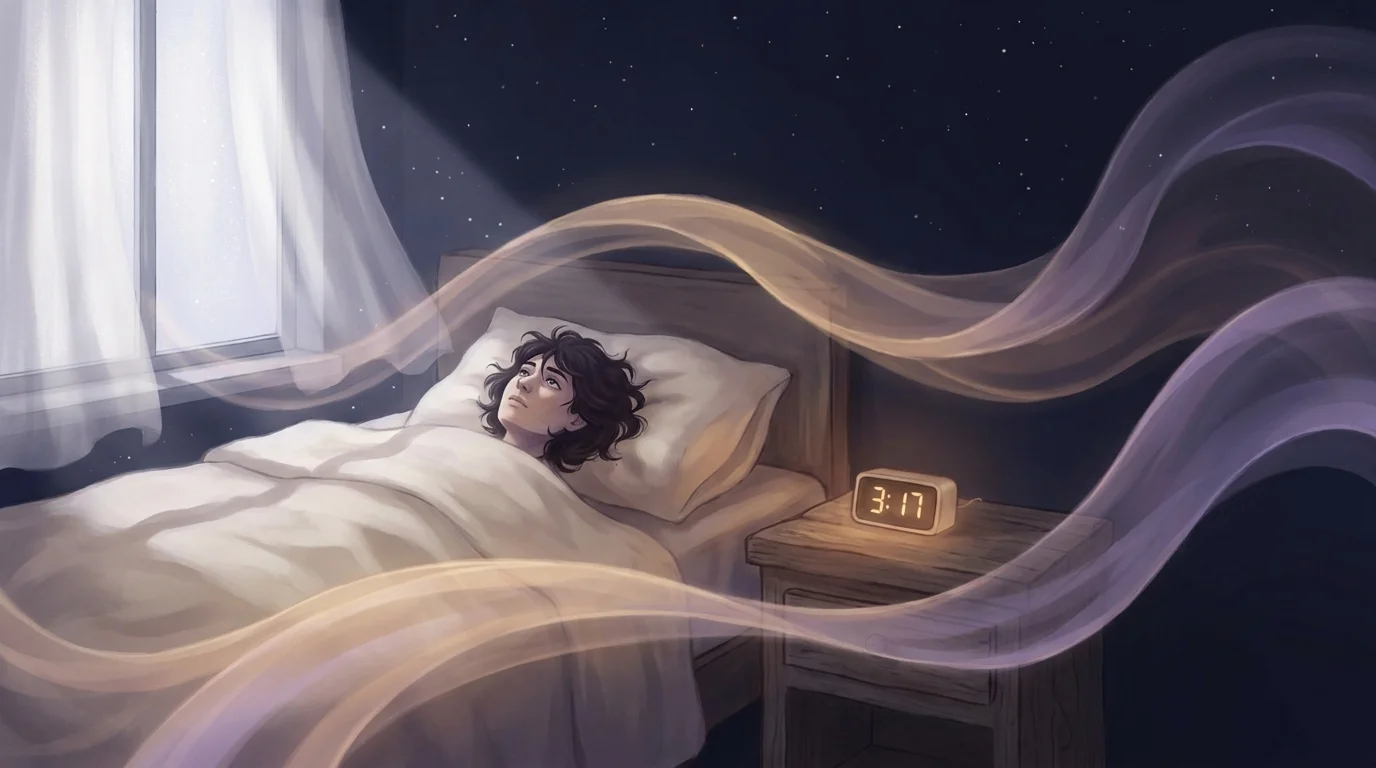
It’s 3:17am. You were sleeping fine — maybe even dreaming — and now you’re suddenly, inexplicably awake. Heart beating a little faster than it should. Mind already scrolling through tomorrow’s to-do list before your eyes have fully adjusted to the dark.
If this sounds familiar, you’re far from alone. Middle-of-the-night waking is one of the most common sleep complaints, and there’s a reason it tends to cluster around the same window: roughly 2am to 4am. It’s not random, and it’s not because something is wrong with you. It’s biology.
Your Sleep Architecture Changes at 3am
Sleep isn’t a single uniform state. Your brain cycles through different stages roughly every 90 minutes, and the composition of those cycles shifts dramatically across the night.
During the first half of the night, your sleep is dominated by deep slow-wave sleep — the heavy, restorative kind that’s hard to wake from. Your brain produces large, rolling delta waves. Growth hormone surges. Your body repairs muscle tissue and consolidates memories.
But around 2-3am, something shifts. Deep sleep has largely done its job for the night, and your remaining cycles become increasingly dominated by REM sleep — the lighter, dream-rich stage where your brain is highly active but your body is essentially paralysed.
The transition between these REM-heavy cycles creates natural “arousal windows.” Your brain surfaces close to consciousness between each cycle, and in the second half of the night, these surfaces are shallower. You’re more easily tipped into full wakefulness.
Think of it like swimming. In the first half of the night, you’re diving deep — it takes a lot to pull you to the surface. In the second half, you’re floating just below the waterline.
The Cortisol Pre-Dawn Ramp
Here’s where biology gets inconvenient. Your body begins ramping up cortisol production in the early morning hours, preparing you for waking. This is called the cortisol awakening response, and it typically begins around 3-4am, peaking about 30 minutes after you eventually wake up.
In a healthy system, this gradual ramp doesn’t wake you. But when your stress load is elevated — chronic work pressure, financial worry, health anxiety, unresolved conflict — your HPA axis (the stress response system) can become dysregulated. The cortisol ramp starts earlier, hits harder, or comes in spikes rather than a smooth curve.
The result: a jolt of alertness at 3am that feels like an alarm going off inside your body. Your heart rate picks up. Your mind sharpens. And the cruel irony is that the harder you try to fall back asleep, the more alert you become.
Blood Sugar and the Midnight Adrenaline Dump
There’s another physiological trigger that often gets overlooked: blood sugar.
If you ate dinner early, had alcohol in the evening, or skipped a late snack, your blood glucose can dip during the night. When it drops below a certain threshold, your body responds by releasing adrenaline and cortisol — emergency hormones designed to mobilise stored energy.
This is a survival mechanism. Your brain runs almost exclusively on glucose, so a significant dip triggers an alarm response. You wake up with a racing heart, sometimes feeling anxious or even panicked, and it has nothing to do with what you were dreaming about.
This is particularly common in people who:
- Ate a high-sugar dinner that caused a blood sugar spike followed by a crash
- Drank alcohol, which initially lowers blood sugar then causes a rebound
- Are going through periods of high stress (which increases glucose metabolism)
- Follow intermittent fasting with an early eating window
Why Anxiety Feeds on 3am
Even if the initial wake-up was purely physiological — a cortisol bump, a blood sugar dip, a noise outside — what happens next is usually psychological.
At 3am, your prefrontal cortex (the rational, planning part of your brain) is still largely offline. But your amygdala (the threat-detection centre) is fully operational. This creates a distorted mental state where problems feel larger, solutions feel impossible, and catastrophic thinking runs unchecked.
Research from sleep labs shows that emotional regulation is significantly impaired during nocturnal awakenings. The same problem that felt manageable at 8pm feels genuinely terrifying at 3am. This isn’t weakness — it’s neuroscience. Your rational brain hasn’t booted up yet, but your alarm system is running hot.
This is why “just don’t think about it” doesn’t work. You’re asking a partially offline brain to override a fully operational threat detector.
How to Fall Back Asleep: What Actually Works
The worst thing you can do at 3am is lie in bed willing yourself to sleep. This creates what sleep researchers call “conditioned arousal” — your brain starts associating your bed with wakefulness and frustration, making the problem worse over time.
Here’s what works instead:
Extend Your Exhale
When you wake with a racing heart, your sympathetic nervous system is firing. The fastest way to shift back to parasympathetic (rest-and-digest) mode is through your breath — specifically, by making your exhale longer than your inhale.
Try a simple 4-8 pattern: breathe in for 4 seconds, out for 8. The extended exhale stimulates the vagus nerve, which directly signals your brain to stand down from alert mode. Six to eight rounds is usually enough to feel a noticeable shift.
If counting feels like too much mental effort at 3am, just focus on making each exhale slow and complete. Let your belly deflate fully before the next inhale begins.
The Body Scan Trick
Rather than trying to empty your mind (nearly impossible at 3am), redirect your attention to physical sensation. Start at your feet and slowly scan upward, noticing the weight of the blanket, the temperature of each body part, the feeling of your hands resting on the mattress.
This works because it engages your somatosensory cortex — a different neural network from the verbal-analytical circuits that produce anxious thoughts. You’re not suppressing thoughts; you’re routing attention somewhere else.
Get Up After 20 Minutes
If you’ve been awake for roughly 20 minutes and sleep isn’t coming, get up. Go to another room. Keep the lights low. Do something unstimulating — read a physical book (not your phone), listen to a calm soundscape, do some gentle stretching.
Return to bed only when you feel genuinely drowsy. This protects the bed-sleep association and breaks the cycle of frustrated wakefulness.
Sound as a Reset
One reason silence is so punishing at 3am is that your brain, now alert, starts scanning for threats in the quiet. Every creak, every distant sound gets flagged and processed.
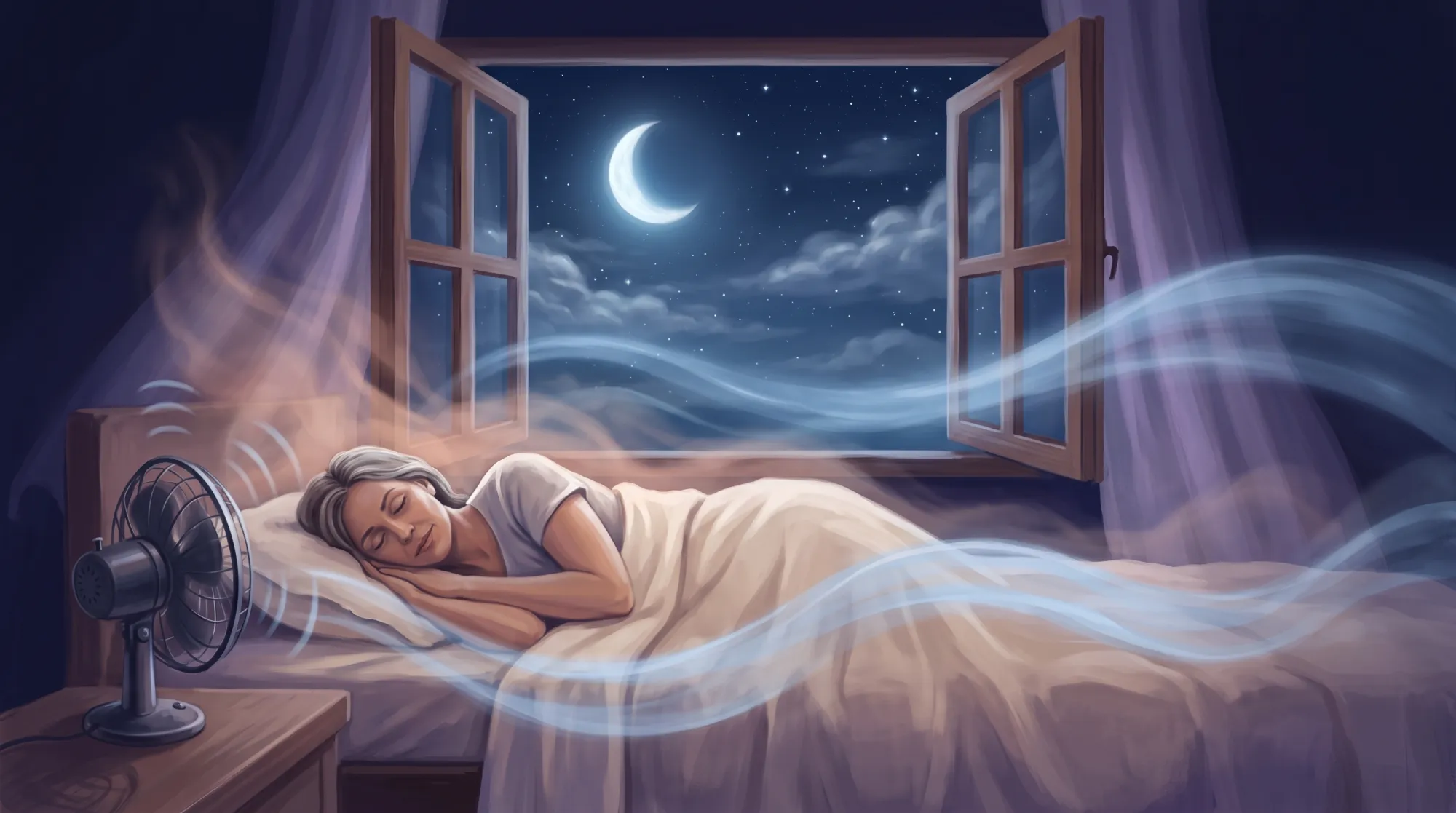
A gentle ambient soundscape — rain, brown noise, a soft fan — gives your auditory cortex something predictable and non-threatening to process. This reduces the startle response to random noises and creates a consistent signal that says “safe, you can stand down.”
Want to try these sounds tonight? Sleep Relax has 100+ calming sounds with a built-in sleep timer.
Try Sleep Relax FreeWhen to Take It Seriously
Occasional 3am wake-ups are normal — a bad day, a late coffee, a stressful week. But if you’re waking between 2-4am most nights for more than a few weeks, it’s worth investigating:
- Persistent pattern + daytime fatigue: Could indicate an underlying sleep disorder. Talk to your GP.
- Waking gasping or choking: May suggest sleep apnoea, especially if you snore.
- Waking drenched in sweat: Can signal hormonal changes, medication side effects, or other medical causes.
- Always needing to urinate: Nocturia affects around 1 in 3 adults over 30 and has treatable causes.
This article is for informational purposes only and is not a substitute for professional medical advice. If you have persistent sleep issues, please consult a healthcare provider.
The 3am Reframe
Here’s something worth remembering the next time you find yourself staring at the ceiling: waking up in the middle of the night is not a sign that your sleep is broken. It’s a predictable consequence of how human sleep architecture works, amplified by stress and modern life.
Your ancestors woke during the night too. Historian Roger Ekirch has documented centuries of evidence for “segmented sleep” — a first sleep and second sleep with a wakeful period between them. The rigid expectation of eight unbroken hours is historically recent.
The goal isn’t to never wake up at 3am. It’s to have the tools to fall back asleep when you do — and to stop the anxiety spiral that turns a five-minute wake-up into an hour of ceiling-staring.
Breathe slowly. Scan your body. Let the sounds carry you back down. Your brain knows how to sleep. Sometimes it just needs a gentle reminder that the danger isn’t real and the morning can wait.
Frequently Asked Questions
Is waking up at 3am a sign of depression?
Consistent early morning waking (especially combined with difficulty falling back asleep and low mood during the day) can be associated with depression. It’s one of the clinical markers for major depressive disorder. If this pattern persists alongside other symptoms like persistent sadness, loss of interest, or changes in appetite, speak with a healthcare professional.
Should I eat something if I wake up at 3am?
If you suspect blood sugar is the trigger — especially if you wake with a racing heart, anxiety, or shakiness — a small snack combining protein and complex carbohydrates can help. A handful of nuts, a small banana, or a spoonful of nut butter. Avoid sugar, which will cause another spike and crash. Over time, addressing the root cause (dinner timing, alcohol, overall blood sugar regulation) is more effective than midnight snacking.
Does looking at the clock make it worse?
Yes. Clock-watching at 3am triggers a rapid calculation: “I only have 3 hours left, I’ll be exhausted tomorrow, this is terrible.” That cascade of anxious thoughts activates your stress response and pushes sleep further away. Turn your clock away from the bed. If you use your phone as an alarm, place it face-down out of arm’s reach.
Sleep better in 14 nights
A gentle 14-night sleep plan based on CBT-I principles, a one-tap 3am button and calming sleep sounds. Nights 1–3 are free.
Download Sleep Relax